

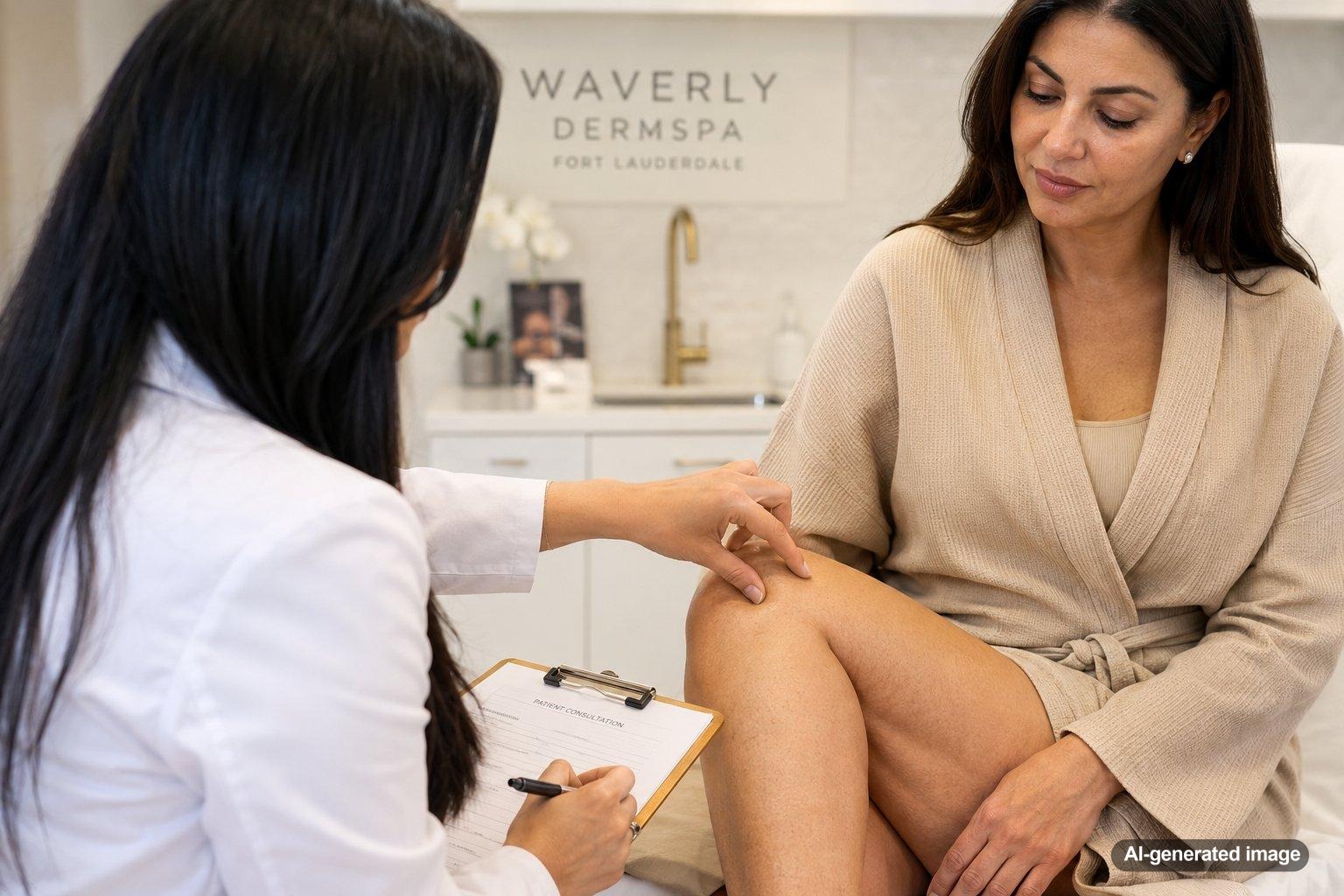
Yes, XERF may help improve the appearance of mild to moderate loose or crepey skin above the knees. This noninvasive radiofrequency treatment is designed to support gradual collagen remodeling and a firmer-looking skin surface. The degree of improvement varies, and XERF cannot reproduce the amount of tightening possible with surgery.
The area above the knees can be particularly challenging because its appearance may reflect several factors at once, including skin laxity, natural anatomy, sun exposure, and changes in muscle or fat distribution. A thoughtful evaluation is important before deciding whether XERF matches the concern you want to address.
Quick answer
- XERF may soften the appearance of mild to moderate laxity or crepey texture above the knees.
- It uses multifrequency monopolar radiofrequency energy rather than a laser or surgical incision.
- Changes are generally expected to develop gradually as the skin responds and remodels.
- It will not remove a large amount of excess skin or create a surgical-style lift.
- A dermatologist can examine the area and determine whether skin laxity, volume, muscle tone, or another factor is driving its appearance.
What is XERF?
XERF is an energy-based treatment that delivers multifrequency monopolar radiofrequency beneath the skin’s surface. The controlled heating is intended to encourage collagen remodeling in treated tissue, while the system incorporates surface cooling during energy delivery.
For the area above the knees, the goal is typically subtle refinement rather than a dramatic transformation. Treatment may be considered when the skin looks mildly loose, thin, or crepey and the person prefers a nonsurgical approach. The treatment plan, energy settings, and number of visits must be individualized by a qualified clinician.
Why does skin above the knees become loose?
The skin around the knees moves constantly and can become less resilient over time. Its appearance may also be influenced by factors that extend beyond the skin itself.
- Natural collagen changes: Skin commonly becomes thinner and less elastic with age.
- Sun exposure: The lower thighs and knees may receive substantial ultraviolet exposure from shorts, skirts, outdoor exercise, boating, and beach activities.
- Weight changes: Gaining or losing weight can alter how the skin drapes over the knee.
- Genetics: Skin thickness, elasticity, and body contours differ from one person to another.
- Muscle and volume changes: Reduced muscle definition or changes in underlying fat can contribute to folds or softness that a skin-focused treatment may not fully address.
This distinction matters because XERF targets skin firmness. It is not primarily a fat-reduction treatment, muscle-building procedure, or method for removing substantial excess skin.
Who may be a reasonable candidate?
XERF may be worth discussing when the concern is mild to moderate laxity, the desired change is natural-looking and gradual, and avoiding surgery is a priority. It may also appeal to Fort Lauderdale residents, snowbirds, and international visitors who want a treatment plan that can be coordinated around work, travel, and seasonal schedules.
Candidacy cannot be determined from a photograph or description alone. Skin quality, the amount of laxity, medical history, previous procedures, expectations, and the exact location being treated can all affect the recommendation. A dermatologist can also explain when another approach may be more appropriate.
What kind of improvement can XERF provide?
The most realistic goal is a modest improvement in firmness and surface smoothness. Some people may notice that the area looks less crepey or that small folds appear softened. Responses vary because collagen remodeling is individual and the appearance above the knees is often influenced by more than skin laxity.
XERF is unlikely to be the right tool for a large amount of hanging skin, pronounced folds, or a concern primarily caused by fat distribution or reduced muscle tone. Clear expectations are essential. During a consultation, your clinician can discuss what degree of change may be reasonable for your anatomy without suggesting certainty.
What can you do at home?
Home care cannot remove excess skin, but it can support the appearance and condition of the area. A simple routine is usually more useful than an aggressive collection of products.
- Apply broad-spectrum sunscreen to exposed legs and reapply according to the product directions, especially during extended outdoor activities.
- Use a moisturizer regularly to reduce dryness and temporarily make crepey texture look smoother.
- Avoid harsh scrubs or frequent strong exfoliation, which may leave the thin skin around the knees irritated.
- Maintain a stable weight when practical, since repeated changes can affect the way skin drapes.
- Consider an appropriate strength-training routine if overall leg definition is part of the concern, while recognizing that exercise does not directly tighten loose skin.
If you’re unsure which products are suitable for the area, a dermatologist or licensed skin care professional can help you build a conservative routine.
What other professional options may be considered?
The right category of treatment depends on whether the main issue is laxity, surface texture, pigmentation, fat distribution, or muscle definition. Professional options may include other energy-based skin treatments, procedures focused on texture, body-contouring approaches, or surgical consultation for more significant excess skin.
These options are not interchangeable. Combining treatments is not automatically better, and a more intensive procedure is not always necessary. An in-person assessment can help separate the different components of the concern and keep the plan focused.
When should you see a dermatologist?
A dermatology visit is appropriate when you want a personalized assessment before an energy-based procedure or when the change above the knee is difficult to explain. It is also worth getting checked if the appearance changes suddenly or is accompanied by persistent pain, swelling, a rash, or another unexpected symptom. Those concerns should be evaluated before pursuing a cosmetic treatment.
A dermatologist can examine the skin, review relevant health history, and explain whether the concern is primarily cosmetic skin laxity or something that needs a different type of evaluation.
Frequently asked questions
Is XERF a laser?
No. XERF uses radiofrequency energy rather than laser light. The distinction matters because the technologies deliver energy differently, even though both may appear within the broader category of nonsurgical aesthetic treatments.
Does XERF remove fat above the knees?
XERF is intended for skin firming rather than primary fat reduction. If fullness above the knee is contributing to the concern, your clinician can explain whether a different body-contouring approach should be considered.
Can XERF eliminate loose skin completely?
No nonsurgical treatment should be expected to eliminate every degree of skin laxity. XERF may provide a subtle improvement for an appropriate candidate, but substantial excess skin may require a surgical consultation to discuss more significant correction.
How many XERF treatments are needed?
The number of treatments varies based on the starting condition of the skin, the treatment area, individual response, and the desired degree of improvement. Your clinician can recommend a plan after examining the area.
What does a XERF treatment feel like?
People may notice cycles of warmth and cooling as energy is delivered. Individual comfort levels vary, so the provider should explain what to expect and invite feedback throughout the visit.
How soon might changes become noticeable?
The response is generally gradual rather than immediate because collagen remodeling takes time. The pace and visibility of change vary, and follow-up evaluation can help determine how the treated area is responding.
At Waverly DermSpa, we offer XERF and can help you understand whether it may be appropriate.
Ready to get help?
Schedule an appointment or send a message and our team will get back to you.
Prefer to call? 954-666-3736
This article is for educational purposes and is not medical advice. For diagnosis and personalized treatment, please book an appointment with a board-certified dermatologist.
