

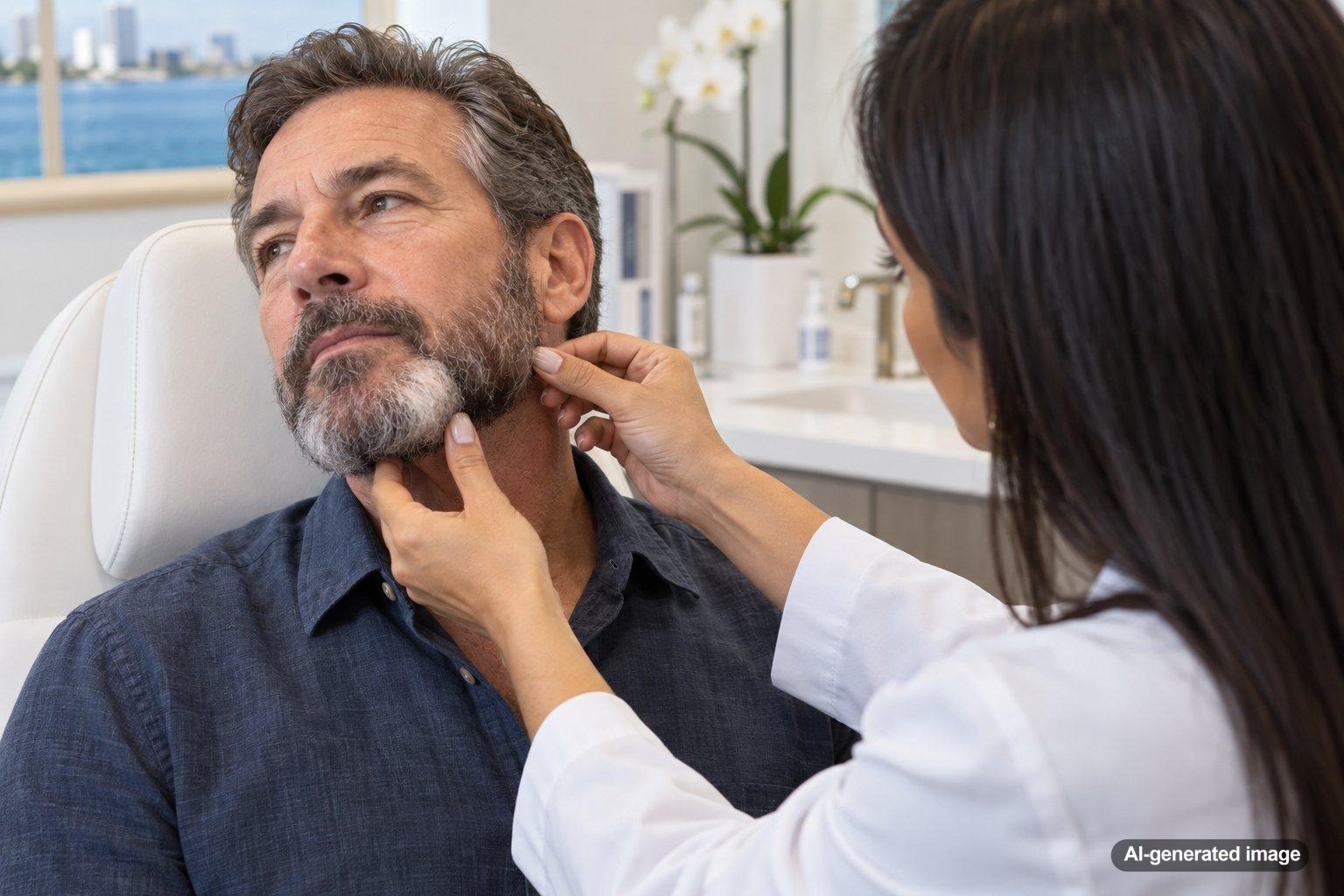
If one small patch of your beard has turned white while the rest has stayed its usual color, the change usually means the hairs in that area are producing less pigment. A localized group of white hairs is sometimes called poliosis. Poliosis describes what the hair looks like rather than identifying the reason it happened.
Sometimes a white beard patch is simply part of normal graying. In other cases, localized pigment loss can be associated with changes involving the skin or hair follicles, including vitiligo or alopecia areata. A dermatologist can examine both the hairs and the skin underneath them to help determine whether the change needs further evaluation.
Quick answer
- A localized patch of white hair can be called poliosis.
- Normal graying can occasionally look uneven or patchy.
- Vitiligo can affect pigment in both skin and hair.
- Alopecia areata may sometimes be associated with white hair, including white hair during regrowth.
- A new or changing patch is worth showing a dermatologist if there are also changes in the skin, hair density, or surrounding area.
What does a white patch in the beard mean?
Hair gets its color from melanin, a pigment produced in association with the hair follicle. When hairs in one confined area have much less pigment than neighboring hairs, they can appear gray or completely white.
Dermatologists use the term poliosis for a localized cluster of white hairs. It can affect the scalp, eyebrows, eyelashes, beard, or other hair-bearing areas. Importantly, poliosis is a clinical sign, not a specific disease. The skin underneath the white hairs may look completely normal, or there may be a visible pigment change that offers a clue about the cause.
What can cause one patch of beard hair to turn white?
There isn’t one explanation that applies to every white beard patch. Possibilities a dermatologist may consider include:
- Normal graying: Pigment production does not always decline evenly. Some follicles may lose pigment earlier than others, creating a noticeably lighter area.
- Vitiligo: This condition causes loss of pigment-producing cells. Hair growing within an affected area can also lose color. Sometimes a lighter or white skin patch is visible beneath the beard.
- Alopecia areata: This autoimmune form of hair loss commonly affects the scalp or beard. When hair begins growing again, it can sometimes initially appear white or lighter than the person’s usual hair color.
- Previous inflammation or injury: Changes affecting pigment cells around a group of follicles can occasionally leave hairs in that location lighter afterward.
- Medication-related or other less common causes: Certain medications and several uncommon conditions have been associated with localized white hair. Your medication history and examination can help a dermatologist decide whether these possibilities are relevant.
Does white beard hair always mean vitiligo?
No. A patch of white beard hair by itself does not establish a diagnosis of vitiligo. With vitiligo, you may also notice skin beneath or around the affected hairs becoming noticeably lighter or white. However, skin pigment changes can sometimes be subtle, particularly beneath dense facial hair.
A dermatologist can examine the area closely and compare it with the surrounding skin. That is more reliable than trying to identify the cause from hair color alone.
Could alopecia areata make beard hair look white?
It can. Alopecia areata may cause round or patchy areas of beard hair loss, and newly regrowing hair can sometimes come in white or blond before pigment returns. The pattern varies from person to person, so white hairs without obvious hair loss should not automatically be assumed to be alopecia areata.
If the white patch is accompanied by thinning, a smooth bald area, broken hairs, or recurring episodes of hair loss and regrowth, a dermatology evaluation can help clarify what is happening.
What can you do at home?
There is usually no need to aggressively treat a white beard patch on your own before you know what is causing it. A few simple steps can make the area easier to evaluate:
- Take a clear photo in consistent lighting so you can compare the area over time.
- Look at the skin underneath the beard for lighter patches, redness, scaling, or another visible change.
- Notice whether the amount of hair is changing as well as its color.
- Avoid repeatedly plucking the white hairs, which can irritate the follicles and make the area harder to assess.
- Use gentle beard and facial skin care if the area feels irritated.
If the white hairs are purely cosmetic and the underlying skin and hair density remain stable, some people simply choose to leave them alone or use a cosmetic beard-coloring product that their skin tolerates.
What professional options are available?
The appropriate approach depends on the underlying reason for the pigment change. A dermatologist may begin with a close examination of the beard, surrounding skin, and other areas where pigment or hair changes could provide useful clues. In some situations, additional evaluation may be appropriate.
If an underlying dermatologic condition is identified, your clinician can explain available management options and whether treatment makes sense for your particular situation. Because localized white hair can have several different causes, treatment aimed at changing pigment is best considered only after the cause has been evaluated.
When should you see a dermatologist?
Consider scheduling an evaluation when the white patch is new, expanding, or accompanied by another change. It is especially useful to get checked if you notice:
- A lighter or completely white patch of skin beneath the beard
- A smooth bald spot or noticeable reduction in beard density
- Several new patches developing in different locations
- Changes involving the eyebrows, eyelashes, scalp hair, or other body hair
- Persistent itching, scaling, irritation, or inflammation
- A new or changing spot, growth, or unusual discoloration in the same area
Even when the cause turns out to be harmless pigment variation, an examination can provide a clearer answer than trying to identify the pattern from appearance alone.
FAQ
Can stress make one beard patch turn white?
Hair pigmentation is complex, and many factors can influence when graying becomes noticeable. A sharply localized white patch, however, has multiple possible explanations. Rather than assuming stress is responsible, consider an evaluation if the change is sudden, clearly defined, or accompanied by skin or hair loss changes.
Can white beard hair turn dark again?
That depends on why the hair lost pigment. Some localized pigment changes may remain stable, while hair can regain pigment in certain situations. There is no dependable way to predict this from appearance alone.
Should I pluck white beard hairs?
Plucking doesn’t address why the hairs became white and repeated plucking can irritate the follicles. Trimming or leaving the hairs alone is generally a more conservative cosmetic approach while you monitor the area.
What if the skin underneath my white beard patch is also white?
A visible area of skin pigment loss is a useful reason to see a dermatologist. Vitiligo is one possible explanation, but an examination is needed because different skin changes can look similar.
What if the white patch appeared after beard hair fell out?
Tell your dermatologist about the sequence of events. Alopecia areata can affect the beard, and regrowing hair can sometimes initially lack its usual pigment. Other causes are possible, so the pattern should be evaluated rather than diagnosed from color alone.
Ready to get help?
Schedule an appointment or send a message and our team will get back to you.
Prefer to call? 954-666-3736
This article is for educational purposes and is not medical advice. For diagnosis and personalized treatment, please book an appointment with a board-certified dermatologist.
Sources & further reading
- DermNet – Poliosis
- American Academy of Dermatology (AAD) – Hair loss types: Alopecia areata signs and symptoms
