

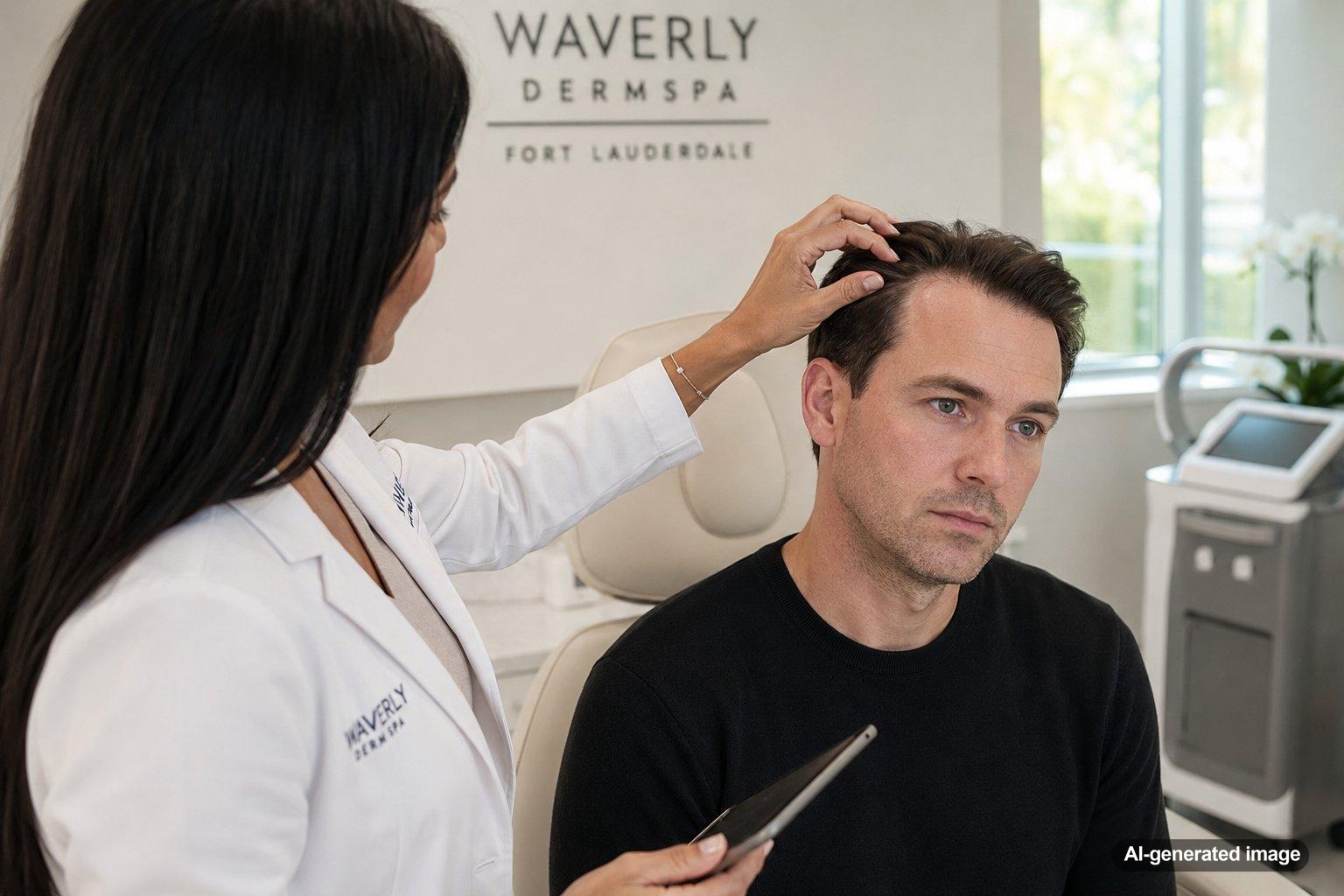
A receding hairline can be a gradual change that many people notice over time, often first at the temples or along the front of the scalp. While it can feel concerning, it is a common pattern of hair change that can be associated with a range of factors, including genetics, hormones, and overall scalp health.
Understanding what may be contributing to these changes is the first step in deciding what, if anything, to do next. In many cases, early evaluation can help clarify whether the pattern is temporary shedding or a more long-term shift in hair growth.
Quick answer
- A receding hairline is often associated with genetic hair thinning over time
- Hormonal changes can influence how hair follicles grow and shed
- Stress, illness, or lifestyle factors may contribute to increased shedding
- Early evaluation can help identify the underlying pattern
What it is
A receding hairline refers to a gradual shift in the hairline position, typically becoming more noticeable at the temples or frontal scalp. It can be part of normal aging for some individuals, while for others it may reflect a more specific type of hair loss pattern.
Common causes or triggers
- Genetic predisposition to pattern hair loss
- Hormonal influences that affect hair follicle cycling
- Physical or emotional stress that can increase shedding
- Nutritional imbalances or rapid weight changes
- Scalp inflammation or irritation
What you can do at home
Gentle hair care practices can help support overall scalp health. This includes avoiding excessive heat styling, minimizing tight hairstyles that pull on the hairline, and using mild cleansing products that do not overly strip the scalp.
Paying attention to overall wellness, including sleep, nutrition, and stress management, may also help support healthier-looking hair over time.
Professional options
A dermatologist can evaluate the pattern of hair loss and help determine possible contributing factors. Depending on the findings, options may include prescription therapies, in-office treatments, or regenerative approaches that aim to support the scalp environment.
At Waverly DermSpa, we offer PRFM for Hair Loss and can help you understand whether it may be appropriate.
When to see a dermatologist
It is worth seeking evaluation if you notice rapid changes in your hairline, patchy hair loss, scalp discomfort, or if hair shedding feels sudden or persistent. Early assessment can help guide appropriate next steps.
FAQ
Why is my hairline receding?
It can be associated with genetics, hormones, or lifestyle factors that influence hair growth cycles.
Can stress cause a receding hairline?
Stress can contribute to increased shedding in some cases, which may make thinning more noticeable.
Is a receding hairline reversible?
It depends on the underlying cause. A dermatologist can evaluate whether the pattern is temporary or progressive.
When should I get it checked?
If changes are rapid, uneven, or concerning, an evaluation can help clarify what is happening.
Ready to get help?
Schedule an appointment or send a message and our team will get back to you.
Prefer to call? 954-666-3736
This article is for educational purposes and is not medical advice. For diagnosis and personalized treatment, please book an appointment with a board-certified dermatologist.
