

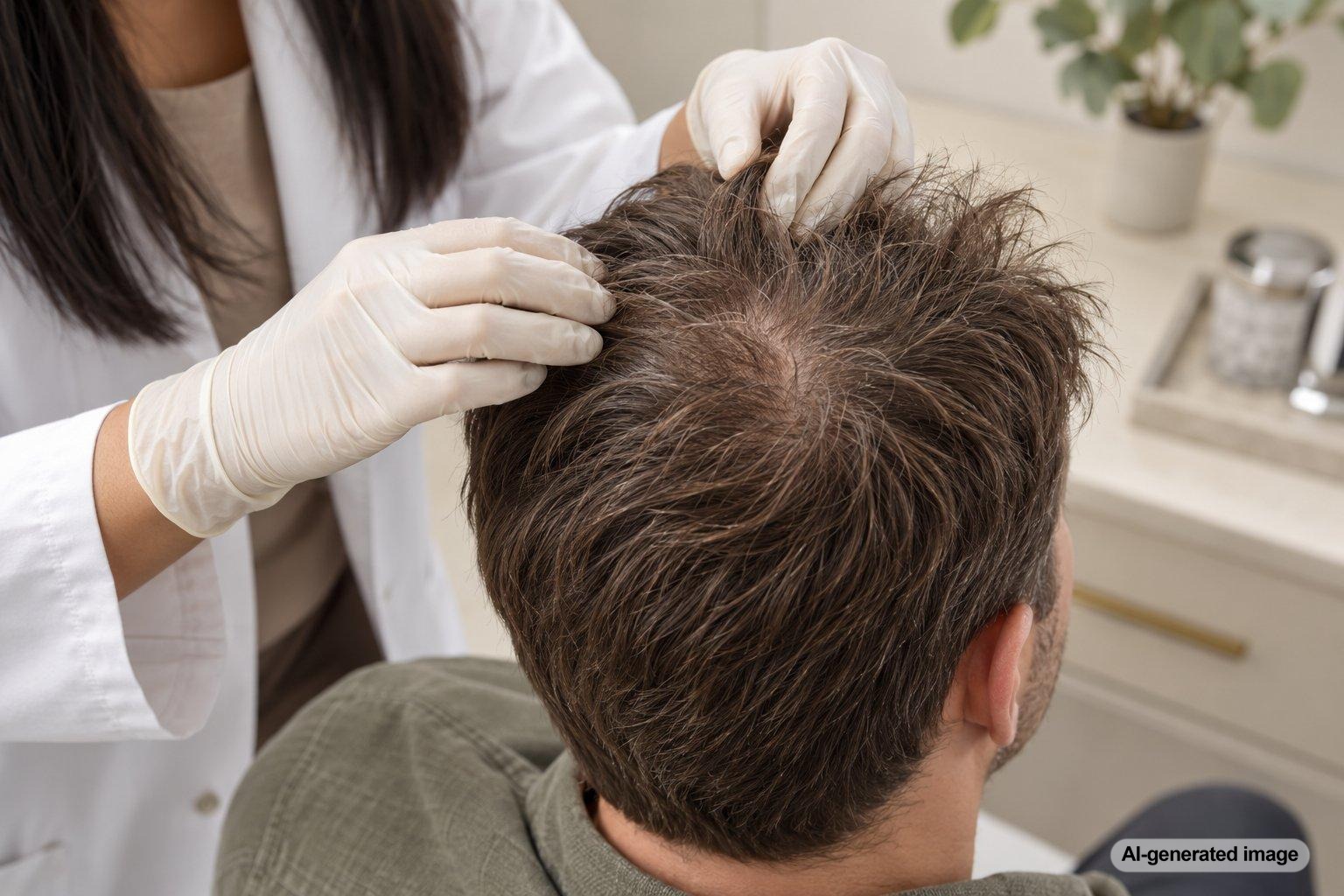
Short, frizzy hairs around the crown can appear even when the rest of your hair feels smooth and healthy. You might notice little strands standing upright near your part, a fuzzy halo that becomes more obvious in humidity, or pieces that never seem to grow as long as the surrounding hair. The most common explanations include new hair growth, breakage from styling or friction, and natural differences in hair texture and growth direction. In some cases, changes in hair density can also make shorter strands more noticeable.
The location matters. The crown sits near the top and back of the scalp, where hair often grows in a spiral pattern and is exposed to brushing, heat, sun, and everyday friction. Understanding whether those short hairs are growing normally or breaking prematurely can help you choose a gentler routine and recognize when a professional scalp evaluation would be useful.
Quick Answer: Why Is My Hair Short and Frizzy at the Crown?
- New hair growth: Shorter strands may be growing in after a normal shedding cycle or a period of increased shedding.
- Hair breakage: Heat styling, chemical processing, brushing, and mechanical stress can cause individual strands to snap before reaching their usual length.
- Natural growth patterns: Cowlicks and changes in hair direction can make short crown hairs stand up rather than lie flat.
- Humidity and texture: Naturally textured or weathered strands may absorb moisture differently, making frizz more visible at the crown.
- Changes in hair density: If the part is widening or more scalp is visible, shorter hairs may be appearing alongside a change in overall hair growth.
These possibilities can look similar in the mirror. The appearance of the hair tips, surrounding density, and changes over time provide more useful clues than frizz alone.
What Makes the Crown Different From the Rest of Your Hair?
The crown is the rounded area toward the upper back of the head. Many people have a natural hair whorl in this region, where follicles point in different directions. This growth pattern can cause shorter strands to lift away from neighboring hair, especially after washing or sleeping.
The crown also receives considerable exposure during ordinary activities. Hair along the top of the head may be touched repeatedly when adjusting a hairstyle, exposed to direct heat from a blow-dryer, or pulled during ponytail and bun styling. The outermost strands also encounter sunlight and environmental conditions without as much protection from surrounding hair.
Because of these factors, even a relatively small number of shorter hairs can become visually prominent. Frizz does not necessarily indicate unhealthy follicles or an underlying medical condition.
Common Reasons for Short, Frizzy Hairs Around the Crown
1. New Hair Growth After Normal Shedding
Hair follicles cycle through growth, transition, resting, and shedding phases. Since individual follicles operate on different schedules, it is normal to have strands of different lengths throughout the scalp.
When new strands emerge around the crown, they may appear soft, fine, and difficult to smooth into a hairstyle. As they become longer, their weight may help them lie closer to the surrounding hair. Some people notice a greater number of short strands after recovering from a period of increased shedding.
New growth is not automatically a sign that previous hair loss has fully resolved. If you have also noticed persistent shedding or changes in scalp visibility, a dermatologist can help evaluate the overall pattern.
2. Breakage From Heat Styling
Frequent blow-drying, flat ironing, curling, or repeated exposure to high temperatures can weaken the hair shaft. The crown can be particularly vulnerable when styling tools repeatedly pass over the same upper sections.
Heat-related breakage may create strands of irregular lengths, with rough or frayed ends. Hair can also become more difficult to detangle, and the shorter pieces may continue appearing despite attempts to grow them out.
Using lower temperatures, reducing repeated passes, and limiting unnecessary heat exposure may help decrease additional damage.
3. Friction From Sleeping, Hats, and Everyday Habits
Mechanical friction can gradually wear down the outer layers of the hair shaft. Repeated rubbing against pillowcases, tight headwear, or other surfaces may contribute to breakage in susceptible hair.
Some people also develop habits of touching, twisting, or repeatedly smoothing the same sections near the crown. Although these actions may seem minor, repeated tension and friction can affect fragile strands over time.
Friction alone does not explain every case of crown frizz, but it is worth considering when shorter hairs are concentrated in areas that receive frequent contact.
4. Tight Hairstyles and Repeated Tension
High ponytails, tight buns, extensions, and hairstyles that repeatedly pull on the same sections can stress the hair shaft and follicles. Crown-area breakage may be especially noticeable when strands are pulled tightly upward or backward.
Signs of excessive tension may include discomfort during styling, broken strands, or visible changes in the hair around the areas being pulled. Persistent traction can sometimes contribute to hair loss rather than simple breakage.
Looser hairstyles and regularly changing the placement of buns or ponytails may help reduce ongoing stress.
5. Chemical Processing and Hair Shaft Damage
Bleaching, coloring, relaxing, perming, and overlapping chemical treatments can alter the hair shaft and increase its susceptibility to damage. The resulting strands may feel coarse, dry, tangled, or unusually fragile.
Previously processed hair can break at different lengths, creating a fuzzy appearance around the crown even when the ends of the hairstyle look comparatively smooth.
Spacing chemical services appropriately and discussing existing damage with a qualified stylist can help limit further stress on the hair.
6. Natural Curl Pattern and Uneven Texture
Not every short, frizzy strand is damaged. Hair texture can vary across different scalp regions. Some people naturally have tighter curls, more pronounced bends, or a different growth direction around the crown.
These differences may become more visible in humidity, after brushing dry curls, or when using styling products that work well on the lengths but provide less control near the roots.
If the shorter crown hairs have been present for years without noticeable thinning or progressive breakage, natural texture may be an important part of the explanation.
7. Changes in Hair Density or Growth
Sometimes the issue is not simply that certain hairs are shorter. A change in the number, thickness, or growth characteristics of hair strands can make the crown look increasingly uneven.
Possible clues include a gradually widening part, more visible scalp around the whorl, a reduction in ponytail fullness, or an increase in shedding. These findings deserve a different evaluation from isolated cosmetic frizz.
Hair density changes can have several possible contributors, and appearance alone cannot establish the cause. A dermatologist may examine the scalp and hair shafts to determine whether additional assessment is appropriate.
How Can You Tell New Hair Growth From Breakage?
Distinguishing regrowth from breakage can be challenging, especially when both are happening simultaneously. A few observations may help you describe what you are seeing.
- Look at the ends: New growth may have naturally tapered tips, while broken strands may have blunt, split, or irregular ends. However, these differences are not always reliable without magnification.
- Compare the lengths: Short hairs that are relatively similar in length may suggest a period of regrowth. Highly irregular lengths can be consistent with breakage.
- Consider texture: Roughness, frequent tangling, and visible splitting may point toward hair shaft damage, although naturally textured new growth can also feel different.
- Review styling habits: A history of frequent heat, chemical treatments, or tight hairstyles makes mechanical damage worth considering.
- Watch the surrounding scalp: Progressive widening of the part or increasing scalp visibility suggests that density should be assessed rather than assuming the problem is only breakage.
None of these observations provides a definitive diagnosis. A dermatologist can use scalp examination and magnification to distinguish changes in the hair shaft from patterns involving the follicles.
Why Do Short Crown Hairs Stick Straight Up?
Short hairs have less length and weight to pull them downward. At the crown, this effect is amplified by the natural whorl and varying directions of follicle growth.
Static electricity, humidity, product buildup, and the shape of the hair shaft can also influence whether strands remain flat or lift away from the surrounding hair. A few short strands may become much more noticeable after blow-drying against their natural growth direction.
This is why a styling approach that works well at the sides or back may be less effective at the crown. Frizz in this area is often a combination of hair length, growth direction, and environmental conditions rather than one isolated problem.
What Can You Do at Home to Reduce Crown Frizz and Breakage?
A conservative hair-care routine can help protect existing strands without assuming a medical cause.
- Reduce unnecessary heat: Choose lower temperatures when practical and avoid repeatedly concentrating hot airflow on the same crown section.
- Detangle gently: Use a suitable conditioner and work through tangles gradually rather than pulling forcefully from the roots.
- Avoid excessive tension: Rotate hairstyles, loosen tight buns, and limit styles that cause persistent pulling or discomfort.
- Condition the hair shaft: A lightweight conditioner or leave-in product may improve manageability and reduce friction. Apply according to your hair type to avoid weighing down the roots.
- Protect hair during sleep: Reduce unnecessary rubbing and avoid sleeping with hairstyles that keep the crown under tension.
- Handle wet hair carefully: Hair can be more vulnerable to certain forms of mechanical damage when wet, so avoid aggressive towel rubbing or forceful brushing.
- Be cautious with chemical treatments: Avoid layering multiple harsh processes onto already fragile hair.
These measures may improve the appearance of frizz and help prevent additional breakage. They cannot restore a hair shaft that has already snapped, and they do not replace evaluation when hair density is changing.
Could Fort Lauderdale Humidity Make Crown Frizz Worse?
South Florida’s humid climate can make the difference between shorter and longer strands especially noticeable. Hair fibers interact with moisture in the air, which can temporarily influence their shape, flexibility, and tendency to frizz.
Short hairs at the crown may lift or curl more readily than the heavier lengths around them. This can produce a visible halo even if the hair looked smooth indoors or immediately after styling.
Humidity itself does not establish that hair is damaged or that follicles are unhealthy. If the problem mainly appears outdoors and settles when environmental conditions change, styling and texture may be significant contributors.
For people spending part of the year in Fort Lauderdale, seasonal differences in humidity and hair-care habits can also make existing crown texture more apparent.
When Should You Consider Professional Hair or Scalp Evaluation?
If short crown hairs are accompanied by changes in hair density, unusual shedding, scalp symptoms, or progressively worsening breakage, a dermatologist can help identify whether the concern extends beyond routine hair-care damage.
During an evaluation, a clinician may review your hair-care practices, recent health changes, medications, nutritional history, and the timing of the symptoms. Examination of the scalp and individual hairs may help clarify whether the issue involves breakage, growth variation, or a hair loss pattern.
Depending on the findings, professional options may involve adjustments to damaging hair-care practices, investigation of possible contributing factors, or discussion of medically appropriate hair loss treatments.
At Waverly DermSpa, we offer PRFM for Hair Loss and can help you understand whether it may be appropriate.
Not every person with short crown hairs needs a procedure. A careful diagnosis is more useful than choosing a treatment solely because the hair appears frizzy.
When Should You See a Dermatologist?
Consider arranging a dermatology appointment if you notice any of the following:
- A widening part or increasing visibility of the scalp around the crown.
- Persistent or unexpectedly increased hair shedding.
- Small areas of hair loss or a rapidly changing pattern of density.
- Scalp pain, persistent itching, tenderness, redness, or scaling.
- Broken hairs occurring alongside noticeable thinning.
- Hair changes that continue progressing despite gentler styling habits.
- A sudden change in hair appearance without an obvious styling-related explanation.
Seek timely medical evaluation for rapidly developing hair loss, especially when accompanied by scalp discomfort or visible inflammation. Earlier assessment may be particularly important when the condition involves the follicles rather than the hair shaft alone.
Frequently Asked Questions
Are short, frizzy hairs on top of my head a sign of new growth?
They can be. New hairs are naturally shorter and may stand up near the crown before gaining enough length to blend with surrounding strands. However, short hair can also result from breakage. Changes in density, hair texture, and styling history help provide context.
Why is my crown frizzy when the rest of my hair is smooth?
The crown has a distinctive growth pattern and is often exposed to greater heat, brushing, friction, and humidity. Shorter strands also have less weight to hold them down. These factors can make frizz more apparent there than elsewhere on the scalp.
Can short crown hairs eventually grow longer?
Healthy growing hairs can become longer over time, although individual growth rates and hair-cycle patterns vary. If strands repeatedly break, they may remain visibly short despite ongoing growth at the follicle. A dermatologist can help assess persistent concerns.
Does crown frizz mean my hair is thinning?
Not necessarily. Frizz alone does not establish hair loss. If you also notice a widening part, increasing scalp visibility, or changes in overall fullness, an evaluation can help distinguish cosmetic texture differences from a change in density.
Should I cut the short hairs that stick up around my crown?
Cutting individual strands may temporarily change their appearance, but it does not address the reason they are short. Trimming too close can also make them more noticeable as they grow. Gentle styling is often a more practical first approach when there is no concerning scalp change.
Can a dermatologist tell whether my crown hairs are broken or regrowing?
A dermatologist can examine the hair shafts and scalp, review associated symptoms, and use magnification when appropriate. This assessment may help distinguish breakage, regrowth, and patterns involving changes in hair density.
The Bottom Line
Short, frizzy hairs around the crown are often related to new growth, styling damage, natural texture, or the direction in which hair grows. Because the crown is exposed and has a distinctive growth pattern, shorter strands can be especially visible there.
Focus on gentle handling, reducing unnecessary heat and tension, and watching for changes in scalp visibility or hair density. If the shorter hairs are appearing alongside noticeable thinning, significant shedding, or scalp symptoms, professional evaluation can help clarify the cause and guide appropriate next steps.
Ready to get help?
Schedule an appointment or send a message and our team will get back to you.
Prefer to call? 954-666-3736
Disclaimer
This article is for educational purposes and is not medical advice. For diagnosis and personalized treatment, please book an appointment with a board-certified dermatologist.
