

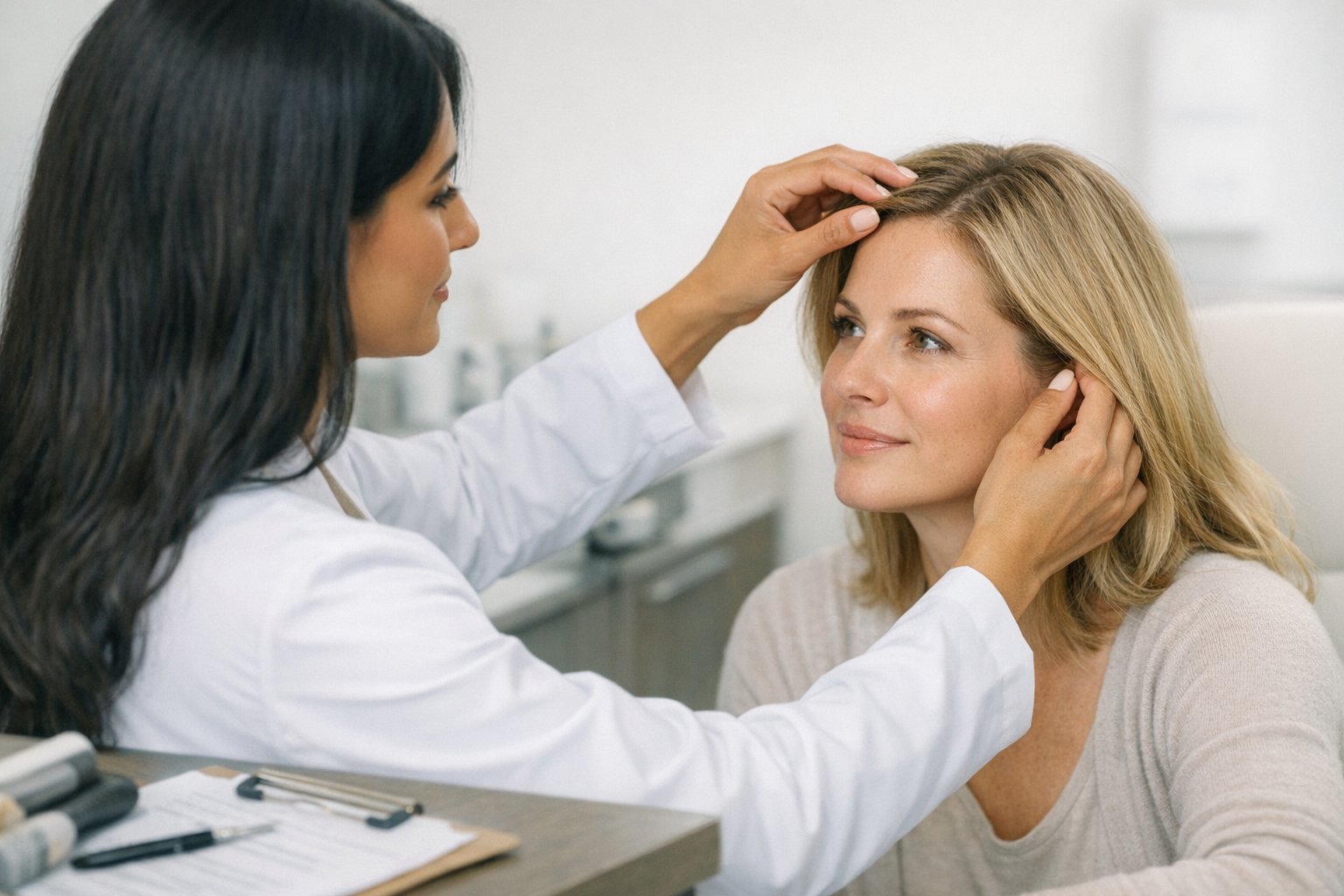
Changes in your hair or scalp can feel surprisingly stressful, especially when they seem to appear out of nowhere. Maybe you’re noticing more strands in the shower, a widening part, new breakage, or a scalp that feels itchy, flaky, or tender. Some hair concerns are temporary and mild, but others are worth a closer look.
If you’re wondering when it makes sense to move beyond home remedies and schedule an appointment, the short answer is this: if a concern is persistent, worsening, or affecting your confidence, a dermatologist can evaluate what may be contributing and help you understand your options.
Quick answer
- See a dermatologist if hair shedding or thinning lasts more than a few weeks or seems to be getting worse.
- Book an evaluation if you notice bald patches, scalp pain, redness, or sudden changes in hair density.
- Scalp itching, scaling, burning, or bumps can also be signs that it is worth getting checked.
- If you’ve tried over-the-counter products without improvement, a professional exam may help clarify next steps.
- Early evaluation can be especially helpful when hair concerns are affecting your daily routine or peace of mind.
What counts as a hair concern?
Hair concerns can include more than obvious hair loss. They may show up as increased shedding, gradual thinning, a receding hairline, patchy loss, more visible scalp, breakage, or texture changes. Sometimes the scalp is part of the issue too. Dryness, oiliness, flakes, irritation, tenderness, or bumps can all play a role.
In plain English, the goal of a dermatology visit is not to jump to conclusions. It is to look at the full picture, including your scalp, hair pattern, symptoms, timing, and routine, so your clinician can help you decide whether the issue seems temporary, related to irritation or breakage, or something that deserves medical attention.
Common reasons people decide to book
- More shedding than usual: You may notice extra hair on your pillow, brush, clothing, or shower floor.
- Gradual thinning: A wider part, less volume, or more scalp showing through can be easy to miss at first.
- Patchy loss: Small or larger areas of missing hair are usually worth prompt evaluation.
- Scalp symptoms: Itching, burning, tenderness, flaking, redness, or bumps can point to scalp inflammation or irritation.
- Breakage: Hair that seems to snap easily may be related to styling habits, processing, or shaft damage rather than true shedding.
- Changes after stress or illness: Many people notice hair changes after a stressful period, travel, major life event, or illness.
- Concerns after starting something new: A new product, supplement, medication, or hair routine may sometimes be associated with changes.
When home care may be reasonable first
Not every hair concern needs urgent evaluation. If the issue is mild and recent, it may be reasonable to take a gentle, conservative approach for a short period. That can include simplifying your hair routine, avoiding tight styles, reducing heat and harsh chemical processing, using a mild shampoo, and paying attention to whether the issue seems stable, improving, or worsening.
You can also take a few photos in similar lighting every couple of weeks. This can make subtle changes easier to track and can be helpful during a consultation. The key is to avoid cycling through too many products too quickly, which can make it harder to tell what is actually helping or irritating your scalp.
Signs it is time to see a dermatologist
- Hair loss or thinning is sudden, significant, or continuing to progress.
- You notice one or more bald patches.
- Your scalp is painful, very itchy, inflamed, or unusually sensitive.
- You see scaling, crusting, bumps, or areas that look scarred or shiny.
- Your hair concern has not improved with simple routine changes.
- You are unsure whether you are dealing with shedding, breakage, or a scalp condition.
- The issue is affecting your confidence, stress level, or quality of life.
If you’re unsure, it’s worth getting checked. A dermatologist can evaluate the pattern, ask about timing and triggers, review products and habits, and discuss whether additional treatment or follow-up makes sense.
What a dermatologist may discuss
Professional options depend on what your clinician sees and what seems most relevant to your situation. Common options may include a scalp and hair exam, a review of your routine and product use, guidance on reducing breakage or irritation, and discussion of treatment categories for shedding, thinning, or scalp inflammation. If prescription therapies or procedures come up, they are typically discussed at a high level and tailored after evaluation.
The main benefit of a visit is clarity. Instead of guessing, you can better understand whether the concern appears temporary, whether the scalp itself needs attention, and what next steps may be reasonable for you. At Waverly DermSpa, we offer PRFM for Hair Loss and can help you understand whether it may be appropriate.
When not to wait
Some situations deserve earlier evaluation rather than a wait-and-see approach. That includes rapid shedding, round patches of hair loss, scalp pain, burning, marked redness, or areas that look like they may be changing texture permanently. Hair concerns in children are also worth timely assessment. Even when the cause turns out to be manageable, getting a professional opinion sooner can help reduce guesswork and frustration.
FAQ
Can a dermatologist help even if I am not sure it is true hair loss?
Yes. Many people are not sure whether they are seeing shedding, thinning, breakage, or scalp irritation. A dermatologist can evaluate the pattern and help explain what may be going on.
Should I wait a few months before booking?
That depends on the situation. Mild, very recent changes may be reasonable to watch briefly, but persistent or worsening concerns are a good reason to schedule an appointment.
What if my scalp is itchy but I am not losing much hair?
Scalp symptoms alone can be a reason to book, especially if they are ongoing or uncomfortable. Scalp health can affect how hair looks and feels, and irritation is worth evaluating when it does not settle down.
Do I need to stop all my products before my visit?
Not necessarily. It is often more helpful to bring a simple list or photos of what you are using so your clinician can review the routine with you.
Can stress-related hair changes still deserve an appointment?
Yes. Many people notice hair changes after stressful periods, and while that can be temporary, an evaluation may help confirm that there is not another contributor worth addressing.
Ready to get help?
Schedule an appointment or send a message and our team will get back to you.
Prefer to call? 954-666-3736
This article is for educational purposes and is not medical advice. For diagnosis and personalized treatment, please book an appointment with a board-certified dermatologist.
