

Hair loss in women can feel personal, frustrating, and difficult to sort through because there is rarely one single reason. It may be related to genetics, hormone shifts, stress, nutritional changes, scalp inflammation, certain hairstyles, medications, or an underlying medical condition.
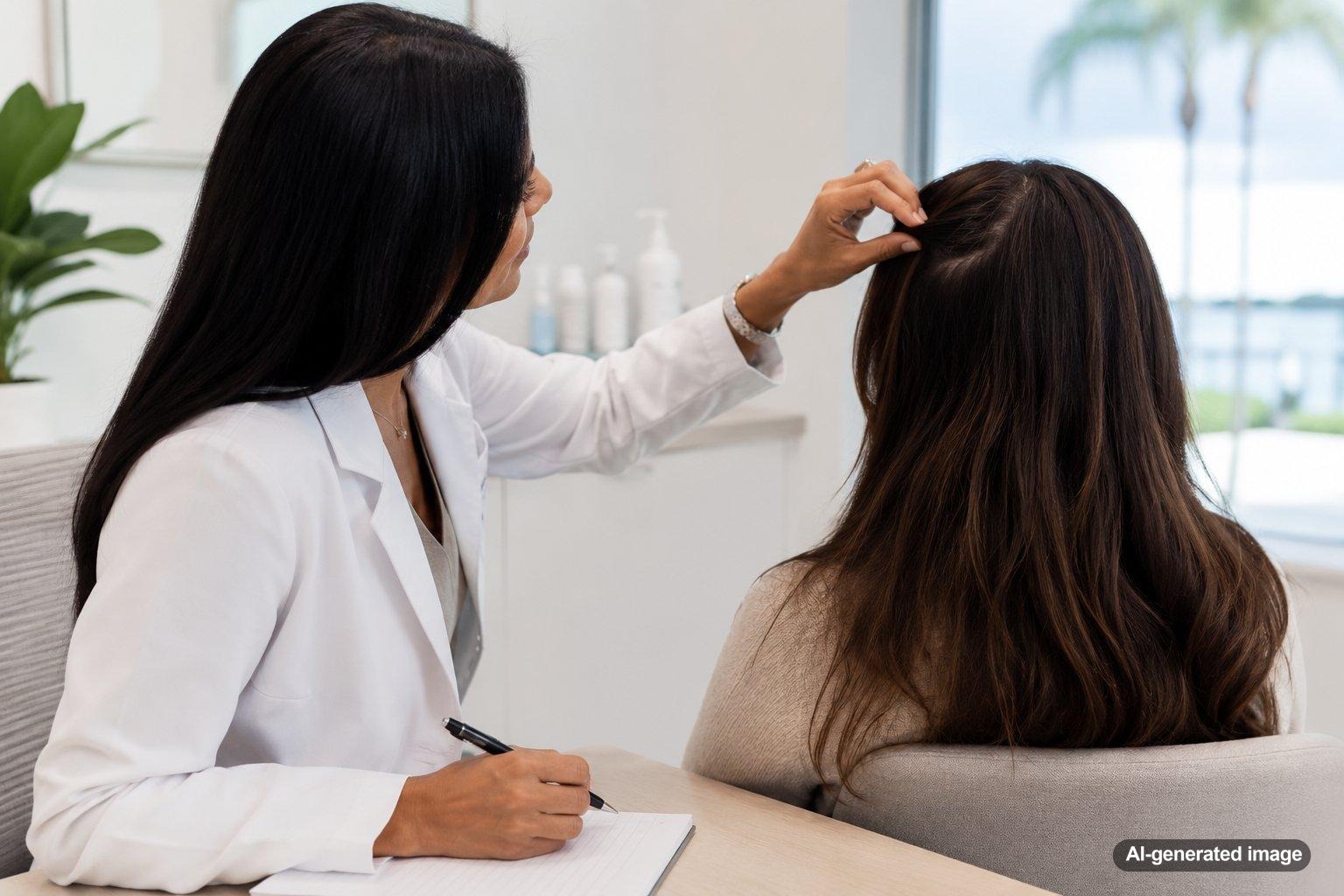
The most helpful first step is to look at the pattern. Gradual thinning along the part can suggest a different cause than sudden shedding, round patches, itching, scaling, or tenderness. A dermatologist can evaluate the scalp, review timing and health history, and help narrow what may be contributing.
Quick answer
- Common causes include female pattern hair loss, stress-related shedding, hormone changes, postpartum changes, thyroid or iron concerns, scalp inflammation, and tight hairstyles.
- Sudden shedding can happen after illness, surgery, major stress, weight changes, or medication changes.
- Round patches, redness, pain, scale, or scarring deserve prompt dermatology evaluation.
- At-home steps can support hair and scalp health, but persistent or worsening hair loss is worth getting checked.
What hair loss in women can mean
Hair naturally moves through growth, resting, and shedding phases. When that cycle is disrupted, more hairs may shed than usual, or hair follicles may gradually produce thinner strands. Some causes are temporary and improve as the trigger settles. Others are ongoing and may need a medical plan to slow progression, reduce inflammation, or support healthier growth.
Because different types of hair loss can look similar at first, self-diagnosis can be misleading. A dermatologist may look closely at the scalp, ask about the timeline, review medications and recent health changes, and consider lab work or scalp testing when appropriate.
Common causes or triggers
- Female pattern hair loss: This often appears as gradual thinning over the top of the scalp or a widening part. Family history and hormones may play a role.
- Telogen effluvium: This is a shedding pattern that can follow physical or emotional stress, illness, surgery, fever, childbirth, weight changes, or certain medication changes.
- Hormonal shifts: Pregnancy, postpartum changes, perimenopause, menopause, and some endocrine concerns can be associated with changes in hair density.
- Thyroid or nutritional factors: Thyroid changes, low iron stores, and certain nutritional patterns may contribute for some people.
- Alopecia areata: This immune-related condition can cause sudden round or patchy hair loss and should be evaluated by a dermatologist.
- Scalp inflammation or infection: Itching, scaling, redness, tenderness, pustules, or flaking can point to scalp conditions that may affect hair growth.
- Traction from hairstyles: Tight ponytails, braids, extensions, buns, or repeated tension can stress follicles over time.
- Hair practices and breakage: Heat styling, chemical services, and fragile strands can cause breakage that may look like thinning.
What you can do at home
Gentle habits can help reduce avoidable stress on the hair shaft and scalp while you are figuring out the cause. Choose loose styles when possible, avoid repeated tension in the same areas, detangle carefully, and limit high heat when hair feels fragile. A mild shampoo routine, regular conditioning, and careful handling after washing may also help reduce breakage.
It can also be useful to keep a simple timeline. Note when shedding began, whether it is sudden or gradual, where it appears most noticeable, and whether you had recent illness, stress, childbirth, diet changes, surgery, or medication changes. Bring that information to your visit so your clinician can connect the pattern with possible triggers.
Professional options
Professional care starts with identifying the likely cause. Options may include scalp evaluation, a review of medications and health history, lab testing when appropriate, treatment for scalp inflammation, prescription or over-the-counter therapies, in-office regenerative options, or referral when another medical issue may be contributing.
For hair thinning that may be appropriate for regenerative support, platelet-rich fibrin matrix is sometimes discussed as part of a personalized plan. At Waverly DermSpa, we offer PRFM for Hair Loss and can help you understand whether it may be appropriate.
When to see a dermatologist
Schedule a dermatology visit if hair loss is sudden, patchy, painful, itchy, scaly, rapidly worsening, associated with redness or bumps, or affecting the eyebrows, eyelashes, or other body areas. It is also wise to get evaluated if thinning continues for more than a few months, if you notice a widening part, or if hair loss is causing distress.
More urgent evaluation is especially important when the scalp looks inflamed or scarred, because some conditions can affect follicles more seriously if they are not addressed early.
FAQ
Is hair shedding always a sign of permanent hair loss?
No. Shedding can be temporary, especially after a major trigger, but it is still worth evaluating if it is heavy, persistent, or paired with scalp symptoms.
Can stress cause hair loss in women?
Stress can be associated with increased shedding in some people, often after a delay. A dermatologist can help determine whether stress is likely part of the pattern or whether another cause should be considered.
Can postpartum hair shedding improve?
Many people notice increased shedding after childbirth as hormones shift. The timing and amount can vary, and persistent or severe shedding should be discussed with a clinician.
Do supplements help with female hair loss?
Supplements may help only when a true deficiency or specific need is present. Taking extra vitamins without guidance is not always helpful, so it is best to ask your clinician before starting a new supplement routine.
Should I stop coloring or heat styling my hair?
You may not need to stop completely, but reducing heat, chemical stress, and tight styling can help limit breakage while you are evaluating the cause of thinning or shedding.
Ready to get help?
Schedule an appointment or send a message and our team will get back to you.
Prefer to call? 954-666-3736
Disclaimer
This article is for educational purposes and is not medical advice. For diagnosis and personalized treatment, please book an appointment with a board-certified dermatologist.
Sources & further reading
- American Academy of Dermatology (AAD) – What causes hair loss in women?
- Mayo Clinic – Hair loss – Symptoms and causes
- MedlinePlus (NIH) – Hair Loss
