

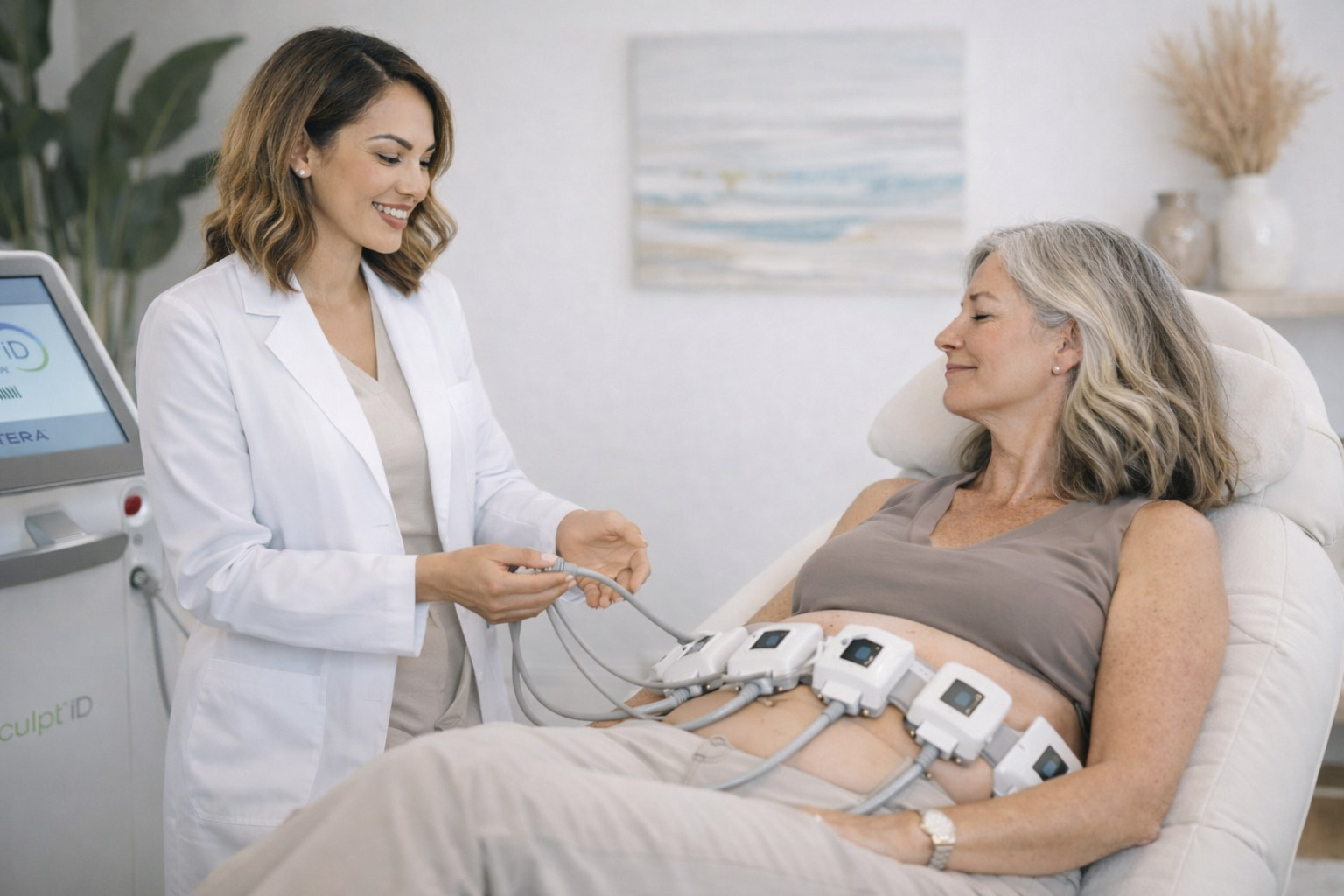
Some areas hold on to fullness even when you are consistent with your routine. If you are looking for a calm, non-surgical option, truSculpt iD is one approach that may help address localized stubborn fat in a measured, science-forward way.
Quick answer
- truSculpt iD is a non-surgical treatment that uses controlled heat to target localized fat under the skin.
- It is often considered for specific areas that feel resistant to diet and exercise.
- Comfort and downtime vary, but many people return to normal activities quickly.
- The right plan depends on your goals, your anatomy, and a clinician evaluation.
What it is
truSculpt iD is a non-invasive body contouring treatment designed to target localized pockets of fat. In plain terms, it delivers controlled energy through the skin to warm the fat layer. The goal is to affect fat cells while keeping the experience straightforward and manageable. It is not a substitute for weight loss, and it is generally discussed as an option for shaping and refinement rather than a sweeping change.
Common causes and contributors to stubborn fat
- Genetics and body shape patterns that influence where fat tends to collect
- Hormonal shifts that can affect fat distribution over time
- Age-related changes in metabolism and muscle mass
- Stress and sleep disruption that can influence appetite and recovery
- Inconsistent nutrition or training cycles that make progress harder to track
- Post-pregnancy or post-weight-change body composition shifts (varies widely)
What you can do at home
If you are aiming for a refined, realistic approach, start with fundamentals that support overall body composition. Focus on consistent strength training, steady daily movement, and a nutrition plan you can maintain. Prioritize sleep and hydration, since both can influence energy, appetite, and recovery. When tracking progress, use more than the scale alone. Photos, measurements, and how clothing fits often provide a clearer picture for body contour goals.
If you are already doing these basics and one area still feels unchanged, that does not mean you are doing anything wrong. It may simply reflect how your body stores fat. That is where an in-office conversation can help you decide whether a targeted treatment makes sense.
Professional options
In-office options for body contouring typically fall into a few broad categories. Your clinician can explain which category aligns with your goals, comfort preferences, and medical history.
- Energy-based body contouring: non-surgical treatments that use controlled energy delivered through the skin to target localized fat.
- Injectable fat reduction: selected approaches that may be used for specific areas, depending on anatomy and candidacy.
- Procedural options: more involved treatments that may be considered for larger changes or certain body goals.
At Waverly DermSpa, we offer truSculpt iD and can help you understand whether it may be appropriate.
When to see a dermatologist
For aesthetic treatments, a dermatologist-led evaluation is especially helpful if you want a plan that accounts for your skin health and medical history. Consider booking a visit if:
- You are unsure whether you are a good candidate or you want a medically guided treatment plan
- You have a history of significant skin sensitivity, scarring, or reactions to procedures
- You are pregnant, nursing, or planning pregnancy and want to discuss timing and safety
- You have an implanted medical device or a complex medical history and want individualized guidance
- You notice new or changing skin symptoms in the area you are considering treating
FAQ
Is truSculpt iD the same as weight loss?
No. It is generally discussed as a way to target localized fat for contouring. It is not designed to replace nutrition, exercise, or medical weight management.
Which areas can be treated?
People commonly ask about areas like the abdomen, flanks, thighs, or under the chin, but suitability depends on your anatomy and goals. A consultation helps define what is realistic for you.
Does it hurt?
Comfort varies. Many people describe a warming sensation during treatment. Your clinician can walk you through what the session typically feels like and how comfort is managed.
How many sessions will I need?
It depends on the area, how your body responds, and the degree of change you are aiming for. Your clinician can recommend a plan after an in-person evaluation.
Is there downtime?
Downtime is often minimal, but responses vary. Some people experience temporary tenderness, swelling, or redness. Your clinician will review what to expect and how to care for the treated area.
Ready to get help?
Schedule an appointment or send a message and our team will get back to you.
Prefer to call? 954-666-3736
Disclaimer
This article is for educational purposes and is not medical advice. For diagnosis and personalized treatment, please book an appointment with a board-certified dermatologist.
