

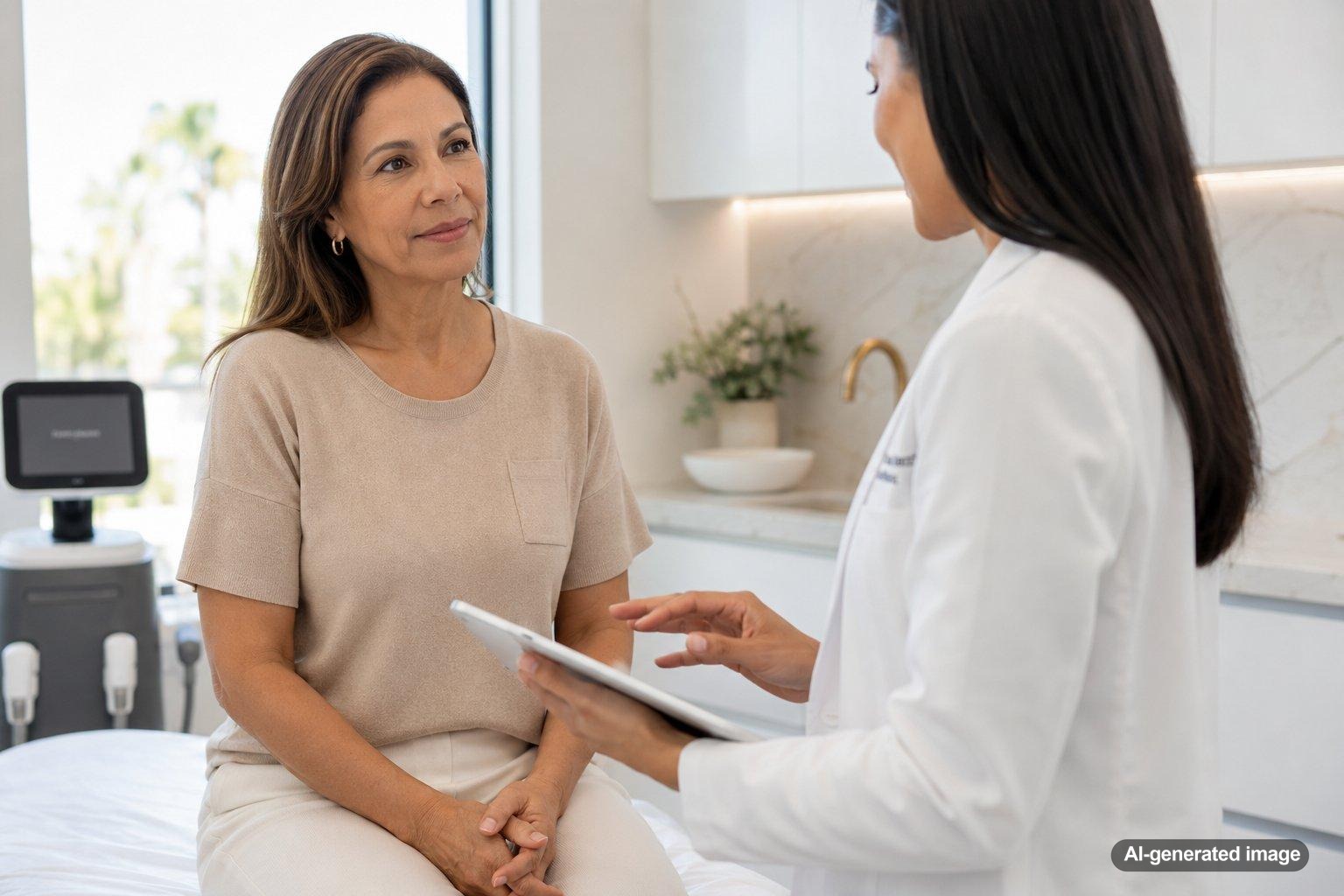
After pregnancy, many people notice that their core feels different. The abdomen may feel softer, less supported, or more difficult to engage, even after returning to normal activity. Diastasis recti, often described as abdominal separation, can be one reason this happens. It involves a widening between the left and right rectus abdominal muscles, and it is commonly associated with pregnancy.
truSculpt Flex does not close a diastasis gap in the same way that targeted rehabilitation or surgery may be discussed for certain cases. Instead, it may help strengthen and re-educate abdominal muscle contractions, which can support a thoughtful postpartum core plan when used appropriately and after clinical evaluation.
Quick answer
- truSculpt Flex uses electrical muscle stimulation to create controlled muscle contractions.
- For postpartum patients, it may help improve abdominal muscle activation and strength over time.
- It should not be viewed as a stand-alone treatment for diastasis recti or a substitute for pelvic floor physical therapy when that is needed.
- A clinician should evaluate whether the abdomen, pelvic floor, and overall postpartum recovery are ready for this type of treatment.
- Results and comfort vary, especially after pregnancy, C-section delivery, or prior abdominal surgery.
What diastasis recti is
Diastasis recti is a separation of the rectus abdominis muscles along the midline of the abdomen. During pregnancy, the growing uterus can stretch the abdominal wall and the connective tissue between these muscles. Some separation can improve naturally after delivery, while some people continue to notice a central bulge, weakness, or difficulty engaging the core.
It is important to understand that diastasis recti is not simply a cosmetic concern. For some people, it can be associated with reduced core support, low back discomfort, pelvic floor symptoms, or a feeling that the abdomen is not coordinating well during movement. A medical evaluation can help distinguish diastasis recti from other concerns, including hernia, surgical changes, or pelvic floor dysfunction.
How truSculpt Flex works
truSculpt Flex is a muscle stimulation device designed to trigger repeated muscle contractions in targeted areas. When used on the abdomen, the goal is to encourage muscle activation through a controlled treatment session. This can be helpful for people who have trouble fully engaging the abdominal muscles on their own after pregnancy, especially when they are rebuilding strength gradually.
In the setting of diastasis recti, the role of truSculpt Flex is best understood as support for muscle conditioning, not as a direct repair of the connective tissue gap. A stronger, better-coordinated abdominal wall may help some patients feel more supported, but the degree of change depends on factors such as the width and depth of separation, postpartum timing, baseline strength, scar tissue, pelvic floor function, and consistency with a broader recovery plan.
Why postpartum evaluation matters
South Florida patients often return to travel, work, fitness, and social schedules quickly after delivery, but the body still needs time to recover. Before considering truSculpt Flex, it is wise to discuss symptoms such as pelvic pressure, urinary leakage, pain, a doming bulge through the midline, C-section scar discomfort, or suspected hernia. These details can change what type of support is appropriate.
A dermatologist or qualified clinician can help determine whether an aesthetic muscle stimulation treatment is reasonable, whether pelvic floor physical therapy should come first, or whether another medical evaluation is needed. This is especially important for postpartum patients who are nursing, recently delivered, planning another pregnancy, or recovering from surgery.
What you can do at home
Conservative postpartum core care usually starts with gentle, controlled movement rather than intense abdominal workouts. Many people benefit from learning how to breathe, engage the deep core, and coordinate the pelvic floor before returning to planks, crunches, or heavy lifting.
- Start with low-pressure movements, such as diaphragmatic breathing and gentle core engagement, if cleared by your clinician.
- Avoid exercises that cause visible doming or coning along the midline until you have guidance.
- Focus on posture, gradual strength, and daily movement rather than rushing into intense abdominal training.
- Consider pelvic floor physical therapy if you have pressure, leakage, pain, or persistent weakness.
- Ask for medical evaluation if you notice a painful bulge, worsening separation, or symptoms that interfere with daily life.
Where truSculpt Flex may fit into a postpartum plan
For the right patient, truSculpt Flex may be considered after the early healing period, once the abdomen is comfortable enough for muscle stimulation and a clinician has reviewed the relevant history. It may be most useful as a complement to safe exercise, pelvic floor support, and realistic body goals rather than as a replacement for them.
At Waverly DermSpa, we offer truSculpt Flex and can help you understand whether it may be appropriate.
When to see a dermatologist or clinician
Consider booking an evaluation if your abdominal changes are persistent, uncomfortable, or confusing. A professional assessment is especially important if you have pain, a firm or tender bulge, symptoms after C-section delivery, suspected hernia, urinary leakage, pelvic pressure, or uncertainty about whether exercise is helping or making symptoms worse.
For patients in Fort Lauderdale and South Florida, this type of evaluation can also help separate postpartum muscle conditioning goals from medical concerns that may need referral or co-management.
FAQ
Can truSculpt Flex close diastasis recti?
truSculpt Flex should not be described as closing diastasis recti. It may help stimulate and strengthen abdominal muscles, but the connective tissue separation itself should be evaluated by a clinician.
Is truSculpt Flex the same as physical therapy?
No. Pelvic floor or postpartum physical therapy teaches coordinated movement, breathing, and safe progression. truSculpt Flex is a device-based muscle stimulation treatment that may be considered as an additional support for selected patients.
How soon after pregnancy can someone consider it?
Timing varies. It depends on delivery type, healing, nursing considerations, symptoms, and medical history. A clinician should clear you before beginning any postpartum aesthetic or muscle stimulation treatment.
Can I do truSculpt Flex after a C-section?
Some patients may be candidates after they have healed, but scar comfort, sensation, timing, and any complications matter. A clinician can evaluate whether treatment near the abdomen is appropriate.
Will it replace exercise?
No. It may support muscle activation, but it does not replace safe movement, progressive strengthening, posture work, or pelvic floor care when those are needed.
Ready to get help?
Schedule an appointment or send a message and our team will get back to you.
Prefer to call? 954-666-3736
Disclaimer: This article is for educational purposes and is not medical advice. For diagnosis and personalized treatment, please book an appointment with a board-certified dermatologist.
Sources & further reading
- Cleveland Clinic – Diastasis Recti: Causes and Treatment
- Mayo Clinic – Separation of the Abdominal Muscles During Pregnancy
- U.S. Food and Drug Administration (FDA) – Electronic Muscle Stimulators
