

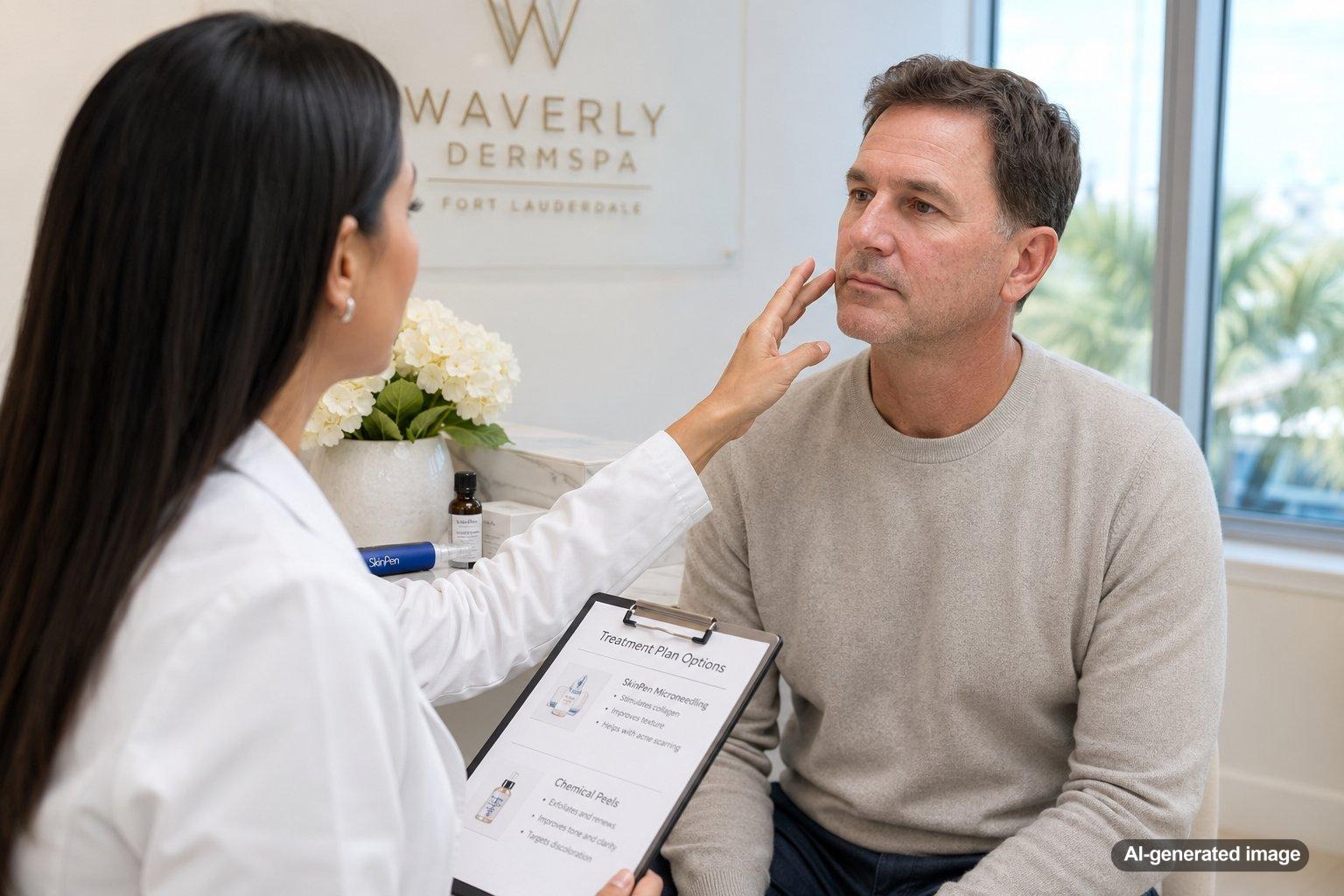
If you are dealing with breakouts and the dark marks they leave behind, the choice between SkinPen and chemical peels depends on what is active now, what is already healing, and how your skin tends to pigment in Fort Lauderdale sun. In general, chemical peels are often considered when acne is still active and the goal is smoother cell turnover, congestion support, and discoloration improvement. SkinPen is usually discussed more for texture, early acne scarring, and post-acne skin quality after active inflammation is better controlled.
The safest answer is not simply one treatment over the other. A dermatologist can evaluate whether you are treating active acne, post-inflammatory hyperpigmentation, acne scars, melasma-like pigment, or a combination of concerns.
Quick answer
- For active inflamed acne: chemical peels may be more commonly considered than microneedling, depending on skin type, acne severity, medications, and irritation risk.
- For post-inflammatory hyperpigmentation: lighter chemical peels and pigment-safe skincare may help, while sun protection is essential in South Florida.
- For pitted or textural acne scars: SkinPen may be discussed once active acne is controlled, because microneedling is often used to improve the appearance of acne scars.
- For darker or pigment-prone skin: conservative settings, careful prep, and strict sun avoidance after procedures matter with either option.
- For mixed concerns: a staged plan may be better than trying to treat active acne, pigment, and texture all at once.
| Concern | SkinPen | Chemical peels |
|---|---|---|
| Active breakouts | Usually not the first choice over actively inflamed acne. | May be considered for some acne patterns after evaluation. |
| Dark post-acne marks | May support overall texture, but pigment strategy still matters. | Often used in carefully selected cases of discoloration. |
| Pitted acne scars | May help improve the appearance of facial acne scars in appropriate adults. | May help some surface irregularity, but scar type matters. |
| Fort Lauderdale sun exposure | Requires diligent sun protection before and after treatment. | Sun avoidance after a peel is especially important to reduce irritation and pigment risk. |
The main difference: active acne versus acne aftermath
Active acne means the skin is still forming clogged pores, inflamed bumps, pustules, or deeper tender lesions. Post-inflammatory hyperpigmentation is the brown, tan, gray-brown, or pinkish discoloration that can remain after a breakout calms down. Acne scars are different again because they involve texture changes, such as pitting or uneven skin contour.
This distinction matters because SkinPen and chemical peels are not interchangeable. A peel may be used to support acne-prone skin and discoloration in certain patients. SkinPen is more often considered when the focus shifts toward post-acne texture and the appearance of scars rather than inflamed acne itself.
Where SkinPen may fit
SkinPen is a microneedling device. Microneedling creates controlled micro-injuries in the skin, which can encourage remodeling over time. It may be discussed for adults with facial acne scars when active breakouts are calmer and the skin barrier is ready for a procedure.
SkinPen is not typically the first move when the face has widespread inflamed acne, open lesions, or irritated skin. Treating over active inflammation can be uncomfortable and may increase the chance of worsening irritation. A dermatologist may first focus on acne control, barrier repair, pigment prevention, and sunscreen consistency before considering microneedling.
At Waverly DermSpa, we offer SkinPen and can help you understand whether it may be appropriate.
Where chemical peels may fit
Chemical peels use carefully selected acids or exfoliating solutions to remove surface layers of skin in a controlled way. Depending on the type and depth of the peel, they may be considered for some patterns of acne, clogged pores, dull texture, and discoloration.
For post-inflammatory hyperpigmentation, lighter and more conservative peels are often preferred over aggressive treatment, especially in pigment-prone skin. The goal is usually gradual improvement, not dramatic peeling for its own sake. In Fort Lauderdale, year-round UV exposure makes sunscreen, hats, shade, and timing especially important after a peel.
How Fort Lauderdale sun changes the decision
South Florida sun exposure can make post-inflammatory hyperpigmentation more persistent. Even a well-chosen treatment can be undermined by incidental UV exposure during errands, driving, beach days, boating, golf, or outdoor dining. Heat and sweating can also make irritated skin feel more reactive after procedures.
For many patients, the most elegant plan is conservative: calm acne first, protect the skin daily, fade pigment gradually, and then decide whether texture treatment is needed. This approach may feel slower, but it can reduce unnecessary irritation and help the skin tolerate treatment better.
What you can do at home
- Use a gentle cleanser rather than scrubbing active breakouts.
- Choose non-comedogenic moisturizer to support the skin barrier.
- Wear broad-spectrum sunscreen every morning, even on cloudy days.
- Avoid picking, squeezing, or scratching acne, since this can increase the chance of dark marks and scarring.
- Pause harsh exfoliation if your skin is burning, peeling, or stinging.
- Tell your clinician about retinoids, acne medications, recent isotretinoin use, cold sore history, pregnancy, nursing, or a tendency to form dark marks or raised scars.
Professional options: choosing a staged plan
A dermatologist may recommend a staged approach rather than choosing SkinPen or chemical peels in isolation. For example, the first phase may focus on controlling acne with an appropriate routine or prescription options. The next phase may address post-inflammatory hyperpigmentation with pigment-safe skincare, selected peels, or other office treatments. Once breakouts are controlled, texture concerns such as pitted acne scars can be evaluated separately.
This is especially important when acne, melasma-like pigmentation, sensitive skin, or darker skin tones overlap. The right plan should consider your skin history, current medications, upcoming travel, sun exposure habits, and tolerance for downtime.
When to see a dermatologist
- Acne is painful, deep, cystic, or leaving marks after most breakouts.
- Dark spots are getting darker despite sunscreen.
- You are unsure whether the discoloration is acne-related, melasma, sun damage, or another condition.
- You have a history of keloids, raised scars, cold sores, or pigment changes after procedures.
- Your skin is irritated from trying multiple acids, retinoids, scrubs, or spot treatments at once.
- You are pregnant, nursing, or taking prescription acne medication and want to know which procedures are appropriate.
FAQ
Is SkinPen better than chemical peels for acne marks?
It depends on whether the marks are flat discoloration or true textural scars. Flat post-inflammatory hyperpigmentation may respond better to pigment-focused skincare, sunscreen, and selected peels. Pitted acne scars may lead your dermatologist to discuss microneedling once active acne is controlled.
Can I get SkinPen if I still have active acne?
Active inflamed acne usually needs evaluation first. A clinician may recommend calming breakouts before microneedling, especially if there are open, tender, or widespread lesions.
Can chemical peels make hyperpigmentation worse?
They can in some situations, particularly if the peel is too aggressive, the skin is not prepared, or sun exposure occurs during healing. This is why peel selection, aftercare, and pigment risk assessment are important.
Which option has less downtime?
Downtime varies by peel type, microneedling depth, skin sensitivity, and the concern being treated. Lighter treatments may involve temporary redness, dryness, flaking, or sensitivity, while more intensive treatments may require more recovery time.
Should I treat acne or dark marks first?
Often, controlling ongoing breakouts comes first because new acne can keep creating new marks. Once acne is steadier, pigment and texture can be addressed more strategically.
Is this safe for darker skin tones?
Many people with darker or pigment-prone skin can have cosmetic procedures, but the treatment plan should be more conservative and individualized. A dermatologist can evaluate risk and choose options that respect your skin’s pigment response.
Ready to get help?
Schedule an appointment or send a message and our team will get back to you.
Prefer to call? 954-666-3736
Disclaimer
This article is for educational purposes and is not medical advice. For diagnosis and personalized treatment, please book an appointment with a board-certified dermatologist.
Sources & further reading
- U.S. Food and Drug Administration (FDA) – Microneedling Devices
- American Academy of Dermatology (AAD) – Microneedling can fade scars, uneven skin tone, and more
- American Academy of Dermatology (AAD) – Chemical peels: Overview
- Cleveland Clinic – Hyperpigmentation: What it is, Causes, and Treatment
