

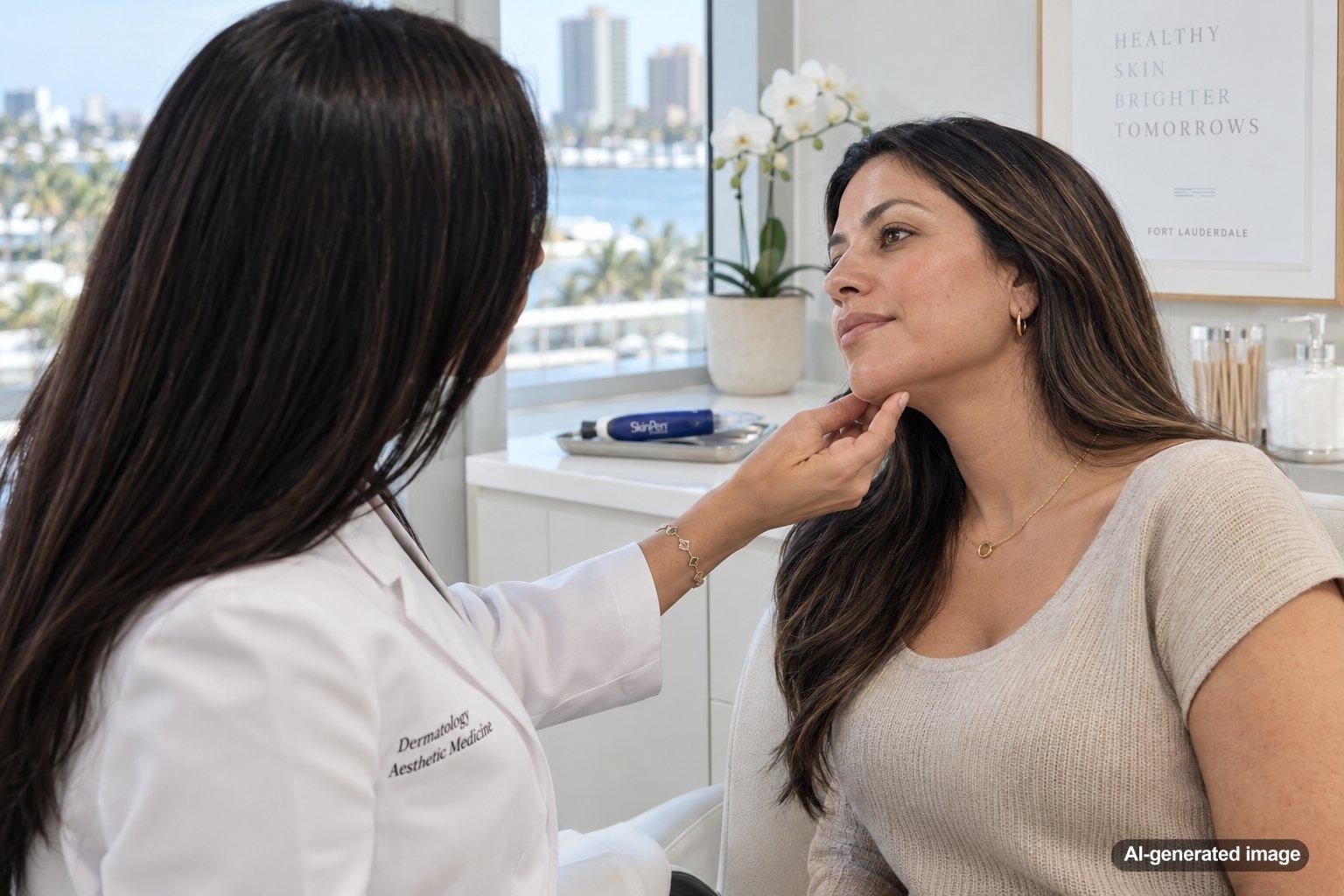
Acne scars along the jawline can be especially noticeable because light catches the curves and shadows of the lower face. SkinPen is a professional microneedling device that may help soften the appearance of certain facial acne scars by creating controlled micro-injuries that stimulate the skin’s natural remodeling response.
For jawline scarring, the important question is not simply whether microneedling is available, but whether the scar type, skin condition, and treatment area make it an appropriate option. A dermatologist can evaluate the scars and discuss whether SkinPen alone or a broader acne-scar treatment plan makes sense.
Quick answer
- SkinPen is a professional microneedling system used to improve the appearance of facial acne scars in appropriate adult patients.
- It may be useful for textural acne scars along the jawline, but different scar types can respond differently.
- Active acne, irritation, infection, or other skin concerns may affect when treatment should be performed.
- Results develop gradually as the skin remodels, and the number of sessions needed varies from person to person.
- A dermatologist can determine whether microneedling or another scar-focused approach is more appropriate for your skin.
What SkinPen microneedling does
SkinPen uses very small needles to create controlled punctures in the skin. This process initiates a healing response that includes new collagen formation. As remodeling occurs, some acne scars may become less noticeable and the surface of the skin may appear smoother.
The U.S. Food and Drug Administration regulates certain microneedling products as medical devices. SkinPen Precision is a Class II powered microneedling device, and FDA documentation includes an indication for improving the appearance of facial acne scars in adults aged 22 years and older. Microneedling should be performed with an appropriate professional device and under qualified clinical supervision.
Why the jawline deserves a careful approach
The jawline is not a completely flat treatment area. It transitions from the cheek to the lower face and curves around the jawbone toward the neck. Scar depth and texture can also vary significantly within a small area. A clinician can adjust treatment technique according to the anatomy and the individual scars rather than treating the entire lower face identically.
It is also common for people to have more than one type of acne scar. Some scars are shallow depressions, while others are deeper or more sharply defined. Because microneedling is not the only approach used for acne scarring, identifying the dominant scar pattern can help guide treatment planning.
Which acne scars may be considered for microneedling?
Microneedling is generally used for depressed or textural acne scars rather than every mark left behind after acne. Flat red or brown discoloration, raised scars, and deep tethered depressions can require a different strategy or a combination of approaches.
A dermatologist may examine the jawline under different lighting and from multiple angles to distinguish true textural scarring from discoloration. This distinction matters because improving pigmentation and improving indentation are different treatment goals.
What about active jawline acne?
If breakouts are still occurring along the jawline, controlling active acne may be part of the plan before or alongside scar treatment. Treating scars while new inflammatory lesions continue to form can make long-term improvement more difficult because additional scars may develop.
Do not attempt aggressive at-home needling over inflamed, irritated, or infected skin. If you have persistent jawline breakouts or are unsure whether a bump represents acne, a dermatologist can evaluate the area before cosmetic treatment.
What treatment may feel like
Professional microneedling involves passing a sterile needle cartridge across the treatment area in a controlled manner. A clinician may use topical numbing beforehand depending on the treatment protocol. During treatment, people commonly describe pressure, vibration, or a prickling sensation rather than a uniform feeling across every part of the face.
Temporary redness, sensitivity, swelling, pinpoint bleeding, dryness, or a tight sensation can occur after microneedling. The intensity and duration vary according to the individual and the treatment performed. Your clinician should provide specific aftercare instructions based on your skin and treatment.
Supporting the skin after SkinPen
After microneedling, the skin barrier needs time to recover. Follow the aftercare instructions provided by your clinician and avoid adding unnecessary irritation while the area settles.
- Use the post-treatment products recommended by your clinician.
- Avoid picking, scratching, or deliberately exfoliating flaking skin.
- Protect treated skin from excessive sun exposure.
- Ask before restarting retinoids, exfoliating acids, scrubs, or other potentially irritating products.
- Contact the treating office if you develop symptoms that seem unusual or concerning.
When another acne-scar treatment may be considered
Microneedling is one of several approaches dermatologists may use for acne scars. Depending on scar shape, depth, skin tone, pigmentation concerns, and treatment goals, professional options can include chemical resurfacing, laser procedures, radiofrequency-based treatments, injectable approaches, or minor scar procedures. Combination treatment may sometimes be considered when one method cannot adequately address every type of scar present.
A consultation is useful because the most noticeable jawline scars may not all have the same underlying structure. Treatment planning can therefore focus on the specific scars rather than applying the same procedure to every mark.
When to see a dermatologist before microneedling
Professional evaluation is especially important if you have active or severe acne, an unexplained rash, significant irritation, a possible skin infection, a history of unusual scarring, or another skin condition affecting the treatment area. You should also tell your clinician about medications, recent procedures, and products you are using because these details can influence treatment timing and aftercare.
If your main concern is a changing, bleeding, painful, or otherwise unusual spot rather than a stable acne scar, have it evaluated before pursuing cosmetic treatment.
FAQ
Can SkinPen completely remove jawline acne scars?
Microneedling is intended to improve the appearance of certain acne scars rather than erase every scar. The degree of improvement varies with scar type, depth, skin characteristics, treatment plan, and individual healing.
Is SkinPen suitable for different skin tones?
The American Academy of Dermatology describes microneedling as a treatment that can be used across skin tones. Individual evaluation still matters because pigmentation history, active inflammation, and other skin concerns can influence treatment planning.
How many SkinPen sessions are needed for jawline scars?
There is no single session count that applies to everyone. Scar depth, scar pattern, treatment response, and personal goals all influence the plan. Your clinician can reassess the jawline between sessions and discuss whether additional treatment may be appropriate.
Can I microneedle jawline acne scars at home?
Professional microneedling devices penetrate living skin and require appropriate technique, hygiene, and patient selection. At-home needling is not equivalent to dermatologist-directed treatment and can create unnecessary irritation or complications when performed improperly.
Does SkinPen help dark marks left by acne?
SkinPen is primarily used to address texture and certain acne scars. Flat discoloration after acne is a different concern and may require a separate skincare or treatment strategy. A dermatologist can distinguish pigmentation from true scar texture during an examination.
At Waverly DermSpa, we offer SkinPen and can help you understand whether it may be appropriate.
Ready to get help?
Schedule an appointment or send a message and our team will get back to you.
Prefer to call? 954-666-3736
This article is for educational purposes and is not medical advice. For diagnosis and personalized treatment, please book an appointment with a board-certified dermatologist.
Sources & further reading
- U.S. Food and Drug Administration (FDA) – Microneedling Devices: Getting to the Point on Benefits, Risks and Safety
- American Academy of Dermatology (AAD) – Microneedling can fade scars, uneven skin tone, and more
- American Academy of Dermatology (AAD) – Acne scars: Consultation and treatment
