

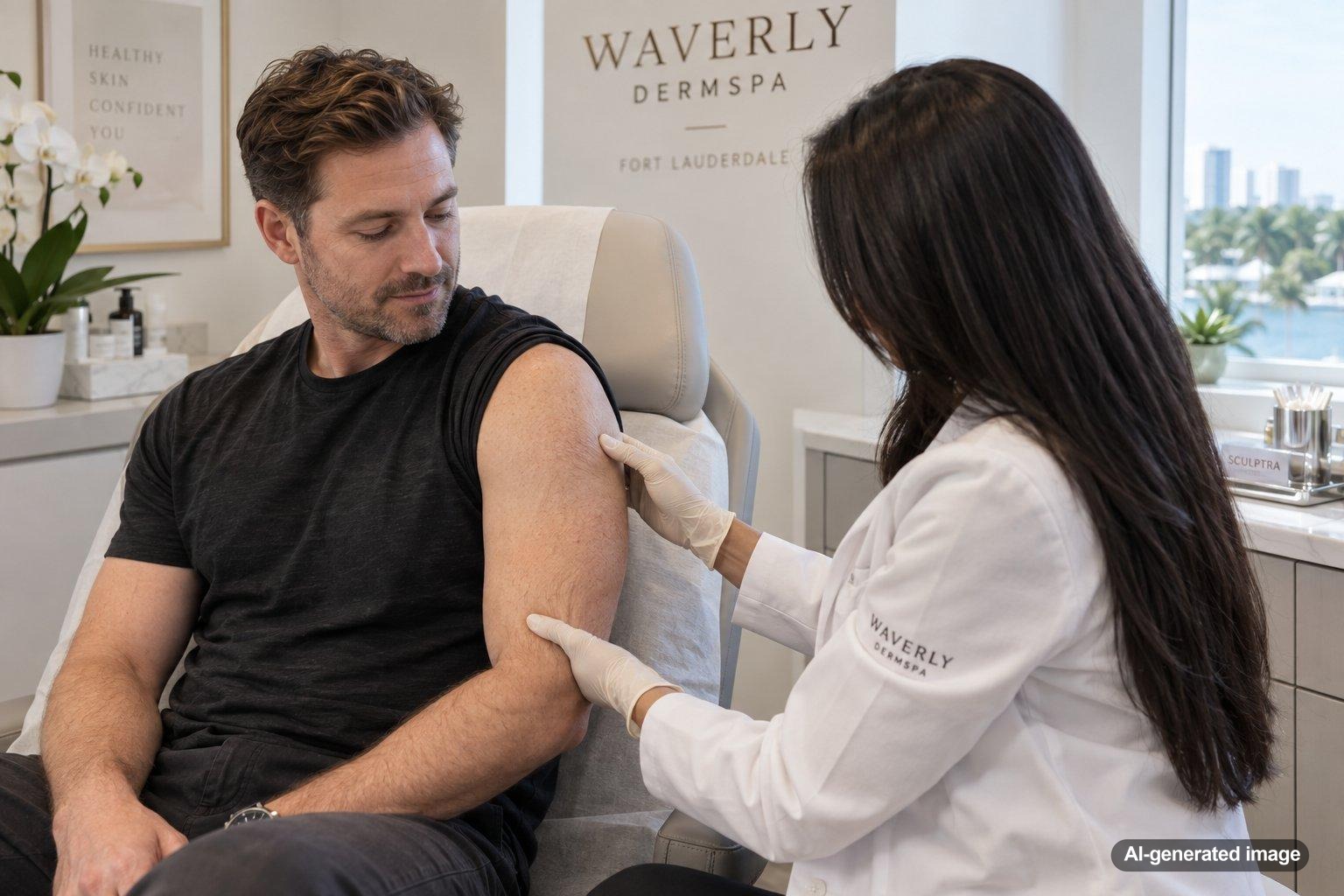
Crepey skin on the upper arms can become more noticeable as the skin gradually loses firmness, thickness, and structural support. For people bothered by that thin, finely wrinkled texture, Sculptra may be one option a dermatologist discusses as part of a broader treatment plan.
Rather than acting like a traditional volumizing filler, Sculptra is used to encourage gradual collagen production in treated tissue. When appropriately selected and placed, that collagen-building approach may help improve the overall quality and support of upper-arm skin over time. The right approach depends on your skin, anatomy, degree of laxity, and treatment goals.
Quick answer
- Sculptra may help improve the appearance of crepey upper-arm skin by supporting gradual collagen production.
- Changes tend to develop progressively rather than appearing immediately.
- It is generally considered for skin quality and structural support rather than dramatic tightening.
- The number and spacing of treatments vary from person to person.
- A dermatologist can evaluate whether Sculptra or another approach makes more sense for your upper arms.
What crepey upper-arm skin actually is
Crepey skin describes a thin, finely wrinkled texture that can resemble crepe paper. On the upper arms, it may appear as delicate horizontal or crisscrossing lines, reduced firmness, or skin that looks less smooth when the arm moves.
Several normal changes can contribute. With age, skin produces less collagen and elastin, while changes in underlying fat and connective tissue can reduce support. Long-term sun exposure can also affect texture and elasticity. Genetics, weight changes, and individual skin characteristics may influence how visible these changes become.
How Sculptra may help
Sculptra is an injectable treatment designed to stimulate the body’s own collagen response. In areas where the skin appears thin or lacks structural support, the goal is to encourage a gradual improvement in tissue quality rather than simply filling individual lines.
For the upper arms, a clinician may consider Sculptra when crepiness is related partly to reduced dermal support. As collagen develops, some patients may notice skin that appears smoother, somewhat firmer, or better supported. Results vary, and the degree of improvement depends on factors such as skin quality, age, treatment technique, and the amount of laxity present.
What Sculptra can and cannot address
Sculptra can be useful to discuss when the primary concern is thinning, textural change, or loss of collagen support. It is not the same as surgically removing loose skin, and it should not be expected to create the degree of tightening associated with an arm lift.
People with more substantial skin laxity may need a different approach or a combination strategy. Depending on the individual, a dermatologist may discuss energy-based treatments, microneedling-based procedures, topical skin care, or other options alongside or instead of injectable collagen stimulation.
What treatment is like
Before treatment, your clinician evaluates the upper arms, discusses your goals, and determines whether your skin characteristics are a reasonable match for the procedure. The treatment itself involves strategically placed injections across the selected area.
Because the goal is collagen stimulation, visible change is typically gradual. Your clinician may recommend more than one treatment session depending on the extent of the area and your response. Treatment plans should be individualized rather than based on a fixed number of sessions for everyone.
Temporary swelling, tenderness, redness, or bruising can occur after injectable treatments. Your clinician should review expected aftercare, activity guidance, and symptoms that warrant a call to the office.
What you can do at home
Home care cannot replace lost structural support, but consistent habits can help protect the skin and support its overall appearance.
- Use broad-spectrum sun protection on exposed arms.
- Moisturize regularly to reduce dryness that can make fine texture look more noticeable.
- Avoid aggressive scrubbing or frequent irritation.
- Maintain a consistent skincare routine instead of frequently switching between harsh products.
- Ask your dermatologist which body-care ingredients are appropriate for your skin if you want to address texture at home.
Professional options for crepey upper arms
There is no single procedure that fits every type of upper-arm crepiness. A dermatologist may consider several categories of treatment depending on whether the main concern is skin texture, collagen loss, laxity, volume change, or a combination of factors.
- Injectable collagen stimulation: Treatments such as Sculptra may be considered when additional dermal support is a goal.
- Microneedling or energy-based treatments: These may be discussed for texture and collagen remodeling depending on the skin and device.
- Topical skin care: A dermatologist may recommend products that complement in-office treatment and support skin quality.
- Combination treatment: Some patients have more than one contributor to upper-arm changes, so combining treatment categories may be considered.
At Waverly DermSpa, we offer Sculptra and can help you understand whether it may be appropriate.
When to see a dermatologist
A consultation is useful when you want to understand what is causing the appearance of your upper arms and which treatment category realistically matches your goals. A dermatologist can distinguish primarily textural crepiness from significant laxity, volume change, sun-related damage, or other skin concerns.
You should also have any new, changing, painful, bleeding, or otherwise concerning skin lesion evaluated rather than assuming it is simply part of normal skin aging.
FAQ
Does Sculptra tighten loose upper-arm skin?
Sculptra is better thought of as a collagen-stimulating treatment than a direct skin-tightening procedure. Improved collagen support may make some skin appear firmer or smoother, but it does not remove significant excess skin.
Is Sculptra useful for very thin, crepey skin?
It may be considered when reduced collagen support contributes to the appearance, but very thin skin requires careful evaluation and technique. A dermatologist can determine whether injectable treatment, another procedure, or a combination approach is more appropriate.
How quickly does the upper-arm skin change?
Sculptra-related changes are generally gradual because the treatment is intended to encourage collagen production over time. The pace and degree of visible change vary among individuals.
How many Sculptra sessions are needed for the upper arms?
There is no universal number. The treatment area, skin quality, degree of crepiness, goals, and response to previous sessions can all influence the plan.
Can Sculptra be combined with other treatments?
In some cases, clinicians may discuss combining collagen stimulation with other approaches for texture or laxity. Whether a combination makes sense depends on your skin and should be determined after an in-person evaluation.
Ready to get help?
Schedule an appointment or send a message and our team will get back to you.
Prefer to call? 954-666-3736
This article is for educational purposes and is not medical advice. For diagnosis and personalized treatment, please book an appointment with a board-certified dermatologist.
