

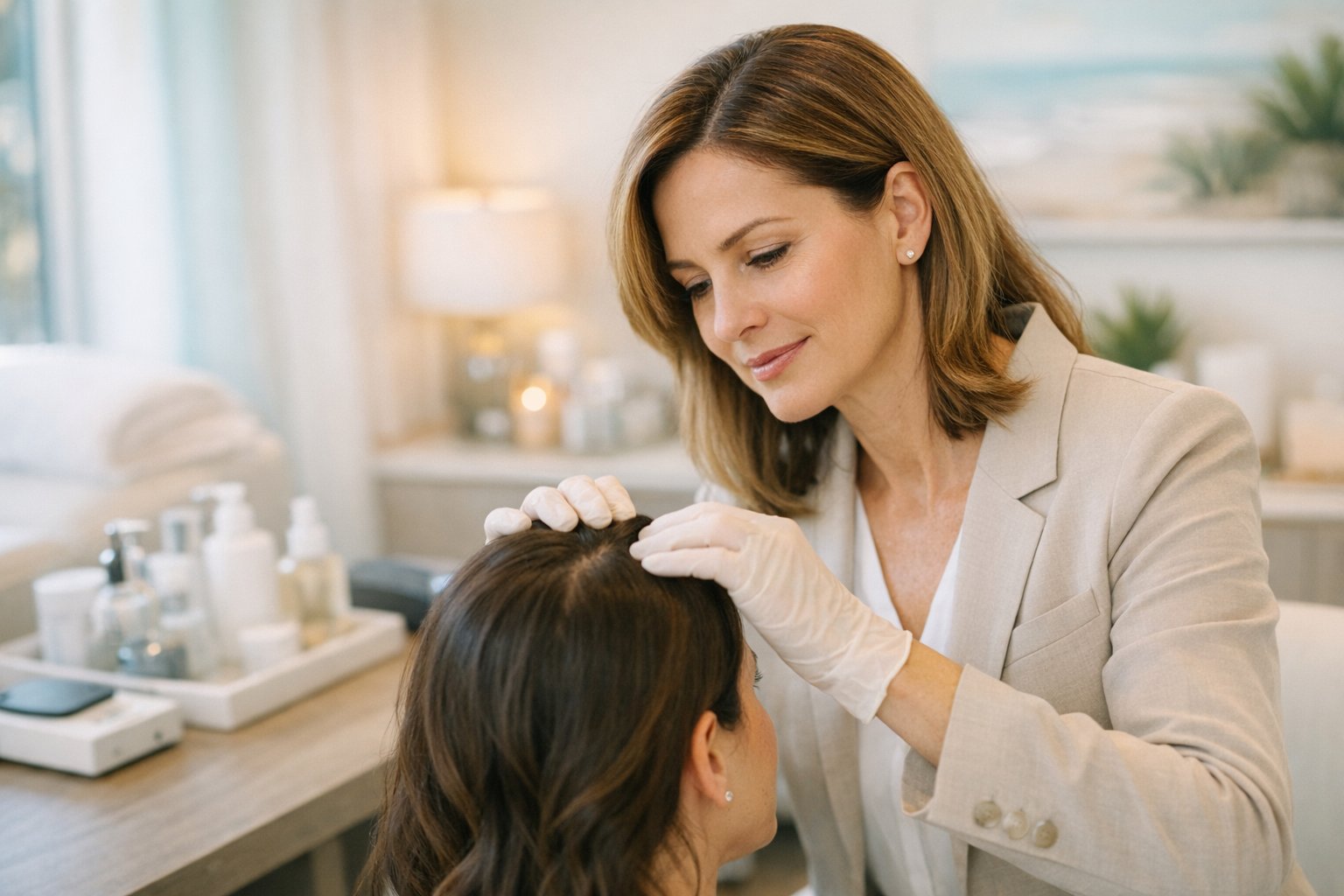
Scalp acne can be surprisingly uncomfortable and frustrating, especially when it feels hidden under your hair but acts like it wants all your attention. The good news is that many cases improve with consistent, gentle habits and a few targeted changes to your routine.
Quick answer
- Scalp acne is often linked to oil, sweat, friction, and product buildup around hair follicles.
- A simple routine (regular cleansing, lighter styling products, and less picking) may help calm flare-ups.
- Persistent, painful, or widespread bumps are worth a dermatology visit to confirm what is going on and discuss options.
What it is
People use the term “scalp acne” to describe pimple-like bumps on the scalp. These bumps typically form around hair follicles, where oil, dead skin, sweat, and residue from products can collect. Some scalp breakouts behave like facial acne, while others look similar but have different causes. Because the scalp is warm, often covered by hair, and prone to friction, it can be an easy place for bumps to linger.
Common causes and triggers
- Oil and sweat: Heat, workouts, and humid weather can leave sweat and oil sitting on the scalp longer than you realize.
- Product buildup: Heavy oils, waxes, pomades, dry shampoo, and leave-in products can accumulate and contribute to clogged follicles.
- Not rinsing thoroughly: Conditioner or styling products left near the scalp (especially at the hairline and nape) can be a common trigger.
- Friction and pressure: Hats, helmets, tight ponytails, headbands, and frequent scratching can irritate follicles.
- Overwashing or harsh cleansing: Stripping shampoos and aggressive scrubbing can disrupt the scalp barrier and make irritation worse.
- Stress and sleep changes: These can be associated with flare-ups for many people, even if they are not the only factor.
- Hot tools and occlusion: Frequent heat styling and keeping the scalp damp under a towel or cap for long periods can increase irritation.
What you can do at home
Home care is about reducing buildup and irritation while keeping the scalp comfortable. Aim for small, consistent steps rather than trying to “scrub it away.”
- Cleanse after heavy sweating: If you work out or spend time outdoors, washing sooner can help remove sweat and residue that may contribute to clogged follicles.
- Choose lighter styling products: If breakouts cluster near the hairline, crown, or nape, consider using fewer leave-in products on the scalp and keeping oils and pomades mid-length to ends.
- Rinse like you mean it: Take an extra minute to rinse shampoo and conditioner thoroughly, especially behind the ears, at the nape, and along the hairline.
- Keep hands off: Picking can increase inflammation and raise the chance of lingering marks or tenderness.
- Loosen tension: Switch up tight styles, rotate where you place ponytails, and take breaks from friction-heavy accessories when you can.
- Refresh tools and linens: Regularly clean brushes, combs, and hats, and consider changing pillowcases more often if your scalp is flaring.
- Go gentle with exfoliation: Avoid abrasive scrubs or sharp tools on the scalp. If you use any exfoliating products, keep it conservative and stop if you notice stinging, increased redness, or scaling.
If you are using over-the-counter scalp products, follow label directions carefully and keep the routine simple so you can tell what is helping (or irritating). If your scalp feels persistently sore, intensely itchy, or starts shedding more than usual, it is worth getting checked rather than escalating products on your own.
Professional options
If bumps keep coming back, a dermatologist can evaluate whether this is acne, irritation, or another follicle-related condition that can look similar. Professional care may include:
- Customized topical routines: Options can be selected based on your scalp sensitivity, hair type, and how widespread the bumps are.
- Prescription therapies (when appropriate): If needed, your clinician can discuss prescription options at a high level and help you decide what fits your situation.
- In-office support: Some patients benefit from clinician-guided scalp care and guidance on product selection, especially when buildup and irritation are major drivers.
Because the scalp can be tricky to assess through hair, an in-person exam is often the fastest way to get clarity and avoid unnecessary trial-and-error.
When to see a dermatologist
- Bumps are painful, deep, or spreading quickly.
- You notice patchy hair thinning, increased shedding, or tender areas that do not settle down.
- There is significant redness, warmth, crusting, or drainage.
- Itching is severe or disrupts sleep.
- Over-the-counter routines have not helped after several weeks of consistent, gentle use.
- You are unsure what the bumps are and want a clear plan that matches your scalp and hair type.
FAQ
Is scalp acne the same as facial acne?
It can be similar, but the scalp has different conditions that can mimic acne. An exam can help confirm what is actually happening so you do not treat the wrong problem.
Can hair products cause scalp breakouts?
Some products can contribute, especially if they are heavy, occlusive, or left close to the scalp. Many people notice improvement when they simplify products and rinse thoroughly.
Does dry shampoo make it worse?
For some people, frequent dry shampoo use can add residue and contribute to buildup. If you rely on it, use it lightly, brush it out well, and consider washing sooner during flare-ups.
Should I pop scalp pimples?
It is best to avoid picking or popping. The scalp is sensitive, and manipulation can increase inflammation and tenderness.
What if it itches more than it hurts?
Itch can have several causes, including irritation or scalp scaling. If itch is intense, persistent, or paired with increased shedding, it is worth getting evaluated.
Ready to get help?
Schedule an appointment or send a message and our team will get back to you.
Prefer to call? 954-666-3736
Disclaimer: This article is for educational purposes and is not medical advice. For diagnosis and personalized treatment, please book an appointment with a board-certified dermatologist.
