

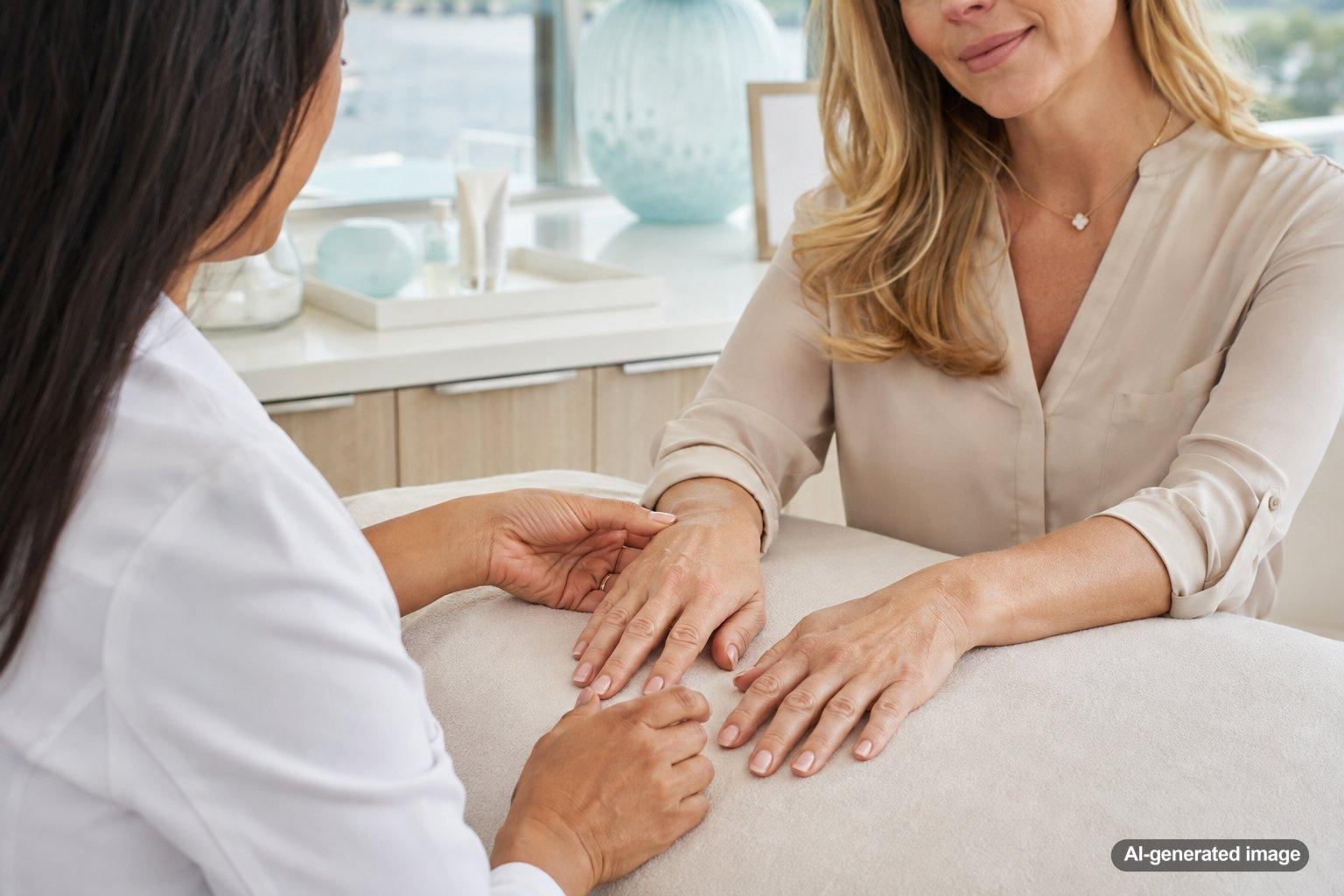
The hands often reveal changes associated with aging even when the face still looks refreshed. Gradual volume loss can make veins, tendons, bones, and knuckles appear more prominent, while sun exposure may add fine lines and uneven tone. Radiesse is an injectable filler that may restore cushioning beneath the skin on the back of the hands and create a smoother transition around visible structures.
Hand rejuvenation requires careful planning because the anatomy is delicate and every person’s concerns are different. A dermatologist can determine whether volume loss is the main issue, explain what filler can and cannot change, and discuss whether Radiesse fits your goals.
Quick answer
- Radiesse is a calcium hydroxylapatite-based dermal filler that can add volume beneath the skin on the back of the hands.
- By restoring cushioning, it may soften the appearance of prominent veins, tendons, bones, and wrinkles near the knuckles.
- It does not treat the joints themselves or correct every cause of hand aging.
- Swelling, bruising, redness, tenderness, and temporary difficulty using the hands can occur after treatment.
- A consultation is important because hand anatomy, skin quality, medical history, and treatment goals affect candidacy.
What is Radiesse hand rejuvenation?
Radiesse is a dermal filler made with calcium hydroxylapatite microspheres suspended in a gel carrier. When placed in an appropriate tissue plane, it provides structural support and may encourage collagen production over time. For hand rejuvenation, treatment generally focuses on the back of the hand, where age-related volume loss can expose veins, tendons, and bony contours.
The goal is not to make the hands look puffy or erase their natural anatomy. Thoughtful treatment aims to replace some of the cushioning that has diminished, creating a softer and more balanced appearance. Because the product is placed in soft tissue, treatment does not involve injecting into knuckles, joints, tendons, ligaments, or bone.
Why do knuckles and hand wrinkles become more noticeable?
Several overlapping changes can influence the appearance of aging hands:
- Volume loss: The natural padding beneath the skin may become thinner, making underlying structures more visible.
- Collagen changes: Skin can become thinner, less elastic, and more prone to fine creases.
- Repeated movement: Bending and straightening the fingers naturally creates folds around the knuckles.
- Sun exposure: Cumulative ultraviolet exposure can contribute to rough texture, spots, and uneven pigmentation.
- Genetics and body composition: Some people naturally have leaner hands or more visible veins and tendons.
- Weight changes: Loss of soft-tissue volume may make the hands appear more angular.
Radiesse mainly addresses the volume component. It may make knuckle creases look less pronounced by improving the surrounding contour, but it cannot stop normal joint movement or remove every line.
What can you do at home?
Skincare cannot replace lost volume, but consistent habits may support skin quality and help limit additional sun-related changes:
- Apply broad-spectrum sunscreen to the backs of the hands and reapply after prolonged outdoor exposure or hand washing.
- Use a moisturizer after washing to reduce dryness and temporarily soften the look of fine lines.
- Wear protective gloves when cleaning, gardening, or working with irritating substances.
- Avoid attempting filler injections yourself or using needle-free filler devices.
- Photograph your hands in consistent lighting if you want to monitor gradual changes before pursuing treatment.
Brown spots, rough patches, fragile skin, and prominent veins may require different approaches. A dermatologist can separate concerns caused by volume loss from those related to pigmentation, texture, vascular visibility, or an underlying medical condition.
What happens during professional treatment?
A consultation usually begins with an examination of the hands at rest and in motion. Your clinician may review allergies, medications, previous filler treatments, bleeding concerns, hand injuries, joint or tendon conditions, skin infections, inflammatory conditions, and your desired level of correction.
If treatment is appropriate, the skin is cleansed and the filler is carefully placed on the back of the hand using a needle or cannula, depending on the clinician’s technique and the treatment plan. The product may then be gently distributed to create an even contour. The amount and placement should be individualized rather than based on a standard formula.
Temporary swelling, bruising, redness, pain, itching, or tenderness can occur. Some people may briefly find certain hand activities less comfortable. Less common but important risks include infection, nodules, open wounds, allergic reactions, tissue injury, and unintended injection into a blood vessel. Your clinician should explain the product-specific risks, aftercare, and symptoms that require urgent attention before treatment.
Results and their duration vary with anatomy, product placement, the amount used, tissue characteristics, and individual response. Maintenance decisions should be based on an in-person reassessment rather than a fixed schedule.
At Waverly DermSpa, we offer Radiesse and can help you understand whether it may be appropriate.
When should you see a dermatologist?
Schedule an evaluation if you are considering hand filler, are unsure whether volume loss is causing the changes you see, or have a history of significant allergies, bleeding problems, hand circulation concerns, joint disease, tendon disease, scarring, or reactions to injectable treatments. Treatment may need to be postponed when the skin is inflamed or infected.
After any dermal filler procedure, seek immediate medical attention for unusual or escalating pain, skin that turns white, gray, or blue, sudden weakness or numbness, trouble speaking, vision changes, severe headache, dizziness, facial drooping, or confusion. Contact the treating office promptly about worsening redness, drainage, fever, persistent swelling, an open sore, or a firm and painful lump.
Frequently asked questions
Can Radiesse smooth wrinkles directly over the knuckles?
It may soften their appearance by restoring volume around visible bones, tendons, and creases. Some lines created by normal finger movement will remain, and filler should not be injected into the joints, tendons, ligaments, or bone.
Will hand filler hide every vein?
No. Added cushioning may make some veins less prominent, but it does not remove veins or change circulation. A natural result generally preserves normal hand anatomy.
Does Radiesse improve brown spots?
Radiesse is intended to address volume and contour rather than pigmentation. Sun spots and uneven tone may require a separate dermatologic evaluation and a different treatment plan.
How much downtime should I expect?
Experiences vary. Bruising, swelling, tenderness, redness, or temporary discomfort with hand activities may occur. Your clinician can provide individualized aftercare guidance based on the procedure performed.
Who may not be a good candidate?
Candidacy depends on medical history and examination. Active inflammation or infection, certain allergies, bleeding concerns, pregnancy or nursing, and diseases involving the joints, tendons, or blood vessels of the hand may affect whether treatment should proceed. A dermatologist can evaluate these factors.
Can Radiesse be removed like hyaluronic acid filler?
Radiesse is not a hyaluronic acid filler and does not have the same straightforward dissolving option. This makes careful product selection, conservative planning, and treatment by an appropriately trained medical professional especially important.
Ready to get help?
Schedule an appointment or send a message and our team will get back to you.
Prefer to call? 954-666-3736
Disclaimer
This article is for educational purposes and is not medical advice. For diagnosis and personalized treatment, please book an appointment with a board-certified dermatologist.
Sources & further reading
- U.S. Food and Drug Administration (FDA) – Dermal Fillers (Soft Tissue Fillers)
- Cleveland Clinic – Dermal Fillers: What They Are, Types, Benefits & Side Effects
