

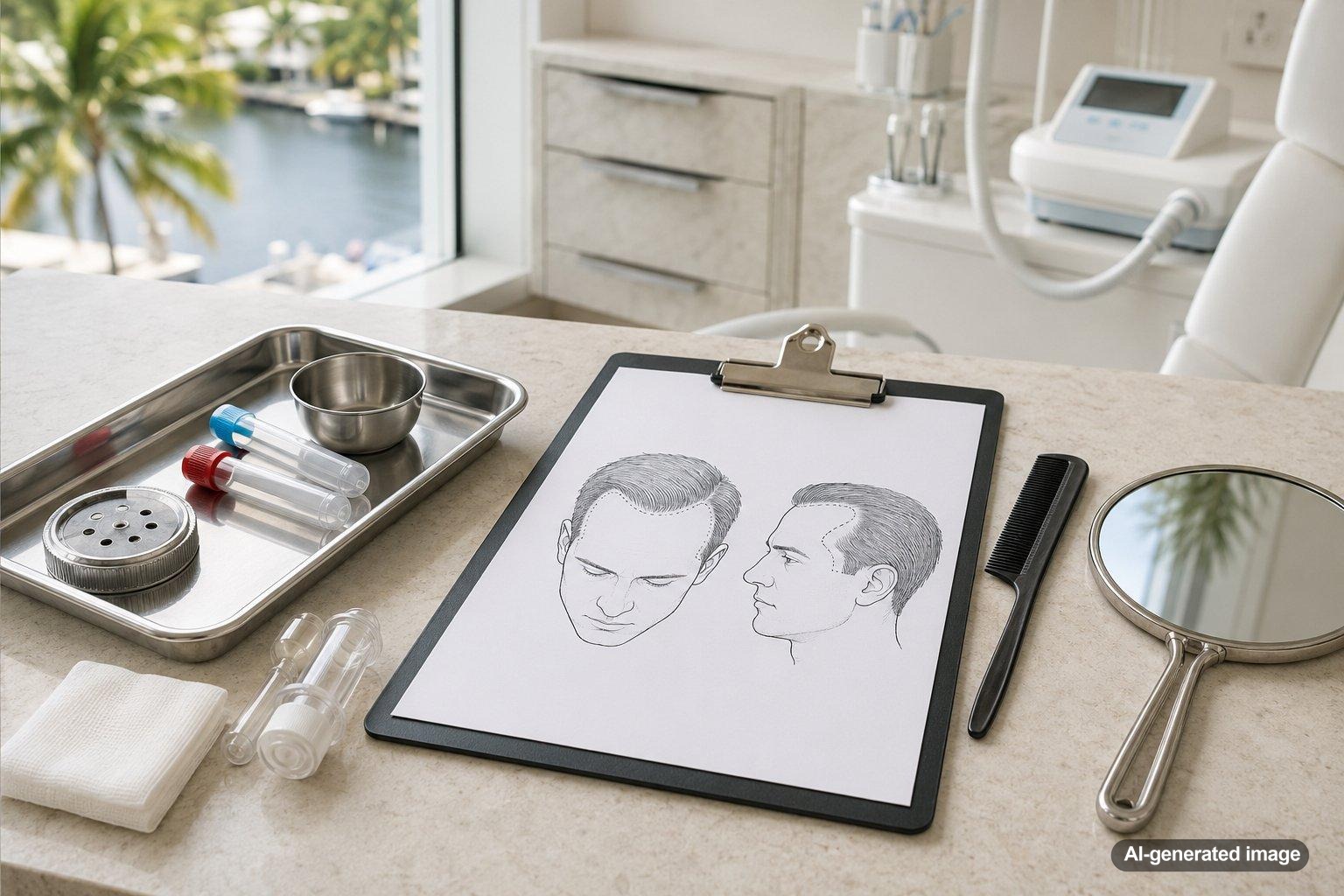
A receding hairline can develop gradually, making it difficult to know whether you are seeing a temporary change or an established pattern of hair loss. For many men, the temples begin to thin first, followed by a more noticeable change across the front of the scalp. PRFM is an office-based treatment that may be considered as part of a personalized plan for certain types of early or moderate thinning.
PRFM does not create new hair follicles, and it is not appropriate for every cause or stage of hair loss. A dermatologist should first evaluate the pattern, scalp condition, medical history, and amount of active follicle function before recommending treatment.
Quick answer
- PRFM uses a concentrated portion of the patient’s own blood to deliver platelets and fibrin to targeted areas of the scalp.
- It may be considered for men who still have functioning follicles along a thinning or receding hairline.
- Results vary, and a series of treatments may be discussed rather than a single appointment.
- PRFM may be combined with other hair loss options when medically appropriate.
- A dermatologist evaluation is important because not every receding hairline has the same cause.
What is PRFM for hair loss?
PRFM stands for platelet-rich fibrin matrix. The treatment begins with a small blood draw. The blood is processed to separate and concentrate platelets and other components that are then prepared in a fibrin matrix. This material is placed into selected areas of the scalp through a series of small injections.
Platelets contain signaling proteins involved in the body’s normal repair processes. The fibrin matrix is intended to provide a supportive structure that holds the concentrated material in the treated area. In hair loss care, PRFM may help support the environment around existing follicles, but individual response depends on factors such as the diagnosis, duration of thinning, follicle activity, age, and overall health.
Why receding hairlines need a careful evaluation
A receding hairline in men is often associated with androgenetic alopecia, commonly called male pattern hair loss. This type of thinning may begin at the temples or front of the scalp and progress slowly. However, similar-looking changes can sometimes be associated with inflammation, traction, nutritional concerns, medication effects, illness, stress, or other scalp conditions.
A dermatologist may examine the scalp closely, review the timing and pattern of shedding, ask about family history, and discuss medications or recent health changes. Additional testing may be considered when the presentation is unusual or when another cause is suspected. Establishing the likely cause helps determine whether PRFM is reasonable or whether a different approach should come first.
Who may be a reasonable candidate?
PRFM may be considered when thinning hair is present but follicles remain active. Men with early changes around the temples, frontal hairline, or crown may have more potential to respond than men with long-standing areas that are completely smooth and without visible follicle openings.
A consultation may also consider:
- How quickly the hairline has changed
- Whether shedding is ongoing
- The amount of miniaturized hair still present
- Any redness, scaling, tenderness, or scalp irritation
- Past hair loss treatments and how they were tolerated
- Medical conditions or medications that could affect healing or blood function
- Expectations about density, maintenance, and gradual change
PRFM may not be recommended when hair loss is caused by an untreated medical condition, active scalp infection, certain blood-related concerns, or a form of hair loss that requires another treatment strategy. Your clinician can help you decide whether it fits your situation.
What happens during a PRFM appointment?
The scalp is first assessed and the planned treatment areas are identified. A small amount of blood is drawn and processed in the office. The scalp is cleansed, and comfort measures may be used before the PRFM is administered through multiple small injections.
The appointment experience varies based on the size of the treatment area and the technique used. Temporary tenderness, pinpoint bleeding, swelling, tightness, or sensitivity may occur. Some people also notice mild bruising or a short period of scalp discomfort. Your clinician should provide aftercare instructions based on your treatment and medical history.
When might changes become noticeable?
Hair growth occurs in cycles, so any visible change is generally gradual rather than immediate. Some men first notice less shedding, improved hair texture, or the appearance of short hairs in treated areas. Others may notice limited change. The timing and degree of response cannot be predicted in advance.
Your dermatologist may recommend standardized photographs or scalp measurements to track changes more objectively. Maintenance appointments may be discussed depending on the response, diagnosis, and long-term plan. It is important to evaluate progress over an appropriate period rather than judging the treatment from day-to-day changes in styling or lighting.
Can PRFM be combined with other hair loss treatments?
PRFM is often discussed as one component of a broader strategy rather than a replacement for a complete evaluation. Depending on the diagnosis, common options may include topical treatments, prescription medications, adjustments to hair care practices, management of an underlying condition, light-based approaches, or hair transplantation.
Prescription therapies have potential benefits, limitations, and side effects that should be reviewed with a dermatologist. Combining treatments is not automatically better, and the plan should reflect the type of hair loss, personal health history, goals, and tolerance for ongoing maintenance.
What can you do at home?
At-home care cannot reverse every form of hair loss, but gentle habits may help protect existing hair and reduce unnecessary breakage. Avoid tightly pulling the hair, aggressive brushing, frequent high-heat styling, and harsh chemical processing. Use a gentle shampoo appropriate for your scalp and address persistent flaking, itching, or irritation rather than covering it with styling products.
A balanced diet with adequate protein and essential nutrients supports general hair health, but supplements should not be used as a substitute for evaluation. Taking large doses of vitamins without a documented need may be unhelpful and can sometimes create other concerns. Discuss supplements with your clinician, especially if you take medications or have a medical condition.
When should you see a dermatologist?
Schedule an evaluation if your hairline is changing, particularly when the loss is rapid, uneven, painful, or accompanied by scalp symptoms. It is also worth getting checked when you notice round patches, broken hairs, significant itching, redness, scaling, drainage, scarring, eyebrow loss, or shedding after an illness or medication change.
Earlier evaluation can clarify whether the follicles are still active and whether treatment may help preserve existing hair. A dermatologist can also explain when PRFM is unlikely to provide meaningful benefit and discuss other options.
Frequently asked questions
Is PRFM the same as PRP?
They are related treatments made from a patient’s own blood, but the preparation methods and final products differ. PRFM includes a fibrin matrix intended to hold concentrated platelets within the treatment area. Your clinician can explain the specific preparation used by the practice.
Can PRFM rebuild a completely bald hairline?
PRFM works with existing follicle activity and does not create new follicles. Areas that have been smooth and without visible hair for a long time may be less likely to respond. A scalp examination can provide more realistic guidance.
How many appointments are needed?
The number and spacing of appointments vary. A clinician may recommend an initial series followed by reassessment or maintenance, but the schedule should be individualized. No specific number of sessions can ensure a particular outcome.
Will I need time away from work?
Many people return to routine activities without extended downtime, although the scalp may look mildly red or feel tender for a short period. Follow the aftercare directions provided by your clinician and ask about exercise, hair washing, sun exposure, and styling products.
Is PRFM only for men with male pattern hair loss?
No. It may be considered for selected patients with other forms of nonscarring thinning, but the underlying diagnosis matters. Some inflammatory, autoimmune, infectious, or scarring conditions require a different approach.
Does Fort Lauderdale’s climate affect aftercare?
Heat, humidity, sun exposure, swimming, and sweating can influence comfort after scalp injections. Your clinician may recommend temporarily limiting strenuous outdoor activity, direct sun, pools, or certain hair products based on how your scalp responds.
At Waverly DermSpa, we offer PRFM for Hair Loss and can help you understand whether it may be appropriate.
Ready to get help?
Schedule an appointment or send a message and our team will get back to you.
Prefer to call? 954-666-3736
This article is for educational purposes and is not medical advice. For diagnosis and personalized treatment, please book an appointment with a board-certified dermatologist.
