

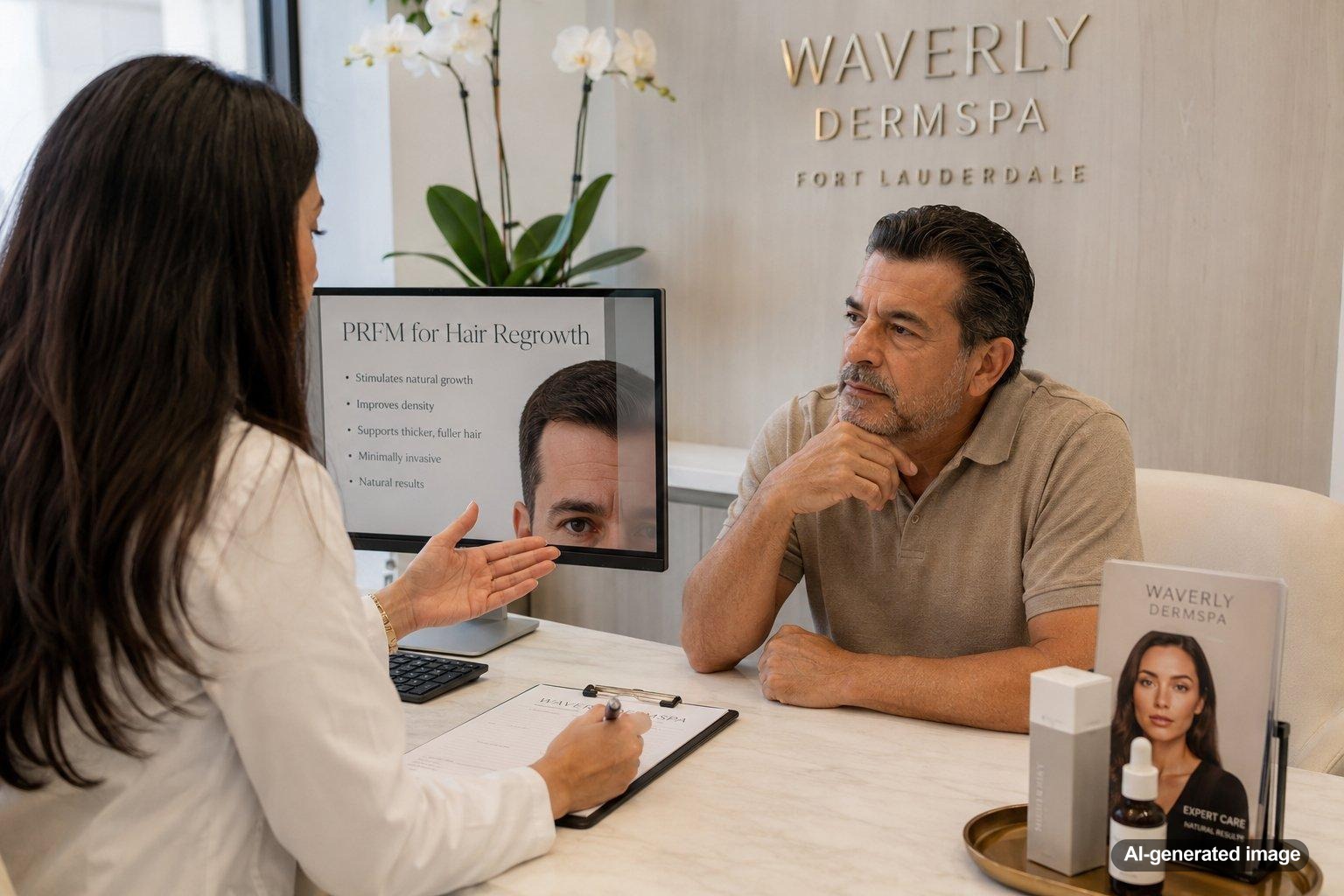
A patchy beard can be frustrating, especially when grooming changes do not make the area look fuller. PRFM, or platelet-rich fibrin matrix, is an injectable treatment prepared from a small sample of a patient’s own blood. It is designed to place a concentrated fibrin network and platelet-derived signaling proteins near hair follicles. For some men, it may be considered as part of a personalized plan for thinning facial hair, but it is not appropriate for every cause of beard loss.
The most important first step is identifying why the beard is patchy. Genetics, naturally uneven density, inflammation, scarring, grooming-related irritation, and conditions such as alopecia areata can look similar at home but may require very different approaches. A dermatologist can examine the skin and hair follicles before discussing whether PRFM is a reasonable option.
Quick answer
- PRFM uses components from your own blood and is injected into selected areas of facial hair thinning.
- It may be considered when follicles are still present and the skin is healthy enough for treatment.
- Results vary, and evidence specifically for PRFM beard growth remains more limited than evidence for platelet-based treatments on the scalp.
- Sudden, smooth, round beard patches should be evaluated because alopecia areata can affect the beard area.
- A consultation is needed to review the cause of hair loss, medical history, expectations, and other treatment options.
What is PRFM?
PRFM stands for platelet-rich fibrin matrix. During treatment, blood is drawn and processed so that platelets and fibrin are concentrated into a preparation that can be injected into targeted areas. Platelets contain signaling proteins involved in normal tissue repair, while fibrin forms a supportive matrix that can hold the preparation in place.
PRFM is related to platelet-rich plasma, or PRP, but the preparation method and final consistency are not identical. In hair restoration settings, both approaches are intended to support the environment around active or weakened follicles. Neither approach creates brand-new follicles where none exist, and neither can reliably restore hair in areas where follicles have been permanently destroyed by scarring.
Why beard growth can look uneven
Facial hair density is influenced by genetics, age, hormone sensitivity, follicle distribution, and the natural growth cycle. Some men have always had lighter growth on the cheeks or small gaps between the mustache and beard. Other men notice a new change that deserves medical evaluation.
- Natural growth pattern: The beard may simply contain fewer follicles in certain areas.
- Alopecia areata: This immune-mediated condition can cause sudden, smooth, round or oval patches of hair loss on the beard or scalp.
- Inflammation or infection: Redness, scaling, tenderness, pustules, or broken hairs may point to another skin condition.
- Scarring: Injury, burns, surgery, or scarring disorders can damage follicles.
- Traction or repeated irritation: Aggressive grooming, picking, or chronic friction may contribute to breakage or inflammation.
- General health factors: Nutritional deficiencies, medications, and hormonal or thyroid concerns may be relevant in selected cases.
How PRFM may be used for patchy facial hair
After the beard and underlying skin are evaluated, a clinician may map the areas of reduced density and place small injections across those zones. The goal is to expose existing follicles to platelet-derived signals within a fibrin matrix. Treatment planning may consider the size of the area, whether hairs are miniaturized or absent, the condition of the skin, and the likely cause of the thinning.
PRFM should not be treated as a universal solution for every beard gap. A naturally sparse area with very few follicles may respond differently from an area with weakened but visible hairs. Likewise, active alopecia areata, infection, or a scarring process may require a diagnosis and condition-specific treatment rather than a cosmetic injection plan alone.
What to expect during and after treatment
A typical visit includes a blood draw, preparation of the PRFM, cleansing of the treatment area, and a series of small injections. The face can be sensitive, so the clinician may discuss comfort measures before treatment. Temporary swelling, tenderness, redness, pinpoint bleeding, or bruising can occur. Because the material comes from the patient’s own blood, allergic reactions to the platelet preparation itself are less likely, but injection-related risks still exist.
Hair growth changes are gradual because follicles move through growth cycles. The number and spacing of sessions should be individualized rather than promised as a fixed formula. Some people may notice improved density or stronger-looking hairs, while others may see little change. Maintenance may also be discussed, depending on the diagnosis and response.
Who may be a reasonable candidate?
A potential candidate is generally someone with stable facial hair thinning, healthy skin in the treatment area, realistic expectations, and follicles that appear capable of producing hair. The clinician should also review medications, bleeding history, active skin problems, and previous hair-loss treatments.
PRFM may not be appropriate when there is an untreated infection, active inflammation, certain blood or platelet disorders, significant scarring, or a medical reason to avoid injections or blood draws. Men taking medications or supplements that affect bleeding should not stop them on their own. The prescribing clinician and treating dermatologist can advise on safe next steps.
What you can do at home
- Use a gentle cleanser and avoid harsh scrubs on irritated beard skin.
- Do not repeatedly pick, pluck, or aggressively brush sparse areas.
- Pause fragranced beard products if they trigger redness, itching, or scaling.
- Take clear monthly photos in the same lighting rather than checking for daily changes.
- Avoid unverified supplements marketed as instant beard-growth solutions.
- Seek an evaluation before applying prescription products or scalp hair-loss medications to the face.
Professional options beyond PRFM
The right option depends on the diagnosis. A dermatologist may discuss observation for a stable natural pattern, treatment for an inflammatory or infectious condition, medications for alopecia areata, topical approaches in selected cases, or surgical hair restoration when appropriate. Sometimes a combination plan is considered, but more treatment is not automatically better.
At Waverly DermSpa, we offer PRFM for Hair Loss and can help you understand whether it may be appropriate.
When to see a dermatologist
Schedule an evaluation if facial hair loss appears suddenly, forms smooth circular patches, spreads, or is accompanied by scalp, eyebrow, or eyelash loss. Redness, pain, drainage, heavy scaling, broken hairs, scarring, or nail changes also deserve attention. These findings do not confirm a diagnosis on their own, but they can help a dermatologist decide whether an examination, testing, or condition-specific treatment is needed.
Frequently asked questions
Can PRFM fill every beard gap?
No. PRFM may support existing follicles, but it cannot reliably create follicles in areas where they are naturally absent or permanently scarred. The cause of the gap matters.
Is PRFM the same as PRP?
They are related blood-derived treatments, but their processing and final formulations differ. PRFM includes a fibrin matrix intended to provide a scaffold for platelets and their signaling proteins.
Can alopecia areata affect only the beard?
Yes. Alopecia areata can begin in the beard area and may appear as one or more smooth, round or oval patches. A dermatologist can distinguish it from other causes of patchy facial hair.
How many PRFM sessions are needed?
There is no single schedule that fits everyone. Recommendations may depend on the diagnosis, treatment area, response, and clinician’s protocol. Results and maintenance needs vary.
Can I use minoxidil on my beard?
Some clinicians discuss topical medications for selected patients, but facial use can cause irritation and may not be appropriate for everyone. Ask a dermatologist before applying a hair-loss medication to the face.
Ready to get help?
Schedule an appointment or send a message and our team will get back to you.
Prefer to call? 954-666-3736
This article is for educational purposes and is not medical advice. For diagnosis and personalized treatment, please book an appointment with a board-certified dermatologist.
Sources & further reading
- American Academy of Dermatology (AAD) – Hair loss types: Alopecia areata signs and symptoms
- National Alopecia Areata Foundation – Symptoms and Diagnosis
- Cleveland Clinic – Regrow Hair: PRP Therapy
