

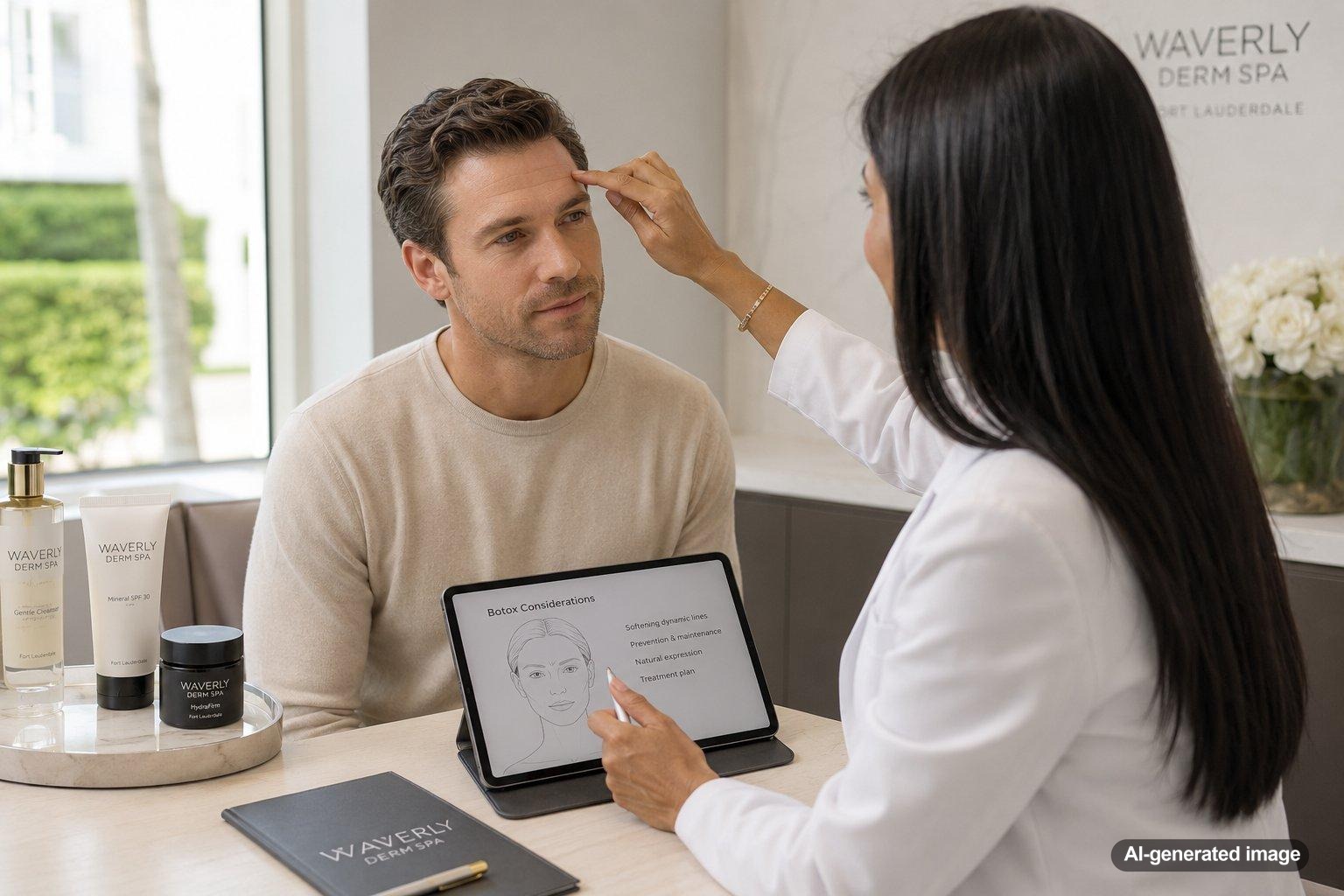
Preventative Botox usually refers to using botulinum toxin injections before expression lines become deeply etched at rest. It is not about stopping aging or changing your face. In a thoughtful dermatology setting, the conversation is usually about muscle movement, facial anatomy, timing, dose, expectations, and whether treatment makes sense for your goals.
For some people, a conservative approach may help soften repeated muscle movement in areas such as the forehead, between the brows, or around the eyes. For others, waiting, adjusting skincare, improving sun protection, or choosing a different option may be more appropriate. The right plan depends on your anatomy, medical history, lifestyle, and comfort level.
Quick answer
- Preventative Botox generally means treating early expression lines before they appear deeper at rest.
- It is a prescription cosmetic procedure, so evaluation by a trained medical clinician matters.
- The goal is usually subtle softening, not a frozen or overtreated look.
- It is not necessary for everyone, and timing can vary widely from person to person.
- A good consultation should include your goals, risks, alternatives, and aftercare guidance.
What preventative Botox is
Botox Cosmetic is a brand name for onabotulinumtoxinA, a botulinum toxin product used cosmetically to temporarily reduce the look of certain facial lines. In everyday conversation, people sometimes use the word Botox to describe neuromodulator treatments more broadly, although different products may have different names and details.
The idea behind preventative Botox is based on the difference between dynamic lines and static lines. Dynamic lines appear with facial movement, such as squinting, frowning, or lifting the brows. Static lines are visible even when the face is relaxed. Preventative treatment is usually discussed when dynamic lines are beginning to linger or when someone wants to consider whether reducing repeated movement may help soften how lines develop over time.
Common causes or triggers
Early expression lines are not caused by one factor alone. They can reflect a mix of natural movement, skin quality, genetics, and environmental exposure.
- Repeated facial expression: Frowning, squinting, smiling, and brow lifting can contribute to lines in predictable areas.
- Sun exposure: Ultraviolet exposure can be associated with collagen changes and visible skin aging.
- Skin thickness and elasticity: Some people naturally show lines earlier than others.
- Lifestyle factors: Sleep, hydration, stress, and smoking history can influence how skin looks over time.
- Facial anatomy: Muscle strength, brow position, eyelid shape, and natural asymmetry all matter when planning treatment.
What you can do at home
Conservative skincare habits can support skin quality whether or not you choose injectable treatment. These steps do not replace a dermatology evaluation, but they can be a practical foundation.
- Use broad-spectrum sunscreen consistently and reapply when outdoors.
- Wear sunglasses and a hat when sun exposure is high, especially in South Florida.
- Use a gentle cleanser and moisturizer that support the skin barrier.
- Consider discussing retinoids or other active ingredients with your clinician if you are not pregnant, nursing, or sensitive to them.
- Avoid chasing every line. Natural movement is part of facial expression.
Professional options
A dermatologist can evaluate whether neuromodulator treatment is appropriate and where a conservative plan may make sense. Discussion often includes the areas of concern, your medical history, medications, prior procedures, pregnancy or nursing status, and whether you prefer a very subtle result.
Common professional options may include botulinum toxin injections, skincare planning, resurfacing treatments, microneedling, light-based options, or simply observation with a follow-up plan. The best option depends on what is actually contributing to the concern. Lines related to movement are approached differently than changes related to pigment, texture, volume, or skin laxity.
At Waverly DermSpa, we offer Botox and can help you understand whether it may be appropriate.
What to discuss before treatment
- Your goal: Explain whether you want softening, prevention, facial balance, or a very natural look.
- Your baseline movement: Ask your clinician to evaluate how your forehead, brows, eyes, and smile move together.
- Dose and placement: Small differences in placement can matter, especially around the brow and eyelids.
- Possible side effects: Discuss bruising, swelling, soreness, headache, temporary weakness in nearby muscles, asymmetry, or less common concerns.
- Medical history: Share neuromuscular conditions, allergies, medications, prior reactions, and whether you are pregnant or nursing.
- Alternatives: Ask whether skincare, sun protection, lasers, microneedling, or waiting would be reasonable.
When to see a dermatologist
See a dermatologist if you are unsure whether your lines are movement-related, if you have had complications from injectables before, if you are considering treatment for the first time, or if you want a plan that respects your natural facial expression. A board-certified dermatologist can also help you understand when a cosmetic concern may be better addressed with skincare, resurfacing, fillers, or a different approach.
You should also seek medical guidance before treatment if you are pregnant, nursing, have a neuromuscular disorder, have difficulty swallowing or breathing, or take medications that may affect bleeding or muscle function.
FAQ
What age should someone start preventative Botox?
There is no one right age. The better question is whether your facial movement, early lines, anatomy, and goals make treatment worth discussing. Some people consider it earlier, while others never feel they need it.
Will preventative Botox make my face look frozen?
It should not have to. A conservative plan is often designed to soften movement while preserving expression, but outcomes vary and depend on anatomy, dosing, placement, and technique.
Is preventative Botox the same as regular Botox?
The product may be the same, but the intent can be different. Preventative Botox usually refers to earlier, conservative treatment aimed at expression lines before they become more visible at rest.
Can skincare replace Botox?
Skincare can support texture, tone, hydration, and sun protection, but it does not relax facial muscles in the same way. A dermatologist can help explain which concerns are movement-related and which are better suited to topical or device-based options.
How long does Botox last?
Duration varies by person, treatment area, dose, metabolism, and other factors. Your clinician can discuss typical ranges during a consultation without promising a specific timeline.
Ready to get help?
Schedule an appointment or send a message and our team will get back to you.
Prefer to call? 954-666-3736
Disclaimer
This article is for educational purposes and is not medical advice. For diagnosis and personalized treatment, please book an appointment with a board-certified dermatologist.
Sources & further reading
- American Academy of Dermatology (AAD) – Botulinum toxin therapy: FAQs
- Cleveland Clinic – OnabotulinumtoxinA Injection (Cosmetic Use)
- U.S. Food and Drug Administration (FDA) – BOTOX Cosmetic (onabotulinumtoxinA) for Injection Medication Guide
