

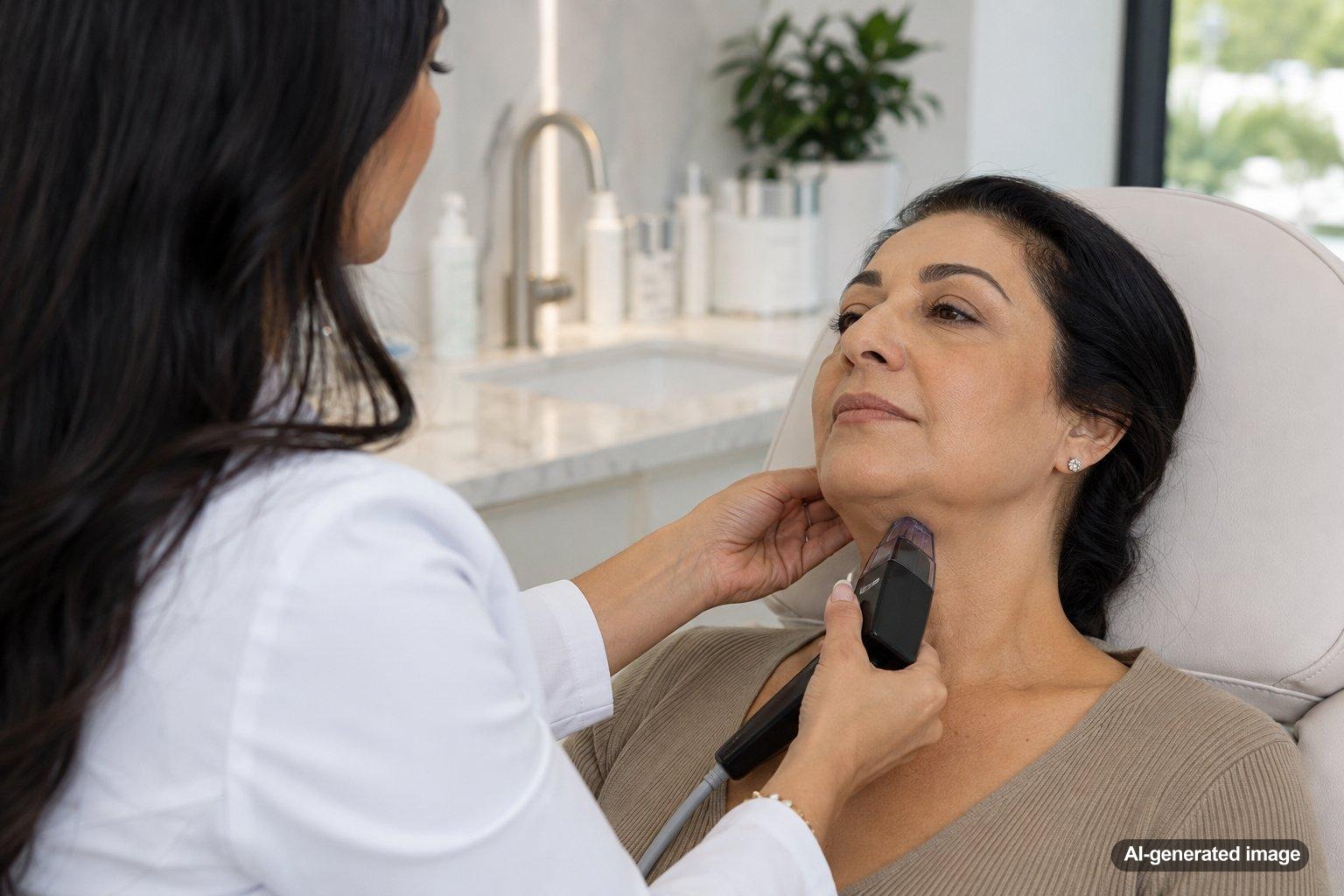
Losing a significant amount of weight can be an important personal milestone, but the skin does not always contract to match a smaller body size. Loose or crepey-looking skin may remain on areas such as the abdomen, arms, thighs, neck, or other regions, depending on factors including age, genetics, the amount of weight lost, and the skin’s natural elasticity.
Morpheus8 is a radiofrequency microneedling treatment that may be considered for selected patients who want to improve mild to moderate skin laxity and texture without surgery. It is important to have realistic expectations, especially after major weight loss. A dermatologist can examine the amount and quality of excess skin and explain whether a nonsurgical treatment is likely to provide a worthwhile change or whether another approach would be more appropriate.
Quick answer
- Morpheus8 combines microneedling with radiofrequency energy delivered beneath the skin.
- The treatment may help improve the appearance of mild skin laxity, crepey texture, and uneven skin quality in appropriately selected areas.
- It cannot remove large folds or substantial amounts of excess skin after significant weight loss.
- Results vary, and more than one treatment may be discussed depending on the treatment area, skin quality, goals, and clinical assessment.
- Because radiofrequency microneedling is a medical procedure with potential risks, treatment should be planned with a qualified, experienced medical professional.
What Morpheus8 is
Morpheus8 is a form of radiofrequency microneedling. Very small needles enter the skin while radiofrequency energy creates controlled heating at selected depths. This combination is intended to stimulate tissue remodeling, including collagen-related changes that may gradually improve skin texture and firmness.
Radiofrequency microneedling is different from traditional microneedling because it adds thermal energy below the skin’s surface. Treatment settings, needle depth, energy level, and the area being treated all matter, which is one reason an individualized evaluation is important.
Why loose skin can remain after significant weight loss
Skin stretches as body size increases. After substantial weight loss, it may not fully contract again. How much laxity remains varies considerably from person to person.
- Amount of stretching: Skin that has been significantly stretched may have more difficulty contracting after weight loss.
- Age and elasticity: Natural collagen and elastin characteristics change over time and can influence how the skin responds.
- Genetics: Some people naturally have greater skin elasticity than others.
- Location: The abdomen, upper arms, thighs, neck, and other areas may respond differently after weight changes.
- Sun exposure and skin quality: Long-term ultraviolet exposure and other factors that affect skin quality can influence its appearance and resilience.
What Morpheus8 may help with after weight loss
For carefully selected patients, Morpheus8 may help soften a mildly loose or crepey appearance and improve overall skin texture. The goal is generally gradual refinement rather than removal of excess tissue.
This distinction is especially important after significant weight loss. Someone with mild laxity may have very different treatment options from someone with a substantial fold of redundant skin. Radiofrequency microneedling does not physically cut away excess skin, so it should not be viewed as a substitute for surgical skin removal when a large amount of tissue is present. Cleveland Clinic similarly notes that radiofrequency microneedling treatments are not replacements for surgery and cannot produce the same type of result.
What Morpheus8 cannot do
Expectations are one of the most important parts of a consultation. Morpheus8 may improve skin quality, but there are limits to what a nonsurgical procedure can accomplish.
- It does not remove hanging or redundant skin.
- It does not reproduce the changes possible with surgical body-contouring procedures.
- It cannot guarantee a specific degree of tightening.
- It does not produce identical results for every body area or every patient.
- It may not be appropriate for every skin condition, medication history, or health situation.
If excess skin is substantial, a dermatologist can help clarify the limitations of nonsurgical treatment and, when appropriate, discuss whether consultation with a plastic surgeon would make more sense for your goals.
What you can do at home
Topical skincare cannot remove significant excess skin, but supportive habits can help protect the skin and maintain its overall quality. Keep the routine simple, particularly if you are considering an in-office procedure.
- Use broad-spectrum sun protection on exposed areas and avoid intentional tanning.
- Choose a gentle cleanser and moisturizer appropriate for your skin.
- Avoid aggressive scrubbing or at-home devices that puncture or intentionally injure the skin.
- Tell your clinician about prescription medications, over-the-counter products, supplements, previous procedures, and any history of abnormal scarring or skin reactions before treatment.
- Follow individualized pre-treatment and aftercare instructions rather than experimenting with strong active ingredients around the time of a procedure.
Professional options for loose skin after weight loss
The most appropriate option depends on how much laxity is present, where it is located, the condition of the skin, and what kind of change you are hoping to achieve. Professional approaches can include radiofrequency-based procedures, microneedling-based treatments, selected laser or resurfacing procedures, and surgical body contouring for more pronounced excess skin.
A dermatologist can help determine whether improving texture, encouraging gradual tissue remodeling, or pursuing a more substantial structural change is the realistic goal. Treatment plans should be individualized rather than based solely on a device name or before-and-after photographs from another patient.
Safety considerations with radiofrequency microneedling
Radiofrequency microneedling should be treated as a medical procedure rather than a casual beauty treatment. In an October 2025 safety communication, the U.S. Food and Drug Administration reported serious complications associated with certain uses of radiofrequency microneedling devices, including burns, scarring, fat loss, disfigurement, and nerve damage. The FDA recommends seeking a licensed healthcare provider with training and experience using RF microneedling devices.
The American Academy of Dermatology also emphasizes the value of professional evaluation before microneedling. A clinician can review your health history, examine the skin, identify circumstances in which treatment should be postponed, and discuss realistic expectations.
When to see a dermatologist
A consultation is useful when you are unsure whether the issue is primarily mild skin laxity, substantial excess skin, changes in texture, scarring, or a combination of concerns. It is also important to seek professional care if you have an active skin infection, a significant rash, open or irritated skin in the proposed treatment area, or another skin problem that has not been evaluated.
If you have already undergone radiofrequency microneedling and develop concerning symptoms such as significant pain, blistering, worsening swelling, persistent skin changes, weakness, numbness, or another unexpected reaction, contact a licensed healthcare professional for evaluation.
What to consider in Fort Lauderdale
Fort Lauderdale’s sunny climate makes sun protection particularly important before and after procedures that temporarily leave the skin more sensitive. Visitors and seasonal residents should also consider timing. If you split your time between South Florida and another location, discuss travel plans and follow-up availability before beginning a treatment series so your care can be coordinated appropriately.
At Waverly DermSpa, we offer Morpheus8 and can help you understand whether it may be appropriate.
FAQ
Can Morpheus8 tighten loose skin after major weight loss?
It may improve mild to moderate laxity and skin texture in selected patients, but it cannot remove a large amount of excess skin. An in-person assessment is the most useful way to determine whether your goals match what a nonsurgical procedure may reasonably accomplish.
Is Morpheus8 the same as surgery for loose skin?
No. Radiofrequency microneedling does not remove excess tissue. When loose skin is substantial, surgical body contouring can provide a type and degree of structural change that a nonsurgical procedure cannot reproduce.
How many Morpheus8 treatments will I need?
There is no single treatment number that is appropriate for everyone. Your clinician can recommend a plan after considering the treatment area, degree of laxity, skin quality, medical history, response to previous procedures, and goals.
Can Morpheus8 be used on areas other than the face?
Radiofrequency microneedling devices may be used on selected body areas depending on the specific device, its authorized indications, the treatment plan, and the clinician’s assessment. The FDA notes that marketing authorization can be specific to particular devices, indications, and areas of the body, so these details should be discussed during consultation.
How soon after weight loss should I consider skin tightening?
The timing is individualized. Your weight trajectory, overall health, condition of the skin, treatment area, and future weight goals can all affect the decision. A dermatologist can evaluate the skin and help determine whether treatment makes sense at your current stage.
Does Morpheus8 have risks?
Yes. All medical procedures have potential risks. The FDA has reported serious complications with certain uses of RF microneedling, including burns, scarring, fat loss, disfigurement, and nerve damage. Discuss potential benefits, risks, alternatives, device selection, provider experience, and aftercare before deciding whether to proceed.
Ready to get help?
Schedule an appointment or send a message and our team will get back to you.
Prefer to call? 954-666-3736
This article is for educational purposes and is not medical advice. For diagnosis and personalized treatment, please book an appointment with a board-certified dermatologist.
Sources & further reading
- U.S. Food and Drug Administration (FDA) – Potential Risks with Certain Uses of Radiofrequency (RF) Microneedling – FDA Safety Communication
- American Academy of Dermatology (AAD) – Microneedling can fade scars, uneven skin tone, and more
- Cleveland Clinic – Radio Frequency (RF) Microneedling
