

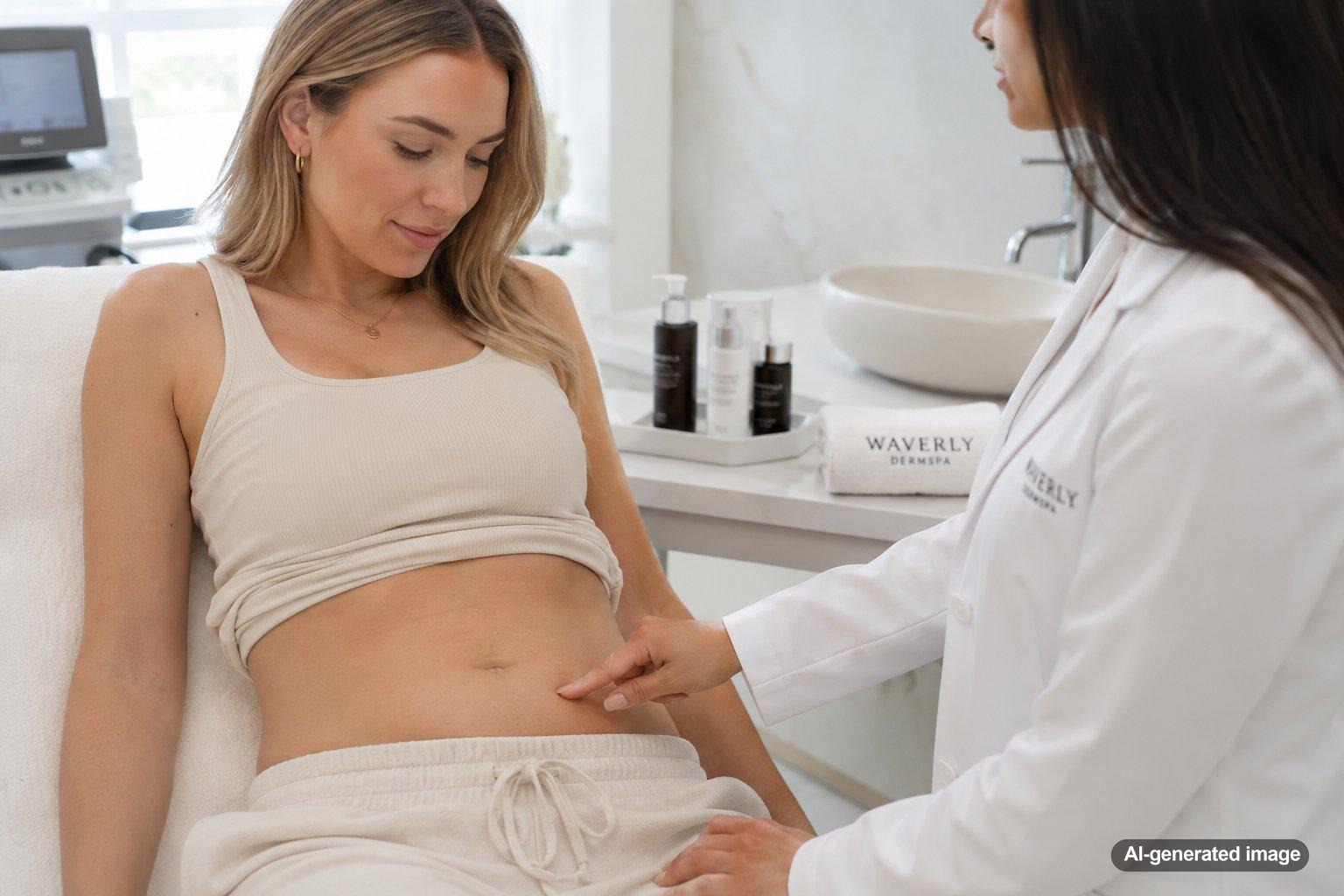
Crepey skin on the lower abdomen can remain after a C-section even when the incision has healed and overall fitness has improved. Pregnancy-related stretching, changes in collagen, weight fluctuations, and the way the skin settles around a surgical scar may all affect the area’s texture.
Morpheus8 combines microneedling with radiofrequency energy to address skin texture and firmness below the surface. It may be an option for appropriately selected patients with mild to moderate crepiness, but it cannot remove significant excess skin or replace abdominal surgery. A personalized evaluation is important because the scar, skin thickness, sensitivity, and degree of laxity can vary considerably.
Quick answer
- Morpheus8 may help improve mild to moderate crepey texture on the lower abdomen.
- The treatment works by creating controlled microchannels while delivering radiofrequency energy into selected tissue depths.
- It does not remove substantial excess skin, repair separated abdominal muscles, or replace scar revision or surgery.
- Treatment planning should account for the C-section scar, skin sensitivity, pigmentation history, and healing status.
- Results and the number of sessions needed vary from person to person.
Why the lower abdomen may look crepey after a C-section
Crepey skin has a thin, finely wrinkled appearance that may be more noticeable when bending, sitting, or gently pinching the skin. After pregnancy, the abdominal skin may not fully return to its previous texture because collagen and elastin fibers have been stretched.
A C-section can add another variable. Scar tissue may feel firmer or less flexible than the surrounding skin, and the skin immediately above the incision can sometimes fold differently. This does not necessarily mean something is wrong. It simply means the lower abdomen may require a more individualized treatment approach than an area without a surgical scar.
How Morpheus8 works on abdominal skin
Morpheus8 is a radiofrequency microneedling treatment. Small insulated or coated needles enter the skin at controlled depths, and radiofrequency energy is delivered into the targeted tissue. This controlled process is intended to support gradual collagen remodeling and improve the appearance of texture and mild laxity.
For the lower abdomen, settings and treatment depth should be selected according to the thickness of the skin, the location of the scar, the amount of underlying tissue, and the patient’s comfort. More energy is not automatically better. Thoughtful treatment planning is more important than using the most aggressive setting.
Who may be a reasonable candidate
Morpheus8 may be considered when the primary concern is skin texture, fine wrinkling, or mild looseness rather than a large amount of hanging skin. A clinician may also evaluate whether the skin has enough thickness and healthy tissue to be treated appropriately.
Factors that may influence candidacy include:
- Whether the C-section incision is fully healed and stable
- The degree of skin laxity and the amount of excess skin
- Any history of raised, thickened, or difficult-to-heal scars
- Current irritation, rash, open skin, or tenderness in the treatment area
- Skin tone and the tendency to develop discoloration after inflammation
- Recent procedures or treatments involving the abdomen
- Personal expectations about what a non-surgical treatment can accomplish
What Morpheus8 can and cannot address
Morpheus8 may help with:
- Fine, crepey surface texture
- Mild to moderate skin laxity
- Uneven texture surrounding a mature scar
- Gradual improvement in the skin’s overall appearance
Morpheus8 is not designed to:
- Remove a significant apron of excess skin
- Repair separated abdominal muscles
- Eliminate stretch marks completely
- Correct a painful, tethered, raised, or changing scar without a medical evaluation
- Create the same degree of tightening that may be possible with surgery
Understanding these limitations helps keep the treatment plan realistic. In some cases, another procedure or a surgical consultation may better match the patient’s goals.
What treatment may feel like
A topical numbing product is commonly used before radiofrequency microneedling. During treatment, patients may notice pressure, warmth, or brief prickling sensations. Comfort can differ across the abdomen, particularly near a surgical scar where sensation may be reduced, heightened, or uneven.
Afterward, the skin may look pink or feel warm, tight, or sensitive. Small pinpoint marks, temporary swelling, dryness, or a rough texture may also occur. The intensity and duration of these effects vary with treatment settings and individual skin response. Your clinician should provide specific aftercare instructions based on how your skin was treated.
How many sessions might be considered
There is no universal treatment schedule for crepey abdominal skin. Some people pursue a series of sessions, while others may be advised that a different approach would be more appropriate. The recommendation can depend on the severity of laxity, skin thickness, treatment settings, healing response, and desired level of improvement.
Changes from collagen remodeling tend to develop gradually rather than appearing all at once. Maintenance may also be discussed because normal aging, hormonal changes, sun exposure, and future weight fluctuations continue to affect the skin.
Can Morpheus8 be used directly over a C-section scar?
A mature C-section scar may sometimes be included in a carefully planned treatment area, but the decision should be made after an in-person evaluation. Scar tissue can differ from normal skin in thickness, sensation, blood supply, pigmentation, and flexibility.
A scar that is painful, raised, itchy, widening, firm, changing, or attached to deeper tissue may require medical assessment before cosmetic treatment is considered. The clinician may avoid the scar, adjust treatment settings, or recommend another approach depending on what is found.
How to support the skin between treatments
At-home care cannot reproduce the effects of an in-office procedure, but a consistent routine can support comfort and the skin barrier. Conservative steps may include:
- Using a mild, fragrance-free cleanser on the area
- Applying a simple moisturizer regularly
- Avoiding aggressive scrubs, picking, or harsh exfoliation
- Protecting the abdomen from direct sun exposure when it is uncovered
- Following the clinician’s instructions about pausing active skincare products
- Keeping weight changes gradual when possible
Do not apply strong acids, retinoids, or other potentially irritating products to recently treated skin unless your clinician has told you when and how to restart them.
When to see a dermatologist before treatment
Schedule a medical evaluation before pursuing cosmetic treatment if the lower abdomen has an open area, persistent rash, drainage, increasing pain, warmth, marked swelling, a newly changing scar, or a lump near the incision. It is also worth getting checked if the skin concern is difficult to distinguish from a scar complication or another abdominal issue.
A dermatologist can assess the skin and scar, discuss realistic options, and determine whether radiofrequency microneedling should be considered.
Frequently asked questions
Will Morpheus8 completely tighten loose abdominal skin?
No non-surgical procedure can reliably duplicate surgical skin removal. Morpheus8 may improve mild to moderate crepey texture and laxity, but significant excess skin may remain.
Can Morpheus8 remove a C-section shelf?
A C-section shelf can involve skin laxity, scar tethering, fat distribution, and the structure of the abdominal wall. Morpheus8 may address part of the skin-quality component, but it may not correct every factor contributing to the fold.
Does Morpheus8 erase stretch marks?
Radiofrequency microneedling may soften the appearance or texture of some stretch marks, but complete removal should not be expected. Response varies based on the age, color, depth, and location of the marks.
Is the C-section scar treated with the same settings as normal skin?
Not necessarily. Scar tissue can behave differently from surrounding skin, so a clinician may change the depth, energy, number of passes, or treatment boundaries.
Can Morpheus8 help if the area feels numb?
Changes in sensation can occur around a surgical incision. Numbness does not determine whether someone is a candidate, but it should be discussed during the evaluation so treatment and comfort can be planned appropriately.
How long should someone wait after a C-section?
There is no single timeline that applies to everyone. The incision should be fully healed, and the treating clinician may recommend clearance from the physician managing the patient’s recovery before elective treatment is planned.
At Waverly DermSpa, we offer Morpheus8 and can help you understand whether it may be appropriate.
Ready to get help?
Schedule an appointment or send a message and our team will get back to you.
Prefer to call? 954-666-3736
This article is for educational purposes and is not medical advice. For diagnosis and personalized treatment, please book an appointment with a board-certified dermatologist.
