

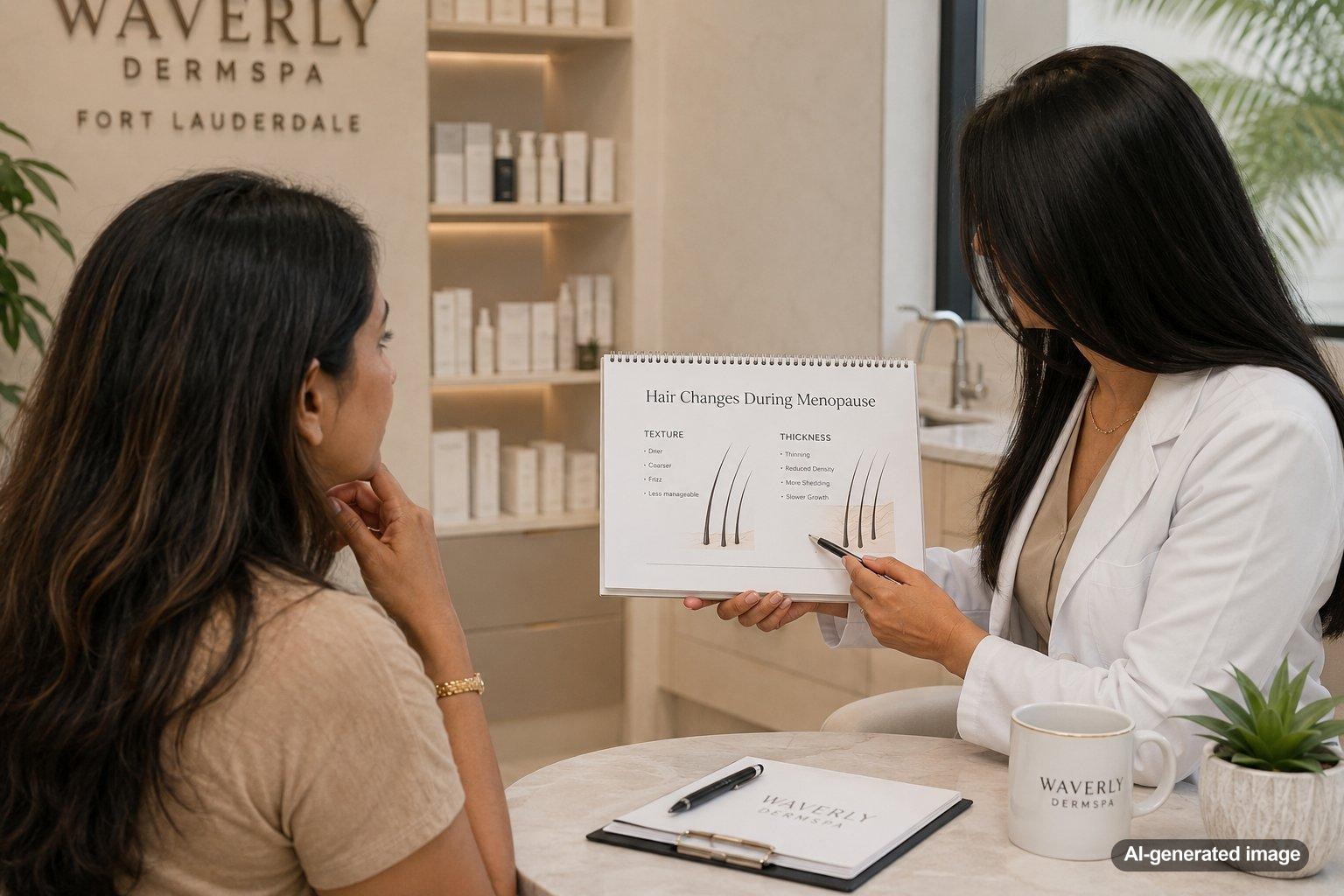
Yes. Menopause can affect how your hair feels and behaves, not only how thick it looks. Some women notice that previously smooth hair becomes drier, coarser, finer, frizzier, less curly, or more difficult to style. Others see widening at the part, reduced ponytail volume, increased shedding, or shorter hairs around the hairline.
These changes are not identical for everyone, and menopause may not be the only factor involved. Aging, genetics, thyroid conditions, nutrition, stress, medications, scalp inflammation, and styling damage can produce similar changes. A dermatologist can help separate expected age-related changes from a treatable form of hair loss.
Quick answer
- Menopause may change hair texture, moisture retention, diameter, density, and growth patterns.
- Hair may feel finer, rougher, drier, flatter, frizzier, or less manageable than it did previously.
- Hormonal shifts can contribute, but genetics, aging, health conditions, and hair-care habits may also play a role.
- Sudden shedding, patchy loss, scalp symptoms, or a rapidly receding hairline should be evaluated by a dermatologist.
Why menopause can affect your hair
Hair follicles respond to a combination of hormones, genetics, age, circulation, inflammation, nutrition, and everyday care. During the menopausal transition, estrogen and progesterone levels fluctuate and eventually decline. These shifts may influence the hair-growth cycle and make genetically susceptible follicles more likely to produce finer strands.
At the same time, natural oil production may decrease with age. Less oil can leave the scalp and hair shaft feeling drier, especially if the hair is color-treated, heat-styled, curly, or exposed to sun, saltwater, and chlorine. In Fort Lauderdale, year-round humidity and frequent swimming can make these texture changes feel even more noticeable.
How hair texture may change
Texture changes can be subtle at first. You may find that products or styling methods that worked for years no longer give the same result. Common observations include:
- Finer strands: Individual hairs may become smaller in diameter, making the overall style feel less full.
- Dryness or roughness: Hair may lose softness and shine or become more prone to tangling.
- Increased frizz: A drier or more porous hair shaft may react differently to humidity.
- Changes in curl pattern: Curly hair may loosen, straighten, tighten, or become less consistent from one area to another.
- Greater breakage: Fragile strands may snap before reaching their previous length.
- Reduced volume: Hair may lie flatter because of lower density, finer strands, or both.
Texture and thickness are related but not interchangeable. Hair can feel rougher while also becoming thinner, or it may appear less dense even when shedding is not dramatic.
How menopause may affect hair thickness
Some women develop gradual thinning across the top or crown of the scalp. The center part may look wider, the scalp may become easier to see under bright lighting, or a ponytail may feel smaller. This pattern can be associated with female pattern hair loss, which often becomes more noticeable with age and hormonal change.
Other women experience diffuse shedding rather than a specific pattern. Increased shedding can follow illness, surgery, major stress, rapid weight changes, restrictive dieting, medication changes, or other physical stressors. Because several causes can overlap during midlife, it is helpful not to assume that every change is simply menopause.
Other factors that can mimic menopausal hair changes
A dermatologist may consider several possible contributors when evaluating new thinning or texture changes, including:
- Family history of patterned thinning
- Thyroid disorders or other hormonal conditions
- Iron, protein, vitamin, or nutritional deficiencies
- Recent illness, fever, surgery, or significant stress
- New medications or dosage changes
- Scalp inflammation, flaking, redness, or itching
- Frequent bleaching, chemical processing, or high-heat styling
- Tight hairstyles that repeatedly pull on the hairline
- Breakage from sun, chlorine, saltwater, or mechanical friction
Supplements are not automatically the right answer. Taking high doses without a confirmed need may be unhelpful and can sometimes interfere with medical testing or create other concerns. Your clinician can help determine whether laboratory testing is appropriate.
What you can do at home
A gentler routine may help protect fragile hair and improve manageability, even when it does not address the underlying cause of thinning.
- Use a mild shampoo focused on the scalp rather than aggressively scrubbing the lengths.
- Apply conditioner through the mid-lengths and ends to reduce friction and breakage.
- Limit repeated flat ironing, curling, bleaching, and high-temperature blow-drying.
- Use a wide-tooth comb and avoid forceful brushing when the hair is wet.
- Rotate tight buns, braids, extensions, and ponytails with looser styles.
- Protect hair before swimming and rinse out saltwater or chlorine afterward.
- Eat a balanced diet with adequate protein and discuss major dietary changes with your clinician.
- Take monthly photos of your part and hairline in similar lighting if you are monitoring gradual changes.
Volumizing products, shorter layers, strategic color placement, and lightweight conditioners may improve the appearance of fullness. Avoid heavy oils near the roots if they make fine hair look flatter.
Professional options
The right approach depends on whether the main issue is breakage, scalp disease, excessive shedding, patterned thinning, or a combination. A dermatologist may examine the scalp and hair shafts, review your medical history, assess the distribution of thinning, and decide whether bloodwork or additional testing would be useful.
Professional recommendations may include scalp-care changes, treatment of an underlying condition, topical hair-growth support, prescription options, or in-office procedures. Suitability varies based on the diagnosis, health history, medications, and individual goals.
At Waverly DermSpa, we offer PRFM for Hair Loss and can help you understand whether it may be appropriate.
When to see a dermatologist
Consider scheduling an evaluation when hair changes are persistent, progressive, distressing, or difficult to explain. It is especially important to seek care for:
- Sudden or heavy shedding
- Round or irregular bald patches
- Rapidly widening part or visible scalp
- Recession along the frontal hairline
- Eyebrow loss occurring with scalp hair loss
- Scalp pain, burning, tenderness, redness, scaling, or sores
- Broken hairs concentrated in one area
- Hair changes accompanied by fatigue, unexplained weight changes, or other new symptoms
Early evaluation matters because different types of hair loss require different approaches. Some forms involve temporary shedding, while others may continue without appropriate management.
Frequently asked questions
Can straight hair become curly during menopause?
It can happen. Hormonal changes, aging of the follicle, changes in strand diameter, and altered moisture levels may affect the way hair bends or holds a curl. However, a dramatic or sudden texture change may have another contributing cause.
Why does my hair feel wiry after menopause?
Reduced scalp oil, increased porosity, chemical processing, sun exposure, and changes in strand diameter can all make hair feel coarser or more wiry. A moisturizing routine and reduced heat may improve manageability, but persistent changes can be discussed with a dermatologist.
Is menopausal hair thinning reversible?
That depends on the cause. Temporary shedding may improve when the trigger resolves, while patterned thinning often requires ongoing management. A dermatologist can evaluate the pattern and discuss realistic options without promising a specific outcome.
Should I take biotin for menopausal hair loss?
Biotin is not automatically helpful unless there is a true deficiency. It may also interfere with certain laboratory tests. Discuss supplements with your clinician before starting high-dose products.
Can hormone therapy restore hair thickness?
Hormone therapy is prescribed based on a person’s overall menopausal symptoms, medical history, and risk profile, not solely as a cosmetic hair treatment. Hair responses vary. This decision should be discussed with the clinician managing your menopause care.
How can a dermatologist tell whether thinning is related to menopause?
There is no single appearance that proves menopause is the cause. A dermatologist considers timing, family history, shedding pattern, scalp findings, medications, recent health events, styling practices, and any other symptoms before recommending next steps.
Ready to get help?
Schedule an appointment or send a message and our team will get back to you.
Prefer to call? 954-666-3736
This article is for educational purposes and is not medical advice. For diagnosis and personalized treatment, please book an appointment with a board-certified dermatologist.
