

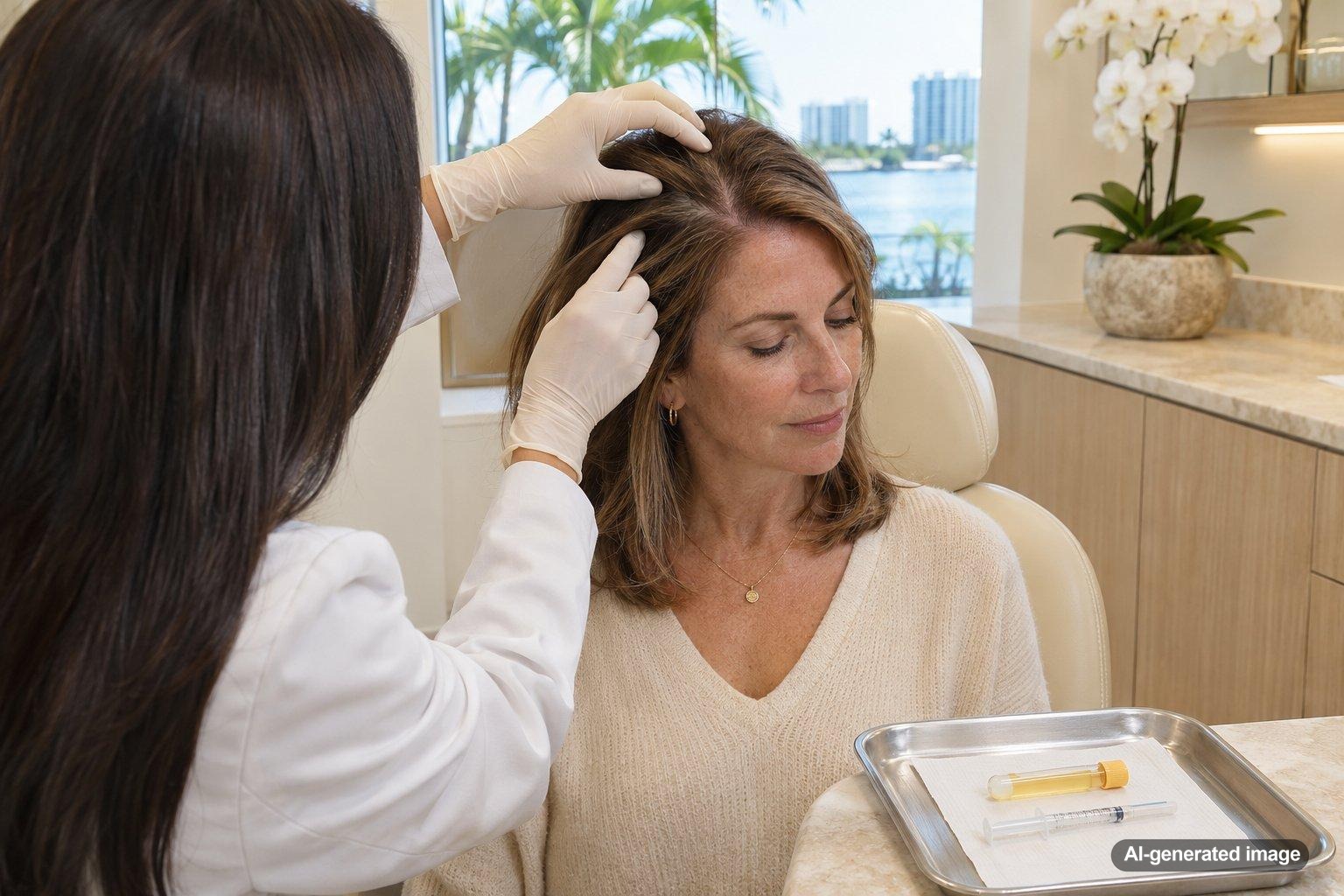
How is PRFM prepared and injected for hair restoration? The process begins with a small blood sample, which is processed to concentrate platelets and create a platelet-rich fibrin matrix. A qualified clinician then administers the prepared material through a series of small injections into selected areas of the scalp. The goal is to deliver platelet-associated growth factors to tissue surrounding hair follicles, although the degree of improvement varies and research on PRFM specifically remains limited.
For people exploring nonsurgical hair restoration, understanding what happens between the blood draw and the scalp injections can make the procedure feel less unfamiliar. PRFM uses components of your own blood, but it is still a medical procedure requiring appropriate preparation, sterile technique, and an individualized assessment of the underlying hair loss.
Quick Answer: How PRFM Hair Restoration Works
- Blood collection: A clinician draws a small sample of blood, typically from a vein in the arm.
- Platelet concentration: The sample is processed in a centrifuge to separate and concentrate platelet-containing components.
- Fibrin matrix preparation: Depending on the preparation system, the platelet concentrate is combined with a controlled fibrin-forming process to create PRFM.
- Scalp injections: Small amounts of the prepared material are injected into selected areas of the scalp using sterile techniques.
- Follow-up: The clinician monitors scalp response and discusses whether additional treatment sessions or other hair loss therapies may be appropriate.
What Is PRFM in Hair Restoration?
PRFM stands for platelet-rich fibrin matrix. It is an autologous preparation, meaning the starting material comes from the patient’s own blood. Platelets are best known for their role in blood clotting, but they also contain signaling molecules involved in normal tissue repair and cellular communication.
PRFM preparation organizes platelet-rich material within a fibrin network. Fibrin is a naturally occurring protein structure involved in clot formation and tissue repair. The matrix provides a framework that may influence how platelet-associated signaling molecules are retained and released locally.
In hair restoration, PRFM is used with the intention of supporting the environment around existing hair follicles. It is not a hair transplant, does not implant new follicles, and cannot be assumed to restore hair in areas where follicles are no longer viable.
Although PRFM is related to platelet-rich plasma, or PRP, the two preparations are not identical. Research supporting platelet-based treatments for certain types of hair loss is evolving, and findings from PRP studies should not automatically be treated as proof of equivalent results with PRFM.
How Is PRFM Prepared Before Injection?
Step 1: Collecting a Blood Sample
The appointment typically begins with a blood draw. The amount collected depends on the preparation system and the planned treatment area. The clinician uses appropriate blood collection supplies and follows the manufacturer’s processing instructions.
Because the procedure involves drawing blood and injecting a processed blood product, infection control and proper handling are essential throughout the appointment.
Step 2: Separating Blood Components
The collected blood is placed into a centrifuge, a device that spins samples at controlled speeds. Centrifugation helps separate blood components according to their physical properties, allowing the clinician to isolate the platelet-containing fraction used for treatment.
Processing times, collection tubes, and centrifuge settings vary among PRFM systems. There is no single preparation protocol that should be assumed to apply to every clinic or product.
Step 3: Creating the Fibrin Matrix
After the platelet-rich component has been isolated, the preparation system facilitates formation of the fibrin matrix. Some systems use specific reagents or activators, while others rely on different processing methods. The exact sequence depends on the system being used.
The resulting material must be handled within the preparation system’s intended working conditions. A clinician prepares it for injection according to the applicable protocol rather than following a universal mixing or waiting period.
Step 4: Preparing the Injection Material
Once the PRFM is ready, the clinician transfers it into suitable sterile injection equipment. The preparation and administration sequence must account for the material’s changing consistency as fibrin forms.
The material is generally prepared and administered during the same visit. It is not something patients prepare or inject themselves at home.
How Is PRFM Injected Into the Scalp?
Before injection, the dermatologist examines the scalp and identifies the areas selected for treatment. The injection pattern depends on the location and distribution of thinning, the condition of the scalp, and the clinician’s assessment.
The scalp is cleaned, and comfort measures may be offered. These can include local anesthetic techniques when appropriate. Using a fine needle, the clinician places small amounts of PRFM through a series of injections across the targeted regions.
Injection depth, spacing, and volume are determined by the treating clinician and the preparation system. Patients should not assume that every PRFM provider uses an identical technique.
People commonly describe brief pinching, pressure, or tenderness during scalp injections. Comfort varies with individual sensitivity, the number of injection sites, and the measures used to reduce discomfort.
What Happens During and After the Appointment?
PRFM hair restoration is generally performed in an outpatient setting. The visit includes assessment, blood collection, preparation, scalp cleansing, and injection. Total appointment length varies according to the clinic’s workflow and the preparation method.
Afterward, temporary tenderness, redness, pinpoint bleeding, swelling, or bruising can occur around the injection sites. These reactions are not necessarily signs of a complication, but persistent or worsening symptoms deserve medical attention.
The clinician may provide individualized instructions about washing the hair, using styling products, exercising, and handling the scalp after treatment. Those instructions should take priority over generalized recommendations found online.
Because hair growth occurs gradually through biological cycles, any visible change in density or shedding would generally be assessed over time rather than immediately after injection. Some people may not experience a meaningful improvement.
Why Might Someone Consider PRFM for Hair Loss?
Interest in PRFM often comes from people who want to explore an injectable, nonsurgical approach to hair thinning. However, the reason for hair loss matters considerably more than the popularity of a particular procedure.
Hair thinning can be associated with several factors, including:
- Hereditary patterns of follicle miniaturization.
- Hormonal changes or other medical conditions.
- Physical or emotional stressors associated with temporary shedding.
- Nutritional deficiencies or changes in overall health.
- Inflammatory or scarring scalp disorders that require specific medical evaluation.
- Medication-related shedding or other treatment effects.
These conditions do not respond to treatment in the same way. PRFM may be considered in selected cases, but it is not an appropriate substitute for identifying the cause of hair loss.
A dermatologist can evaluate the pattern of thinning, review the medical history, examine the scalp, and determine whether additional testing or a different treatment approach makes more sense.
What Can You Do at Home Before Considering PRFM?
While home care cannot reproduce a professional PRFM procedure, several conservative habits can support scalp comfort and help make a hair loss consultation more productive.
- Keep a consistent hair routine: Use products suited to your scalp and avoid unnecessary irritation.
- Reduce excessive traction: Consider whether tight hairstyles or repeated pulling may be contributing to breakage or stress on the hair.
- Track meaningful changes: Occasional photographs taken in similar lighting can help document changes without relying on daily impressions.
- Review recent health changes: Make a note of new medications, illnesses, major stressors, or dietary changes to discuss with your clinician.
- Avoid unverified home injection products: Blood processing and scalp injections require professional equipment, sterile technique, and medical oversight.
If shedding is significant or persistent, an evaluation is generally more useful than purchasing multiple products without understanding the cause.
How Does PRFM Compare With Other Professional Hair Restoration Options?
PRFM is one of several approaches that may be discussed during a dermatology consultation. The most appropriate option depends on the diagnosis, medical history, extent of thinning, and individual preferences.
Platelet-rich plasma: PRP also involves concentrating platelets from the patient’s blood, but its preparation and physical characteristics differ from PRFM. Evidence and treatment protocols vary across platelet-based procedures.
Medical hair loss treatment: Depending on the diagnosis, a dermatologist may discuss topical or prescription treatments. These options have their own benefits, limitations, and safety considerations.
Hair transplantation: Surgical hair restoration relocates existing follicles rather than relying on an injectable preparation. It addresses a different aspect of hair restoration and requires appropriate candidate selection.
Combination approaches: Some clinicians may consider integrating multiple treatment strategies, but adding procedures does not automatically produce better outcomes.
At Waverly DermSpa, we offer PRFM for Hair Loss and can help you understand whether it may be appropriate.
When Should You See a Dermatologist About Hair Loss?
A professional evaluation is particularly worthwhile when hair shedding begins suddenly, thinning progresses noticeably, or the scalp develops symptoms that are not typical for an uncomplicated hair loss pattern.
Seek medical assessment for patchy hair loss, persistent itching, significant scaling, pain, tenderness, pustules, or changes in scalp appearance. These findings can sometimes be associated with conditions requiring treatment beyond cosmetic hair restoration procedures.
Prompt evaluation is also important when hair loss occurs alongside other unexplained health changes. Earlier identification of certain scalp disorders may help guide appropriate care.
Frequently Asked Questions About PRFM Hair Restoration
Is PRFM the same as PRP?
No. Both begin with blood-derived platelet preparations, but PRFM incorporates a fibrin matrix. The exact preparation methods and physical properties differ, and clinical results from one approach cannot automatically be applied to the other.
Does PRFM require a blood draw at every appointment?
PRFM is typically prepared from a fresh blood sample during each treatment visit. The process depends on the preparation system and the clinician’s protocol.
Are PRFM scalp injections painful?
Patients may experience brief pinching, pressure, or discomfort at injection sites. The clinician can discuss available comfort measures and what to expect based on the planned treatment.
How many PRFM sessions are needed for hair restoration?
There is no universally established treatment schedule for every patient or PRFM preparation. A clinician may recommend a series of sessions or follow-up assessments based on the type of hair loss, treatment approach, and response. Additional sessions do not assure improvement.
Can PRFM grow hair on a completely bald scalp?
PRFM is not a method of implanting new hair follicles. Its potential usefulness depends partly on whether functioning follicles remain in the treatment area. A dermatologist can assess whether injectable treatment is reasonable or whether another approach may be more appropriate.
Is PRFM hair restoration suitable for everyone?
No. Candidacy depends on the cause of hair loss, scalp health, medical history, and other individual factors. Because PRFM involves blood collection and injections, a clinician should review relevant health conditions, medications, and procedural risks before treatment.
Ready to get help?
Schedule an appointment or send a message and our team will get back to you.
Prefer to call? 954-666-3736
Disclaimer
This article is for educational purposes and is not medical advice. For diagnosis and personalized treatment, please book an appointment with a board-certified dermatologist.
