

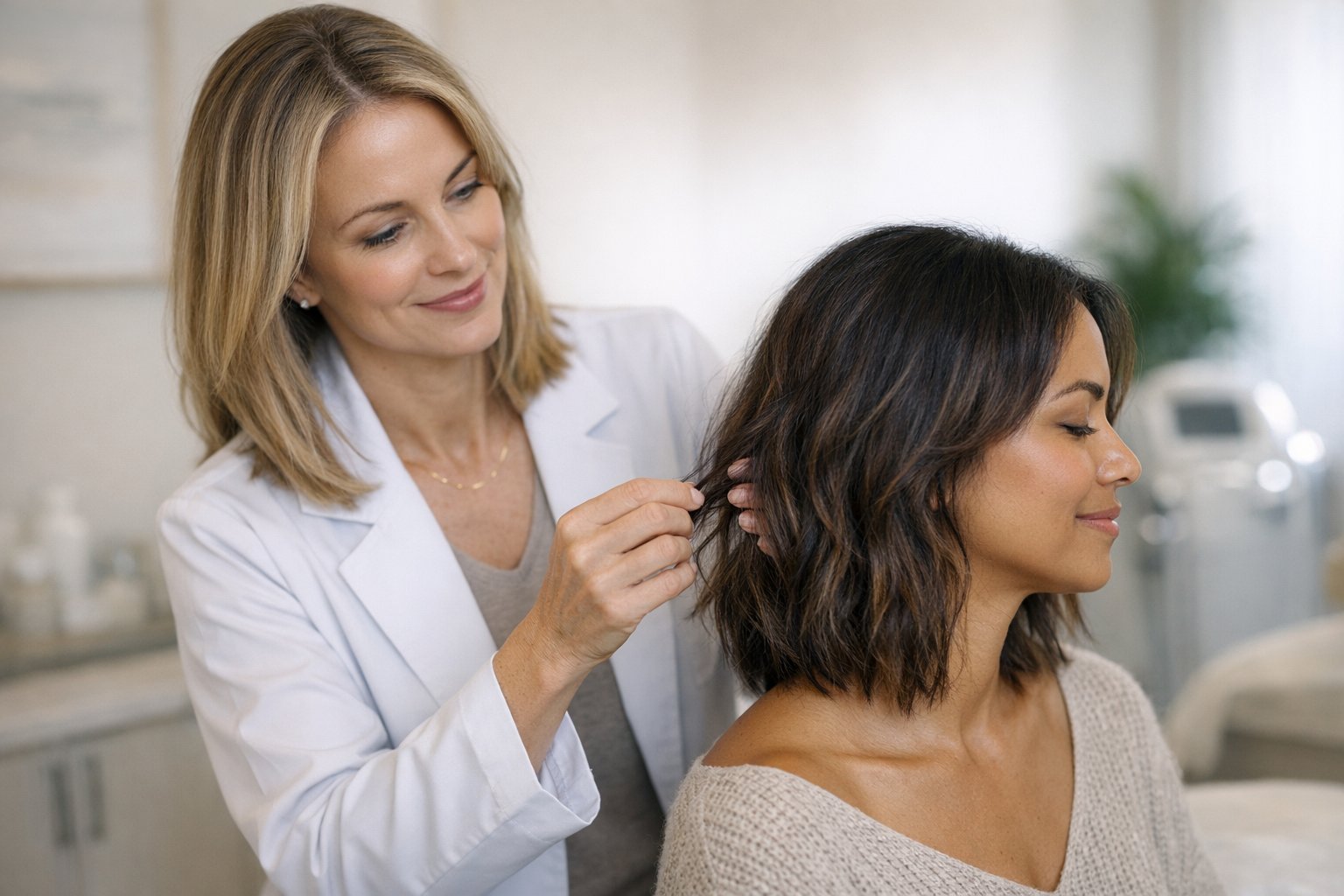
Hair Breakage vs Shedding: Quick Self-Check
If you’re concerned about hair health, it’s important to understand the difference between hair breakage and shedding. While both can affect the appearance of your hair, they have distinct causes and solutions. Here�s a quick self-check to help you distinguish between the two.
Quick Answer
- Hair breakage typically happens when individual strands snap off, often due to damage or lack of moisture.
- Shedding refers to the natural process of losing hair from the scalp, usually when hair reaches the end of its growth cycle.
- Breakage is usually more localized and can be seen as shorter, uneven strands.
- Shedding often involves the loss of longer strands, which may be seen in your hairbrush or on pillows.
What It Is
Understanding whether your hair is breaking or shedding can help you take the right steps to improve its health. Hair breakage occurs when individual strands become weak and snap off, often due to factors like heat styling, harsh chemical treatments, or environmental damage. Shedding, on the other hand, is part of the natural hair growth cycle and is less about external damage. Both are common, but it’s important to know the difference so you can address them effectively.
Common Causes/Triggers
- Heat styling (flat irons, curling irons, blow dryers)
- Chemical treatments (coloring, perming)
- Lack of moisture
- Stress or hormonal changes
- Nutrition deficiencies
- Excessive brushing or tight hairstyles
- Age-related changes
What You Can Do at Home
To address breakage, try using hydrating shampoos and conditioners, limit heat styling, and avoid tight hairstyles that stress the hair shaft. For shedding, ensure you’re eating a balanced diet rich in vitamins and minerals to support healthy hair growth. Gentle scalp massages can also help improve circulation and stimulate growth.
Professional Options
If you’re experiencing persistent hair issues, professional options like treatments designed to strengthen hair or restore hair density may be appropriate. At Waverly DermSpa, we offer PRFM for hair loss and can help you understand whether it may be appropriate.
When to See a Dermatologist
If you’re concerned about excessive shedding, hair thinning, or scalp health, it’s worth consulting with a dermatologist. Red flags include rapidly thinning hair, bald patches, or scalp irritation. Your dermatologist can evaluate your condition and recommend personalized treatments.
FAQ
What is the difference between hair breakage and shedding?
Hair breakage happens when individual strands become weak and snap off, while shedding refers to the natural loss of hair as part of the growth cycle.
How can I tell if my hair is breaking or shedding?
Check the length of the hair you�re losing. Breakage is typically seen as shorter strands, while shedding tends to involve longer hairs.
What are the best treatments for hair breakage?
Use deep conditioning treatments, avoid heat styling, and limit the use of harsh chemicals.
Can stress cause hair shedding?
Yes, stress can trigger temporary shedding as part of a condition called telogen effluvium.
Ready to get help?
Schedule an appointment or send a message and our team will get back to you.
Prefer to call? 954-666-3736
Disclaimer
This article is for educational purposes and is not medical advice. For diagnosis and personalized treatment, please book an appointment with a board-certified dermatologist.
