

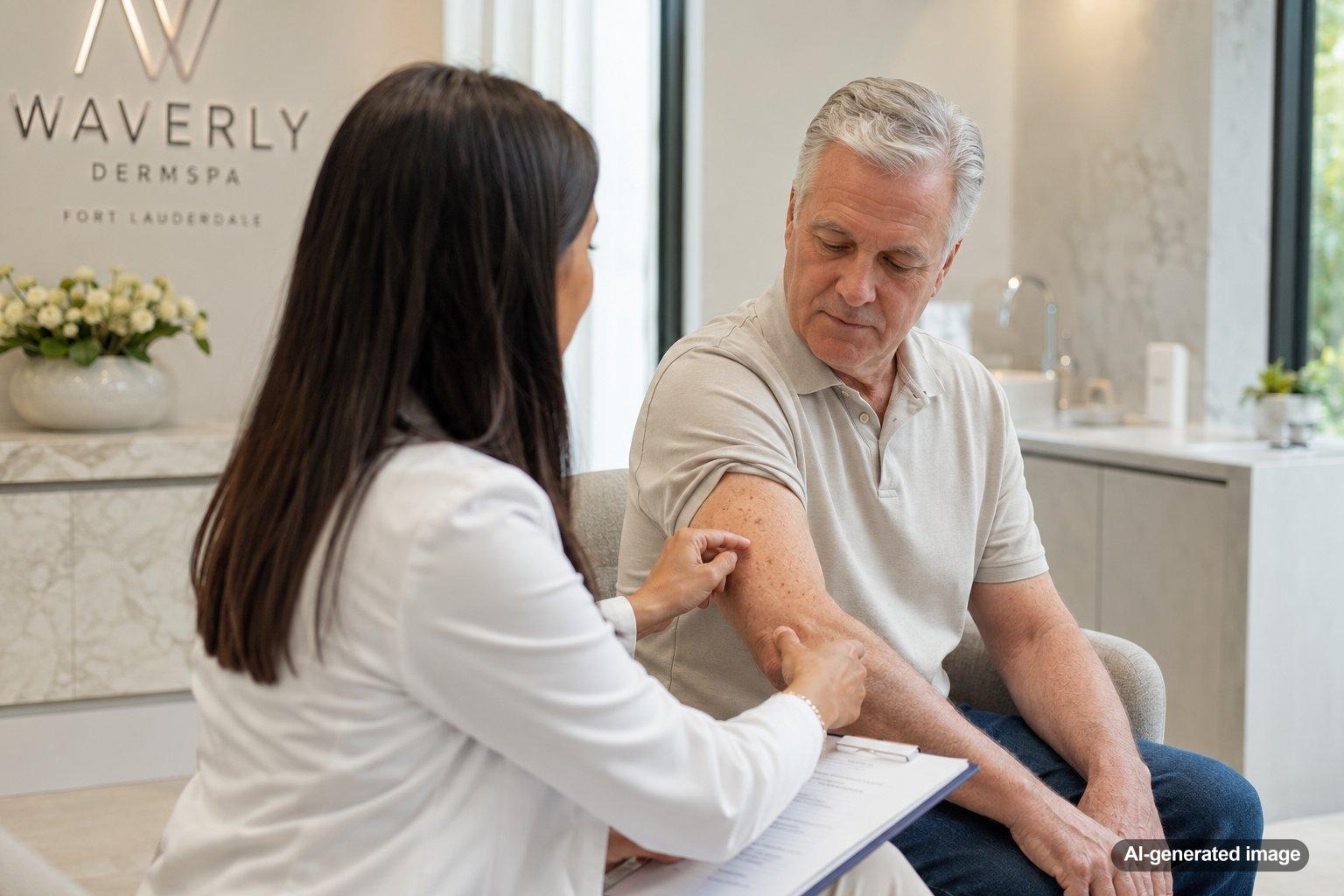
Yes, Excel V+ may be used to treat appropriately diagnosed cherry angiomas on many areas of the body. Cherry angiomas are small vascular growths that often look bright red, burgundy, or purple. They are usually harmless, but some people choose treatment because the spots catch on clothing, bleed after friction, or simply bother them cosmetically.
The important first step is confirming that a spot is actually a cherry angioma. Not every red or dark bump is the same, and treatment settings can vary based on the lesion’s size, color, depth, location, and your skin tone. A dermatologist can examine the area and decide whether vascular laser treatment is a reasonable option.
Quick answer
- Excel V+ is a vascular laser platform that may be appropriate for some cherry angiomas.
- The laser targets blood within the small vessels that make up the lesion.
- Body location, spot thickness, skin tone, and medical history can affect the treatment plan.
- Temporary redness, swelling, darkening, bruising, or crusting may occur after treatment.
- A dermatologist should evaluate spots that are new, changing, irregular, painful, or repeatedly bleeding.
What are cherry angiomas?
Cherry angiomas are common benign vascular growths. They typically appear as smooth or slightly raised red, blue-red, or purple spots. Many people notice more of them over time, especially across the chest, abdomen, back, shoulders, arms, or thighs.
They do not usually require medical treatment. Removal is generally considered when a lesion is irritated, bleeds from rubbing or shaving, or is unwanted for cosmetic reasons. Because other skin growths can sometimes resemble a cherry angioma, an in-person diagnosis matters before treatment.
How Excel V+ may treat a cherry angioma
Excel V+ uses laser wavelengths designed to address vascular concerns. The light is absorbed by hemoglobin in the lesion’s blood vessels. That energy heats the targeted vessel while the clinician works to limit unnecessary effects on nearby skin.
Cherry angiomas can vary from tiny pinpoint spots to thicker, darker papules. A small superficial lesion may be approached differently from a raised or deeper one. The clinician selects settings based on the individual spot rather than using one standard setting for every patient or every body area.
Which body areas may be treated?
Cherry angiomas commonly appear on the torso and may also occur on the arms, shoulders, neck, and legs. Many of these areas may be considered for vascular laser treatment after evaluation. However, the skin’s thickness, healing tendency, sun exposure, friction from clothing, and the number of lesions can influence the plan.
For example, treatment on the chest may require a more conservative approach because this area can be more prone to visible scarring in some people. Recently tanned skin can also complicate laser treatment because additional pigment in the skin may absorb light. Your clinician may recommend postponing treatment until a tan has faded and the area can be protected from the sun.
What happens during an appointment?
The dermatologist first examines the spots and reviews relevant health information, medications, sun exposure, and any history of unusual scarring or pigment changes. Protective eyewear is used during laser treatment.
During treatment, patients often describe a quick warm snap or stinging sensation. Cooling built into the device may help protect the skin and improve comfort. The appointment length depends on the number of spots and the size of the treatment area.
Immediately afterward, a treated angioma may look darker, gray, purple, or slightly swollen. A small crust can form. These changes are part of the local treatment response, but the appearance and recovery period vary from person to person.
How many sessions might be needed?
Some small cherry angiomas may respond noticeably after one session, while thicker, larger, darker, or more numerous lesions may need additional treatment. A lesion may flatten, fade, or darken before improving. New cherry angiomas can also develop elsewhere over time, even when previously treated spots respond well.
A dermatologist can give a more useful estimate after seeing the lesions in person. It is also important to allow the skin to heal before deciding whether another session is appropriate.
Possible side effects and aftercare
Vascular laser treatment can cause temporary effects. These may include:
- Redness or mild swelling
- Bruising or purple discoloration
- Temporary darkening of the treated spot
- Light crusting or a small scab
- Tenderness or a sunburn-like sensation
- Temporary pigment change
Less common concerns can include blistering, infection, textural change, or scarring. Risk can vary by treatment location, device settings, skin tone, recent sun exposure, and individual healing response.
Aftercare is usually simple: avoid picking or scrubbing, follow the clinician’s cleansing and moisturizing instructions, and protect exposed areas from sunlight. Do not apply harsh exfoliants or irritants to the treated skin until your clinician says they are appropriate.
What can you do at home?
There is no reliable at-home skin care product that removes the blood vessels inside a cherry angioma. Trying to burn, cut, freeze, or puncture a spot yourself can lead to bleeding, infection, pigment change, or scarring. It can also delay evaluation of a lesion that is not a cherry angioma.
At home, the safest approach is to reduce friction, avoid picking, and use sun protection on exposed areas. If a spot bleeds after being rubbed, apply steady gentle pressure with clean gauze. Seek medical attention if bleeding does not stop or if the lesion continues to recur.
When should a spot be checked before laser treatment?
Schedule a dermatology evaluation if a spot is uncertain or has features that do not fit a typical stable cherry angioma. It is especially worth getting checked when a lesion:
- Changes quickly in size, shape, or color
- Develops an irregular border or multiple colors
- Bleeds without clear friction or trauma
- Becomes painful, ulcerated, or persistently itchy
- Looks very different from your other spots
- Appears suddenly along with many other new lesions
A dermatologist may use dermoscopy to examine the lesion more closely. If the diagnosis is uncertain, a biopsy may be recommended instead of laser treatment.
Is Excel V+ right for every cherry angioma?
Not necessarily. Vascular laser treatment is one option, but electrosurgery, cryotherapy, shave removal, or another approach may be considered depending on the lesion. Raised or thick spots may respond differently than flat, bright red lesions. The best method also depends on the treatment area, skin tone, number of lesions, tolerance for downtime, and risk of pigment change or scarring.
At Waverly DermSpa, we offer Excel V+ and can help you understand whether it may be appropriate.
FAQ
Do cherry angiomas come back after laser treatment?
A treated spot may fade or flatten, but response varies. New cherry angiomas may form in other locations over time because treatment does not prevent future lesions from developing.
Can multiple cherry angiomas be treated in one visit?
Often, several lesions can be addressed during one appointment. The practical number depends on their size, location, your skin’s response, and the clinician’s treatment plan.
Does Excel V+ work on dark red or purple angiomas?
Color and depth influence how a vascular lesion responds. Darker or thicker spots may need different settings or a different treatment approach. An examination is needed to determine whether the lesion is suitable for laser treatment.
Can cherry angiomas be treated on tanned skin?
Recent tanning can increase laser-related risk because pigment in the surrounding skin may absorb light. Your clinician may advise waiting until the tan has faded and avoiding sun exposure before and after treatment.
Is laser removal considered cosmetic?
Removal is commonly cosmetic when a lesion is harmless and not causing symptoms. Coverage varies, so patients should check directly with their insurance plan when treatment is being considered for irritation or bleeding.
Ready to get help?
Schedule an appointment or send a message and our team will get back to you.
Prefer to call? 954-666-3736
This article is for educational purposes and is not medical advice. For diagnosis and personalized treatment, please book an appointment with a board-certified dermatologist.
