

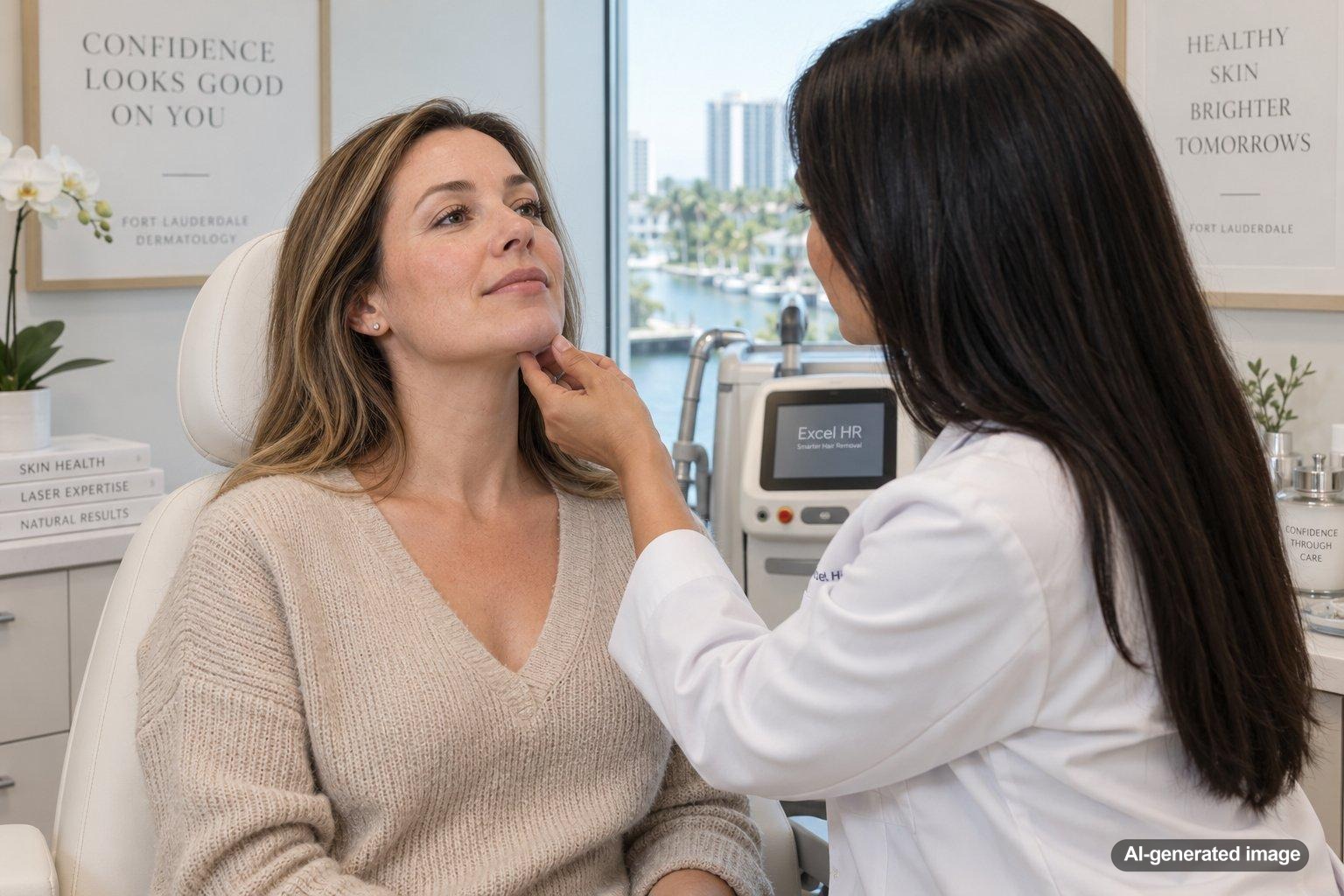
Coarse hair on the chin and upper neck can be especially frustrating because it may feel noticeable again soon after shaving, plucking, or other temporary removal methods. Excel HR laser hair removal is an in-office option designed to target hair follicles with controlled laser energy, which may gradually reduce the amount and thickness of treated hair over a series of sessions.
For women with dark, coarse facial or upper-neck hair, a personalized evaluation matters. Hair color, skin tone, hair density, previous removal methods, and possible hormonal influences can all affect how a treatment plan is approached.
Quick answer
- Excel HR may be used to treat unwanted coarse hair along the chin and upper neck.
- Laser hair removal works best on hair that contains enough pigment for the device to target effectively.
- Multiple sessions are typically planned because individual hairs grow at different times.
- Maintenance treatments may sometimes be useful, especially when new hair growth continues over time.
- A dermatologist can help determine whether sudden or increasing facial hair warrants additional evaluation.
What is Excel HR laser hair removal?
Excel HR is a professional laser platform used for hair reduction. During treatment, laser energy is directed toward pigment in the hair follicle. The goal is to interfere with the follicle’s ability to produce the same degree of future hair growth while protecting the surrounding skin as much as possible.
Because facial skin and neck skin can differ from areas such as the legs or underarms, settings and treatment strategy should be individualized. The chin and upper neck can also contain a mixture of thick terminal hairs and finer hairs, so an experienced clinician will usually evaluate exactly where treatment is appropriate.
Why can coarse chin and neck hair be stubborn?
Coarse facial hair often behaves differently from softer body hair. Individual follicles may cycle through active and resting phases, which means not every hair is available for effective laser targeting during the same appointment.
Hormonal influences can also affect facial hair growth in some women. This does not mean that every woman with chin hair has an underlying medical condition. However, if coarse facial hair appears suddenly, increases significantly, or occurs along with other new symptoms, a dermatologist can evaluate whether further medical assessment may be appropriate.
Why repeated sessions are usually needed
Laser hair removal is generally performed as a series because hair follicles are not synchronized. A treatment can only affect follicles that are in a suitable stage of the growth cycle at that particular time.
As treatment progresses, many people notice that regrowing hairs become less dense, finer, or slower to appear. The degree of change varies from person to person, and ongoing hormonal stimulation can influence whether additional treatment is needed later.
What areas can be treated?
For women concerned about coarse facial hair, treatment may be focused very precisely. Common areas can include:
- The center or sides of the chin
- The area just beneath the jawline
- The upper neck
- Small clusters of coarse hairs rather than the entire face
Careful treatment mapping is important because the goal is usually to target truly unwanted coarse hair without unnecessarily treating nearby fine hair.
How should you prepare for an appointment?
Your clinician will provide instructions based on your skin and treatment plan. In general, people considering laser hair removal are often asked to avoid removing hairs from the root with methods such as waxing or plucking before treatment because the follicle needs to remain available for laser targeting.
Shaving may be recommended instead, depending on your clinician’s instructions. It is also important to tell the office about recent tanning, changes in skincare products, medications, or previous reactions to light-based treatments so the treatment plan can be reviewed appropriately.
What does treatment feel like?
Sensation varies by person and by treatment area. The chin and upper neck can be sensitive, and people commonly describe brief pulses of heat or snapping sensations during laser treatment. Professional systems use features intended to improve comfort during treatment, but individual experiences vary.
Temporary warmth or redness may occur after an appointment. Your clinician can explain appropriate post-treatment skincare and when to resume products or activities that might irritate the treated area.
What about gray, white, blonde, or very fine hairs?
Laser hair removal relies on pigment within the hair as part of the targeting process. Hair with very little pigment may respond differently than dark, coarse hair. Very fine facial hair may also require a different discussion because it is not always an ideal laser target.
An in-person evaluation can help distinguish which hairs are reasonable treatment targets and which may be better managed with another removal method.
When should facial hair be evaluated medically?
Facial hair is common and often represents normal variation. Still, it is worth discussing with a dermatologist if you notice a rapid increase in coarse hair, a major change from your usual pattern, or other new skin, scalp, menstrual, or hormonal symptoms.
The purpose of an evaluation is not to assume a diagnosis. It allows a clinician to consider your overall history before focusing only on cosmetic hair removal.
FAQ
Can Excel HR be used specifically on the chin?
Yes, laser hair removal can be planned for small facial areas such as the chin when the hair and skin characteristics are appropriate. A clinician should evaluate the area first and select settings based on the individual.
Can the upper neck be treated at the same visit?
Often, the chin and upper neck can be included in the same treatment plan when both areas contain suitable unwanted hair. Exact treatment boundaries should be determined during evaluation.
Should I pluck chin hairs between sessions?
Plucking removes the hair from the follicle, which can interfere with laser targeting. Your clinician may instead recommend shaving or trimming between appointments. Follow the instructions provided for your specific treatment plan.
Will every hair respond the same way?
No. Hair thickness, pigment, growth cycle, treatment area, skin characteristics, and hormonal influences can all affect response. Some hairs may respond more noticeably than others.
Can laser treatment help if chin hair is hormonally influenced?
Laser treatment may still reduce suitable pigmented hairs, but ongoing hormonal stimulation can contribute to new growth over time. If hormonal factors are suspected, a dermatologist can help determine whether additional evaluation is appropriate.
Is Excel HR appropriate for every skin tone?
Suitability and device settings depend on individual skin and hair characteristics. A professional consultation is the appropriate way to determine whether Excel HR may be a reasonable option for a particular person.
At Waverly DermSpa, we offer Excel HR Laser Hair Removal and can help you understand whether it may be appropriate.
Ready to get help?
Schedule an appointment or send a message and our team will get back to you.
Prefer to call? 954-666-3736
This article is for educational purposes and is not medical advice. For diagnosis and personalized treatment, please book an appointment with a board-certified dermatologist.
