

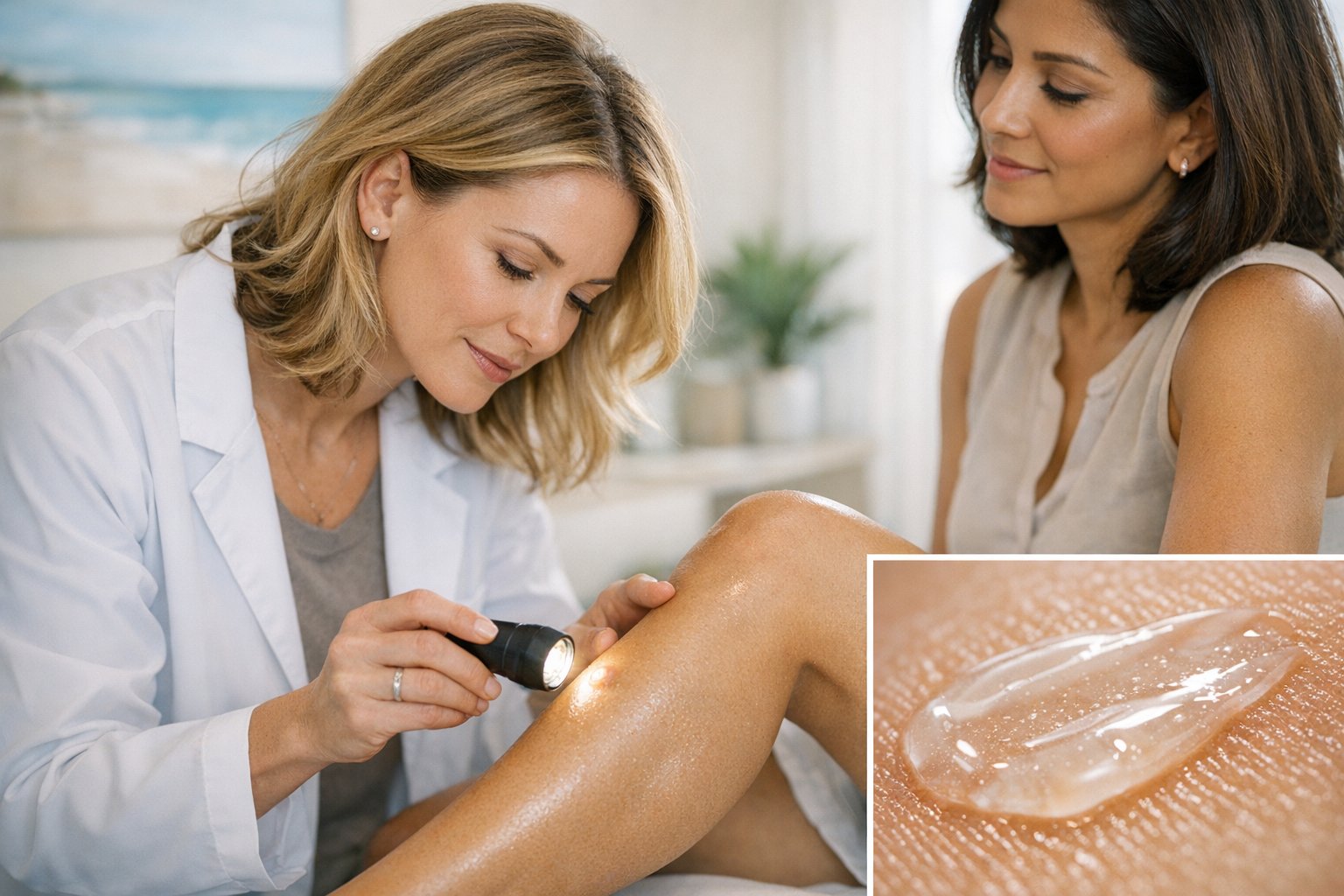
Dermatofibromas are small, firm bumps that can appear on the skin after an injury, such as a bug bite. While they are typically harmless, understanding their causes and how to manage them is important for your skin health.
Quick answer:
- Dermatofibromas are benign, raised skin growths.
- They often develop after an injury, like a bug bite or scratch.
- These growths are not cancerous and typically require no treatment unless symptomatic.
- Dermatofibromas are most common on the legs.
- If they cause pain or discomfort, a dermatologist can evaluate options for removal.
What it is:
Dermatofibromas are benign, fibrous skin growths that form in response to skin trauma. They usually appear as firm, brownish bumps that are typically 1 to 2 cm in diameter. Although they are not dangerous, they may appear after insect bites or minor skin injuries, making them more common in areas where skin has been damaged.
Common causes/triggers:
- Insect bites
- Minor cuts or scrapes
- Skin irritation or injury
- Family history of dermatofibromas
What you can do at home:
Dermatofibromas are generally harmless and do not require home treatment. However, keeping the area clean and avoiding further irritation can help prevent new growths. If you notice any changes in the size, color, or texture of the bump, it’s important to consult with a dermatologist.
Professional options:
If the dermatofibroma becomes bothersome, your dermatologist may offer treatment options such as excision or cryotherapy (freezing). These treatments are typically straightforward, with minimal downtime.
When to see a dermatologist:
If you notice that your dermatofibroma is growing, changing in appearance, or causing discomfort, it may be time to schedule an appointment. A dermatologist can evaluate the growth and discuss potential treatment options.
FAQ:
1. Can dermatofibromas become cancerous?
No, dermatofibromas are benign and not cancerous. They do not pose a risk for skin cancer.
2. Can dermatofibromas be removed?
Yes, dermatofibromas can be removed if they are painful, unsightly, or growing. Speak with a dermatologist for the best course of action.
3. Do dermatofibromas go away on their own?
Dermatofibromas often remain in place for years. In some cases, they may shrink or flatten over time but typically do not disappear completely.
Ready to get help?
Schedule an appointment or send a message and our team will get back to you.
Prefer to call? 954-666-3736
Disclaimer: This article is for educational purposes and is not medical advice. For diagnosis and personalized treatment, please book an appointment with a board-certified dermatologist.
