

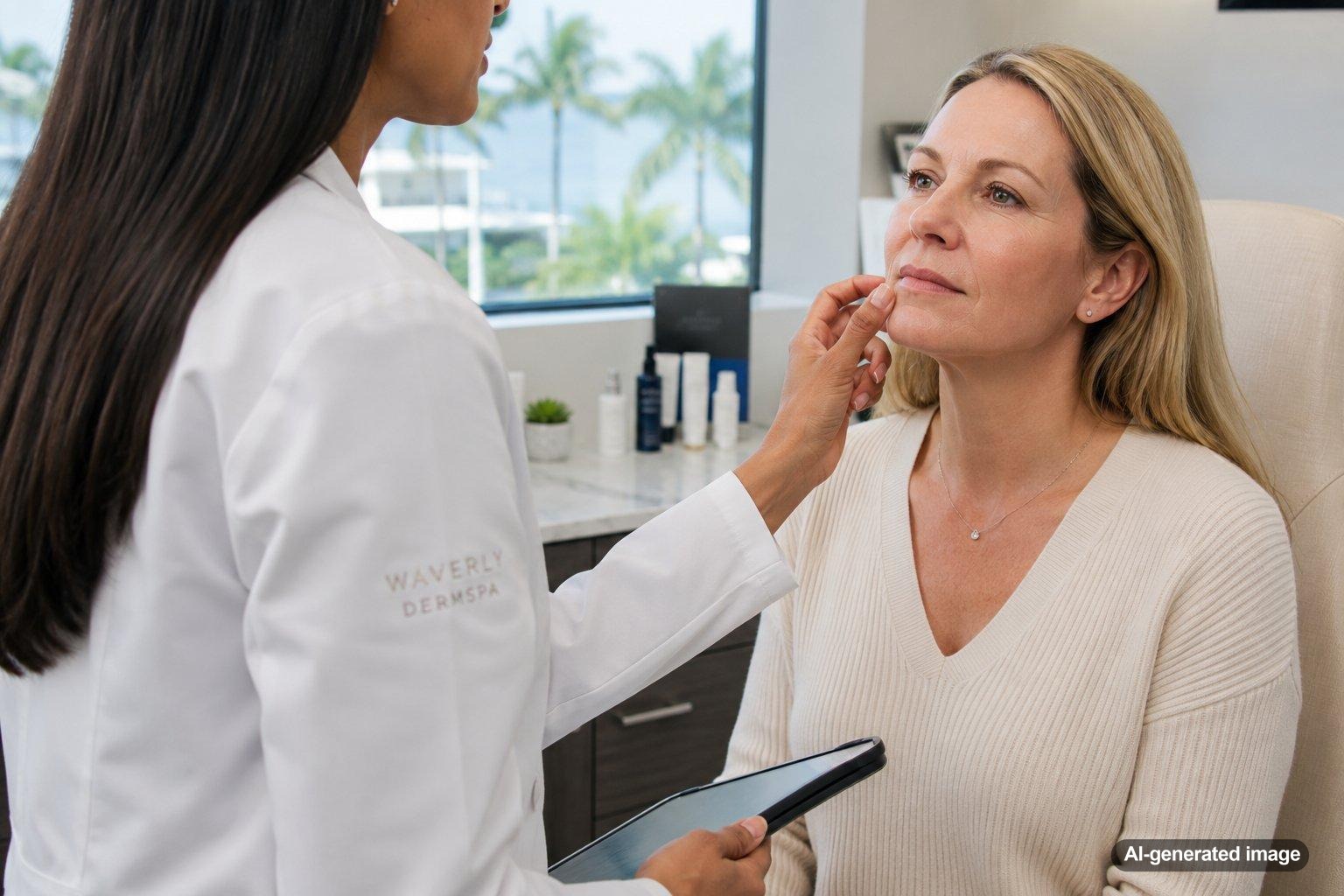
Yes, a deep phenol peel may significantly soften severe lines around the mouth in carefully selected patients. Because it reaches deeper layers of skin than a light or medium peel, it can create more noticeable resurfacing for etched-in perioral wrinkles. However, it is also an intensive medical procedure with substantial recovery, strict aftercare, and risks that require thoughtful screening.
The right answer depends on more than wrinkle depth. Skin tone, medical history, heart health, healing tendency, prior procedures, sun damage, and expectations all affect whether a deep peel is reasonable or whether another approach may be safer.
Quick answer
- A deep phenol peel may improve severe, deeply etched lines around the mouth.
- It does not tighten sagging skin or erase every crease.
- Recovery is much longer and more involved than with lighter peels.
- Phenol can affect the heart, kidneys, and liver, so medical screening and monitoring are essential.
- A board-certified dermatologist should evaluate whether a deep peel or another resurfacing option better fits your skin and goals.
Why lines around the mouth can be difficult to treat
Lines around the lips, often called perioral lines, can develop from repeated facial movement, collagen loss, sun exposure, genetics, smoking history, and natural changes in skin thickness. Over time, fine lines may become fixed creases that remain visible even when the mouth is relaxed.
Topical skincare and gentle procedures may improve texture and early lines, but they usually cannot create the same degree of resurfacing as a deep peel. That is why a phenol-based peel may enter the conversation when wrinkles are pronounced and the patient understands the tradeoffs.
How a deep phenol peel works
A chemical peel applies a controlled chemical solution to remove damaged skin layers. A deep phenol peel reaches farther into the skin than superficial or medium-depth peels. As the treated area heals, new skin forms with a smoother surface and a more even appearance.
Deep phenol peels are medical procedures, not spa treatments or at-home treatments. Application may be divided into sections to limit phenol exposure, and monitoring may be needed because phenol can affect heart rhythm and organ function. A deep peel is generally performed only once rather than as a repeating maintenance treatment.
What results may be realistic
For an appropriate candidate, a deep peel may soften deeply etched lip lines, improve rough texture, and reduce some visible sun damage. The degree of improvement varies with wrinkle depth, skin quality, treatment area, and healing response.
It is important to separate resurfacing from lifting. A deep peel can improve the surface of the skin, but it does not replace volume, reposition tissue, or tighten significant laxity. Some lines may remain, and future aging and sun exposure can create new changes over time.
Who may not be a good candidate
A dermatologist may advise against a deep phenol peel when the medical or pigment-related risks outweigh the likely benefit. Factors that may affect candidacy include:
- Certain heart, kidney, or liver conditions
- A history of abnormal scarring or poor wound healing
- Active skin infection or uncontrolled inflammation
- Frequent cold sore outbreaks without an appropriate prevention plan
- Recent use of certain medications or recent procedures that may affect healing
- Skin tones with a higher risk of long-lasting lightening or uneven pigment
- Inability to follow strict wound care and sun protection instructions
This is not a complete screening list. A dermatologist should review medications, health history, prior cosmetic treatments, and the skin itself before discussing a plan.
What recovery can involve
Recovery after a deep peel is not comparable to the mild flaking associated with a light peel. Swelling, redness, crusting, discomfort, and a period of intensive wound care are expected. New skin forms gradually, while redness and sensitivity may persist much longer.
During healing, patients generally need careful cleansing, protective ointment, follow-up visits, and rigorous sun avoidance. Picking, rubbing, or applying products too early can increase the chance of infection, scarring, and pigment changes. Exact instructions and timing vary, so aftercare should come directly from the treating physician.
What are the main risks?
Potential complications include prolonged redness, infection, scarring, darker or lighter pigmentation, visible demarcation between treated and untreated skin, and an unsatisfactory cosmetic result. Deep phenol peels also carry systemic concerns, including irregular heart rhythm and possible effects on the kidneys or liver.
These risks are why a deep peel should never be approached as a routine beauty service. The setting, physician’s training, screening process, monitoring, emergency readiness, and follow-up plan all matter.
Are there alternatives for severe mouth lines?
Yes. Depending on the cause and pattern of the lines, a dermatologist may discuss other options such as fractional laser resurfacing, ablative laser resurfacing, medium-depth peels, microneedling-based treatments, injectable treatments, or a combined plan. Some approaches focus on skin texture, while others address muscle movement, volume loss, or tissue laxity.
No single treatment is ideal for every face. A conservative combination may sometimes offer a more acceptable balance of improvement, downtime, and risk than one aggressive procedure.
At Waverly DermSpa, we offer Chemical Peels and can help you understand whether they may be appropriate.
When to see a dermatologist
Schedule a medical consultation before considering any deep peel. It is especially important to seek expert guidance if you have a history of heart rhythm problems, kidney or liver disease, keloids, pigment changes after procedures, cold sores, recent isotretinoin use, or difficulty healing.
After any peel, contact the treating clinician promptly for worsening pain, spreading redness, pus, fever, blisters outside the expected treatment area, darkening tissue, or other symptoms that feel more severe than the recovery plan described.
Frequently asked questions
Can a phenol peel remove all smoker’s lines?
It may soften pronounced vertical lip lines, but complete removal cannot be promised. Results depend on line depth, skin quality, facial movement, and the treatment plan.
Can a phenol peel be used only around the mouth?
Localized treatment may be considered in some cases, but matching the treated area to surrounding skin can be challenging. A dermatologist must evaluate skin tone, border placement, and the risk of a visible color difference.
Is a deep peel better than laser resurfacing?
Neither is automatically better. The choice depends on the type of wrinkles, skin tone, medical history, expected downtime, available technology, and the clinician’s experience.
How long does a deep phenol peel last?
Improvement may be long-lasting, but skin continues to age and accumulate sun exposure. Results are not permanent, and strict sun protection remains important.
Can darker skin tones have a deep phenol peel?
Deep peels may create a higher risk of significant pigment change, including lasting lightening. Individual evaluation by a dermatologist experienced with diverse skin tones is essential.
Ready to get help?
Schedule an appointment or send a message and our team will get back to you.
Prefer to call? 954-666-3736
This article is for educational purposes and is not medical advice. For diagnosis and personalized treatment, please book an appointment with a board-certified dermatologist.
Sources & further reading
- Mayo Clinic – Chemical peel
- American Academy of Dermatology (AAD) – Chemical peels: FAQs
- Cleveland Clinic – Chemical Peels: Types of Peels, Conditions Treated, What to Expect
