

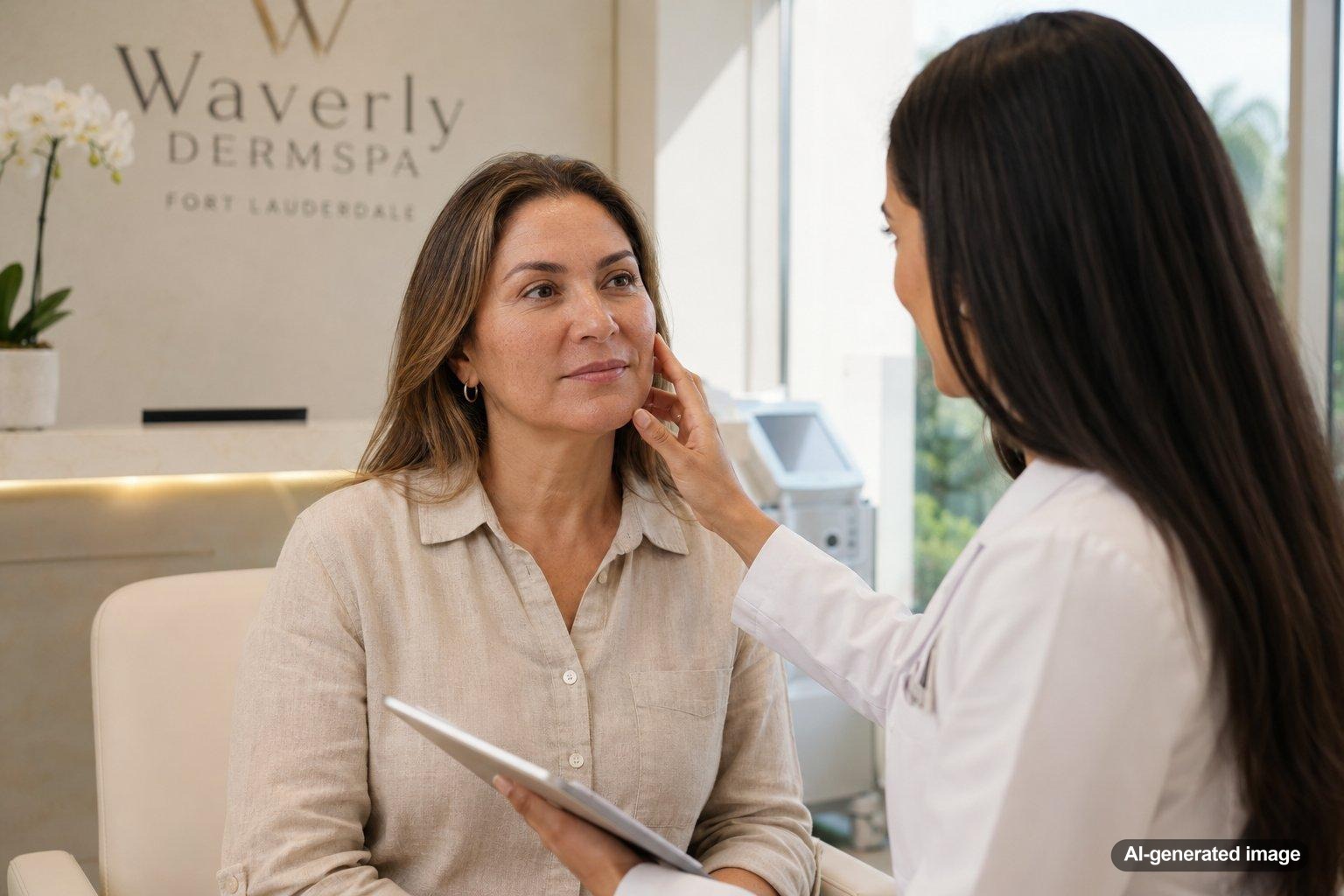
A deep phenol peel may help soften the appearance of certain acne scars on the cheeks by creating controlled exfoliation at a deeper level than lighter chemical peels. It is an intensive medical procedure, however, and it is not appropriate for every scar type, skin tone, health history, or lifestyle.
For patients in Fort Lauderdale, careful planning is especially important because strong year-round sun exposure can affect preparation, recovery, and post-procedure pigmentation risk. A board-certified dermatologist should examine the scars, review your medical history, and compare a phenol peel with other options before recommending treatment.
Quick answer
- Deep phenol peels may improve selected deeper textural irregularities and etched-in facial lines.
- They require more recovery and medical oversight than superficial or medium-depth peels.
- Not every acne scar responds equally, especially narrow ice-pick scars or tethered rolling scars.
- Skin tone, heart health, medications, sun exposure, and healing history can affect candidacy.
- A personalized dermatologist evaluation is essential before deciding whether this procedure is appropriate.
What is a deep phenol peel?
A deep phenol peel is a physician-directed chemical resurfacing procedure that reaches deeper layers of the skin than lighter peels. The solution creates a controlled injury that prompts the treated skin to shed and renew during a closely monitored healing process.
Because phenol penetrates deeply and can place stress on the body, treatment requires careful patient selection, controlled application, and detailed aftercare. It should not be approached as a routine spa peel or a casual treatment for mild acne marks.
Which cheek acne scars may respond?
Acne scars vary in shape, depth, and attachment to underlying tissue. A deep peel may be considered for selected areas with broad textural damage, sharply defined depressions, or significant surface irregularity. Results depend on scar architecture rather than simply how noticeable the scars appear.
Common scar patterns include:
- Boxcar scars: Broad depressions with defined edges that may respond to resurfacing when they are relatively shallow.
- Rolling scars: Undulating depressions caused partly by bands beneath the skin, which may require subcision or combination treatment.
- Ice-pick scars: Narrow, deep openings that often need a targeted technique rather than broad resurfacing alone.
- Post-inflammatory discoloration: Flat red or brown marks are not true textural scars and may call for a different plan.
Why dermatologist evaluation matters
The depth of a peel must be matched carefully to the patient’s skin, scars, and medical profile. During an evaluation, a dermatologist may assess scar type, pigmentation tendency, prior procedures, current skincare products, history of abnormal scarring, active acne, and ability to follow strict recovery instructions.
Deep phenol peels may not be suitable for people with certain medical conditions, medication histories, healing concerns, or higher risks of pigment change. Your dermatologist may recommend another approach when the anticipated benefit does not justify the recovery or risk profile.
What preparation may involve
Preparation varies by patient and should follow the treating dermatologist’s instructions. It may include simplifying skincare, pausing selected irritating products, managing active breakouts, reviewing medications and supplements, and planning rigorous sun avoidance.
Patients should also arrange practical support. The early healing period can involve substantial redness, swelling, peeling, crusting, and sensitivity. Work, social events, exercise, travel, and outdoor activities may need to be adjusted while the skin recovers.
What recovery can look like
Recovery from a deep phenol peel is more involved than recovery from a light lunchtime peel. The treated area may initially look swollen, raw, or intensely red. A protective dressing or prescribed ointment may be used, depending on the dermatologist’s protocol.
New skin gradually forms, but visible redness can remain for an extended and variable period. Healing speed differs from person to person, and the skin may remain sensitive to sun, heat, friction, and active skincare ingredients after the surface has closed.
Contact the treating office promptly for worsening pain, spreading redness, pus-like drainage, fever, unusual swelling, or any symptom that feels concerning.
Fort Lauderdale sun exposure and aftercare
South Florida’s intense ultraviolet exposure makes sun protection a central part of treatment planning. Direct sun during recovery may increase the risk of prolonged redness, uneven pigmentation, and irritation.
Your dermatologist may recommend staying indoors during the earliest healing stage, wearing protective clothing and a wide-brimmed hat when permitted, and using a suitable broad-spectrum sunscreen once the skin is ready. Beach days, boating, outdoor workouts, and extended walking should be discussed before scheduling treatment.
Professional alternatives and combination options
A phenol peel is only one possible approach to cheek acne scars. Depending on the scar pattern and skin characteristics, professional options may include:
- Medium-depth chemical peels
- Fractional resurfacing procedures
- Microneedling or radiofrequency microneedling
- Subcision for tethered scars
- Targeted treatment for narrow scars
- Dermal filler for selected depressions
- A staged combination plan
Combination treatment is often considered because one person may have several scar types in the same area. A dermatologist can help prioritize the techniques that best match the underlying structure of each scar.
At Waverly DermSpa, we offer Chemical Peels and can help you understand whether they may be appropriate.
When to see a dermatologist
Schedule a dermatologist consultation before pursuing any deep chemical peel. Professional evaluation is particularly important if you have active acne, frequent cold sores, a history of unusual scarring, recent facial procedures, significant pigment changes, sensitive skin, or medical conditions that may affect healing.
You should also seek evaluation when acne scars are affecting your confidence but you are unsure which treatment matches the scar type. A thoughtful plan may involve controlling active acne first, then addressing texture and discoloration in separate stages.
Frequently asked questions
Can a phenol peel completely remove cheek acne scars?
No procedure can promise complete scar removal. A deep phenol peel may soften selected scars and improve overall texture, but the degree of change varies according to scar depth, scar type, skin characteristics, and healing response.
Is a deep phenol peel suitable for every skin tone?
No. Deeper peels may carry a meaningful risk of prolonged or uneven pigment change, and candidacy must be assessed carefully. A dermatologist can discuss whether a different resurfacing method may offer a more appropriate balance of benefit and risk.
Can both cheeks be treated at the same time?
That decision depends on the size of the treatment area, the application protocol, medical considerations, and the dermatologist’s treatment plan. Some patients may require a staged or localized approach.
How long does redness last?
Redness after a deep peel can be significant and may persist for a variable period. Your dermatologist can provide a personalized recovery range, but healing cannot be predicted precisely in advance.
Can I fly home after treatment in Fort Lauderdale?
Travel plans should be discussed before scheduling. Early follow-up may be important, and heat, sun exposure, airport logistics, and access to the treating office can complicate recovery for visiting patients.
Are lighter peels enough for acne scars?
Lighter peels may help with brightness, mild surface roughness, and some discoloration, but they generally do not reach deeply enough to substantially change deeper depressed scars. The right depth depends on the concern being treated.
Ready to get help?
Schedule an appointment or send a message and our team will get back to you.
Prefer to call? 954-666-3736
This article is for educational purposes and is not medical advice. For diagnosis and personalized treatment, please book an appointment with a board-certified dermatologist.
