

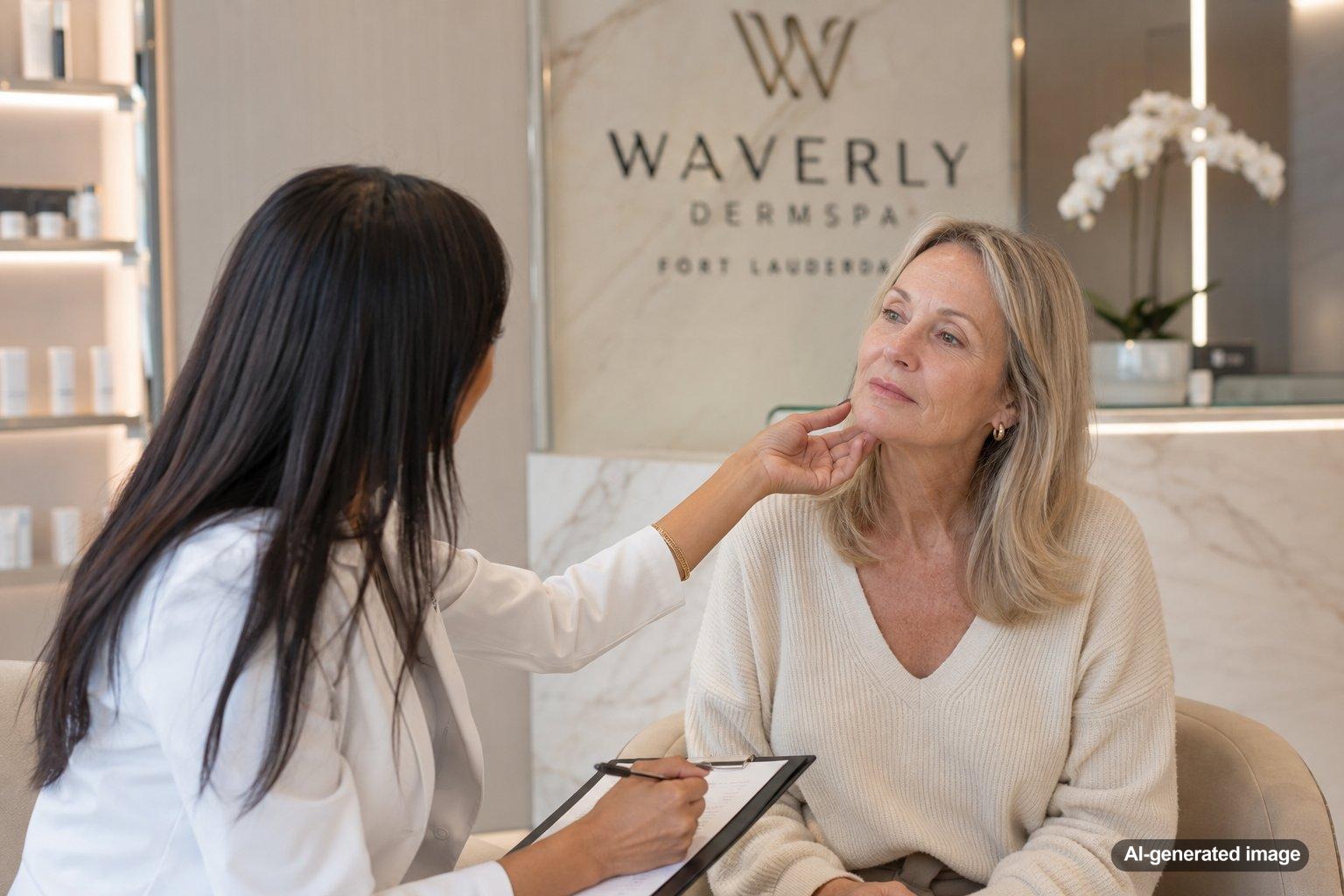
Collagen is one of the most talked-about words in skincare, and for good reason. It helps give skin its firmness, smoothness, and structure, but the way skincare interacts with collagen is often misunderstood. A cream can support the surface of the skin beautifully, yet it cannot simply replace collagen in the deeper layers like filling a cushion.
The calm truth is this: good skincare can help protect the collagen you have, support a healthier-looking barrier, and improve the appearance of texture and fine lines. For deeper collagen remodeling, a dermatologist can help you understand whether in-office options may be appropriate for your skin, goals, and comfort level.
Quick answer
- Skincare can support collagen indirectly by protecting skin from UV exposure, dryness, irritation, and oxidative stress.
- Collagen creams mainly moisturize the surface; collagen molecules in topical products are not a direct replacement for collagen deeper in the skin.
- Ingredients like retinoids, sunscreen, antioxidants, peptides, and moisturizers may help depending on your skin type and consistency.
- Professional treatments may be considered when someone wants to address deeper texture, firmness, or visible skin aging.
What collagen is
Collagen is a structural protein that helps skin look firm, resilient, and smooth. Think of it as part of the support network beneath the visible surface of the skin. Over time, collagen naturally changes, and skin can begin to look thinner, less firm, or more creased. Sun exposure, smoking, chronic inflammation, and repeated irritation can also be associated with visible changes in skin quality.
Because collagen sits mostly below the outermost layer of the skin, topical products have limits. That does not make skincare useless. It simply means skincare is best understood as daily support, not as a direct rebuild of the deeper support layer.
Common causes or triggers of collagen changes
- Sun exposure: Daily UV exposure can be associated with changes in texture, discoloration, fine lines, and firmness.
- Age-related changes: Collagen production and organization naturally shift over time.
- Smoking and pollution exposure: These can contribute to visible skin aging and dullness.
- Chronic inflammation: Ongoing irritation, picking, or untreated skin conditions may affect how skin looks and feels.
- Barrier disruption: Over-exfoliating or using too many active ingredients can leave skin looking dry, sensitive, or uneven.
What skincare can do at home
The most effective at-home approach is usually steady and simple. A broad-spectrum sunscreen used consistently may help protect skin from UV-related collagen changes. A gentle cleanser, barrier-supporting moisturizer, and well-chosen active ingredients can help skin look smoother, calmer, and more even.
- Sunscreen: Often the most important daily step for protecting the appearance of skin over time.
- Retinoids: These may help improve the look of fine lines, texture, and uneven tone, but they should be introduced gradually and may not be right for everyone.
- Antioxidants: Ingredients such as vitamin C may help support a brighter, more even-looking complexion.
- Peptides: Peptide products may support the appearance of firmer, smoother skin, though results vary by formula and skin type.
- Moisturizers: Hydrated skin often looks plumper and softer, even when deeper collagen has not changed.
What skincare cannot do
Topical skincare cannot fully replace collagen that has been lost in deeper skin layers. A collagen cream may make the skin feel more hydrated and comfortable, but it should not be viewed as a direct substitute for the skin’s own collagen network. Skincare also cannot lift significant laxity, erase deeper lines, or change facial structure.
This is where expectations matter. When skincare is used with realistic goals, it can be very worthwhile. It may help skin look healthier, smoother, more hydrated, and more luminous. When goals involve deeper texture, firmness, or more advanced signs of aging, an in-person evaluation can help clarify what is reasonable.
Professional options
Professional collagen-focused options vary widely and may include energy-based treatments, microneedling, resurfacing procedures, injectable biostimulatory treatments, or other dermatologist-guided approaches. The best choice depends on skin tone, skin sensitivity, medical history, downtime preferences, and the specific concern being treated.
A dermatologist can evaluate whether a procedure is appropriate and explain benefits, limitations, risks, recovery, and expected variability. At Waverly DermSpa, we offer SkinPen and can help you understand whether it may be appropriate.
When to see a dermatologist
Consider scheduling a dermatology visit if changes in your skin are sudden, if you have irritation that is not calming down, if you are unsure which active ingredients are safe for you, or if you are considering a procedure. It is also worth getting checked if a spot, mole, or growth is changing, bleeding, painful, or not healing.
For collagen-related concerns, a dermatologist can help separate normal skin aging from issues that need medical attention and can build a plan that respects your skin type, goals, and lifestyle.
FAQ
Do collagen creams build collagen?
Collagen creams may help the skin feel hydrated and smoother on the surface, but they should not be understood as a direct way to replace collagen deeper in the skin.
Are peptides worth using?
Peptides may be helpful in some formulas for supporting the appearance of smoother, firmer-looking skin. They are usually best viewed as supportive rather than dramatic.
Is sunscreen really part of collagen care?
Yes. Consistent sun protection is one of the most practical ways to support the look of skin over time because UV exposure is associated with visible skin aging.
Can retinoids help with collagen?
Retinoids may help improve the appearance of fine lines, texture, and uneven tone for many people. They can also be irritating, so a dermatologist can help guide use if your skin is sensitive or if you are unsure where to start.
When should I consider an in-office treatment?
An in-office consultation may be useful when skincare is not matching your goals, especially for deeper texture, firmness, acne scars, or more noticeable lines. Treatment choices should be individualized.
Ready to get help?
Schedule an appointment or send a message and our team will get back to you.
Prefer to call? 954-666-3736
Disclaimer
This article is for educational purposes and is not medical advice. For diagnosis and personalized treatment, please book an appointment with a board-certified dermatologist.
