

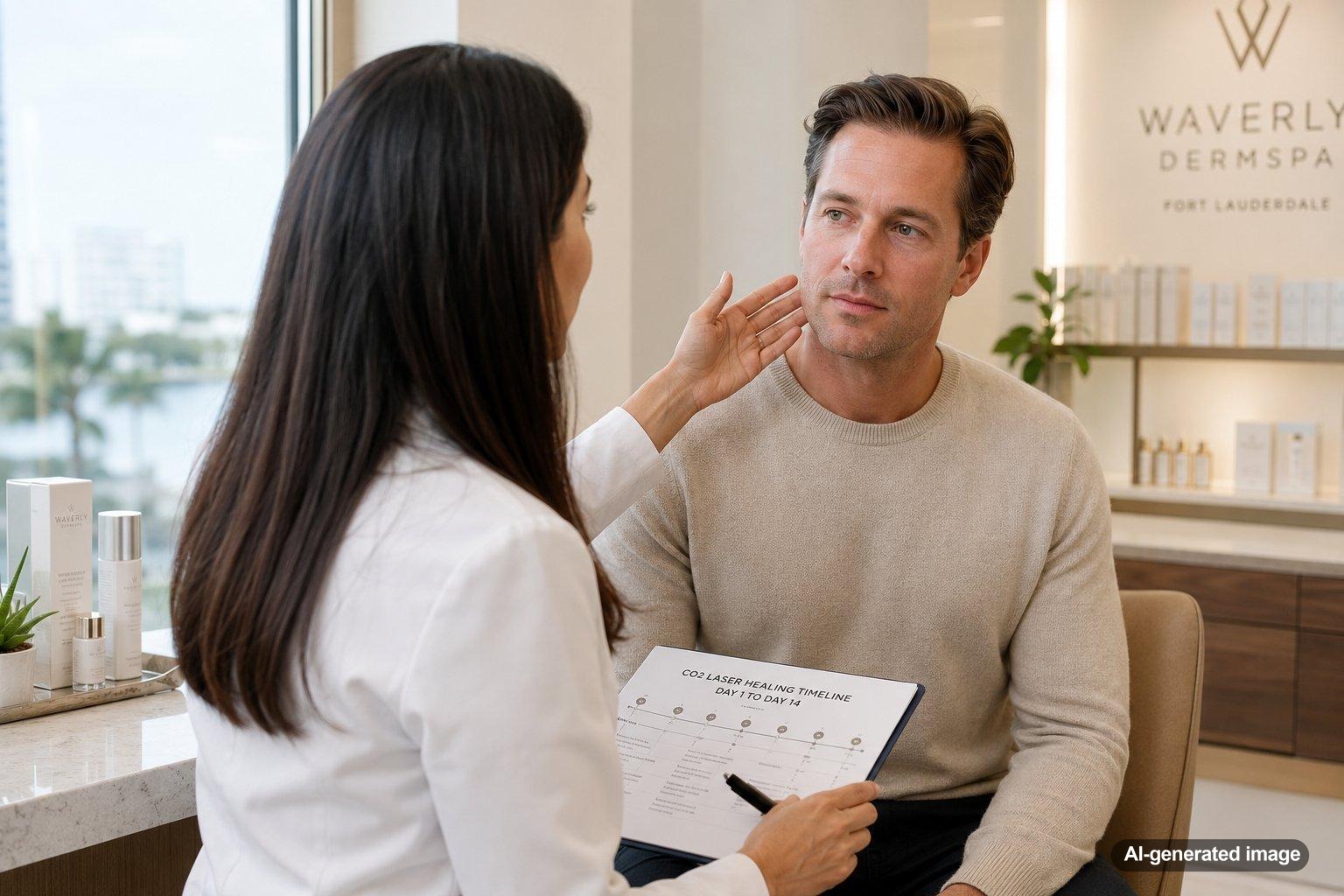
CO2 laser recovery is not a single moment. It is a gradual healing process that can look different from day to day, especially during the first two weeks. Redness, warmth, dryness, flaking, and sensitivity can be part of the expected pattern, but the details vary based on the treatment depth, your skin type, the area treated, your skincare routine, sun exposure, and your clinician’s instructions.
This guide walks through a general Day 1 to Day 14 pattern so you can understand what may happen after CO2 laser resurfacing. It is not a substitute for your personalized post-care plan. Your treating clinician should always be your first source for instructions, especially if something feels unexpected.
Quick answer
- Days 1 to 3 are often the most intense, with warmth, redness, swelling, and a tight feeling.
- Days 4 to 7 commonly bring dryness, rough texture, and visible flaking or peeling.
- Days 8 to 14 may feel calmer, but the skin can still be pink, sensitive, and easily irritated.
- Sun protection is essential while the skin heals, because treated skin may be more vulnerable to discoloration.
- Call your dermatologist if you notice increasing pain, spreading redness, pus-like drainage, fever, blistering, or symptoms that concern you.
What CO2 laser resurfacing is
CO2 laser resurfacing uses focused laser energy to treat the skin in a controlled way. Depending on the device settings and technique, it may be used to address concerns such as texture, fine lines, acne scarring, sun damage, uneven tone, or certain benign growths. Some CO2 treatments are more intensive, while fractional or lighter approaches may create a more limited pattern of treatment zones.
Healing happens in stages because the skin barrier needs time to recover. During this period, your skin may be more reactive than usual. That is why aftercare tends to focus on gentle cleansing, moisture support, avoiding unnecessary irritation, and careful sun avoidance.
Day 1: Warmth, redness, and a raw feeling
On the first day, the treated skin may feel hot, tight, swollen, or similar to a strong sunburn. Redness is common. Depending on treatment intensity, there may also be pinpoint bleeding, oozing, or a shiny appearance. Your clinician may recommend specific cooling, cleansing, ointment, or barrier support instructions.
Avoid picking, scrubbing, exfoliating, applying active skincare ingredients, or using products that were not cleared by your clinician. The goal is to keep the skin calm and protected.
Days 2 to 3: Swelling and tightness may peak
For many people, swelling and tightness are most noticeable during the first few days. The skin may look red, bronze, darker, or grid-like depending on the type of CO2 treatment. This can be unsettling if you were expecting the skin to look better right away, but early inflammation is part of the healing response.
At this stage, simple care usually matters more than doing more. Use only the cleanser, moisturizer, ointment, sunscreen, or other products your clinician has approved. Avoid heat exposure, heavy sweating, pools, saunas, hot yoga, direct sun, and harsh skincare unless your dermatologist gives different instructions.
Days 4 to 5: Dryness, roughness, and flaking often begin
As the surface layer starts to shed, the skin may feel sandpapery, tight, itchy, or flaky. It can be tempting to help peeling skin come off, but picking or rubbing may increase irritation and can raise the risk of marks or delayed healing.
Gentle cleansing and consistent moisturization are often the focus. If itchiness, burning, or discomfort feels significant, contact your clinician rather than adding new products on your own.
Days 6 to 7: Peeling may continue as new skin appears
By the end of the first week, some people notice smoother-looking skin beginning to show through, while others are still pink, dry, or peeling. Both patterns can be normal, depending on the treatment depth and individual healing. The new skin may look delicate, shiny, or more sensitive than usual.
Even if the surface looks improved, the barrier may still be recovering. Continue to avoid exfoliating acids, retinoids, scrubs, fragranced products, and other potential irritants unless your clinician has cleared them.
Days 8 to 10: Redness may soften, but sensitivity can remain
During the second week, the skin may feel less raw and more comfortable. Redness can gradually soften, although pinkness may last longer in some people. Makeup, sunscreen, and skincare should be reintroduced only according to your clinician’s guidance, because timing can vary.
If you are a snowbird, visitor, or frequent traveler in Fort Lauderdale, this is also the stage where planning matters. Heat, humidity, sun exposure, flights, and outdoor activities can all make post-laser care more complicated. Your clinician can help you plan around travel and local sun exposure.
Days 11 to 14: The skin may look calmer, but it is not finished healing
By Days 11 to 14, many people feel more comfortable in everyday settings, but the skin may still be pink, dry, sensitive, or uneven in tone. Collagen remodeling and color settling can continue beyond the first two weeks, and the visible timeline is not the same for everyone.
This is a good time to keep routines simple. Gentle moisturizer, careful sun protection, and avoiding unnecessary actives can help reduce the chance of irritation while the skin continues to recover.
What can affect the healing timeline
CO2 laser recovery is influenced by more than the calendar. Your healing pattern may vary based on:
- Treatment depth and density
- Whether the treatment was fully ablative, fractional, or a lighter CO2 approach
- Skin tone and history of post-inflammatory hyperpigmentation
- Recent sun exposure or tanning
- Use of retinoids, exfoliating acids, or irritating skincare
- History of cold sores or certain skin conditions
- Smoking, medical conditions, or medications that can affect healing
- How closely post-care instructions are followed
What you can do at home
Home care should be conservative and based on your specific instructions. In general, many post-laser plans emphasize:
- Using a gentle cleanser as directed
- Keeping the skin moisturized with approved products
- Avoiding picking, peeling, or scrubbing
- Staying out of direct sun while the skin heals
- Using sun protection when your clinician says it is appropriate
- Avoiding retinoids, exfoliating acids, abrasive tools, and fragranced products until cleared
- Checking in with your clinician before restarting active skincare
Do not use internet advice to replace your actual post-procedure plan. CO2 laser settings can vary widely, so the safest routine is the one designed for your treatment.
Professional options and follow-up care
Your clinician may schedule follow-up care to check healing, adjust skincare, or advise when it is reasonable to return to makeup, exercise, active ingredients, or additional treatments. Some people need a very simple recovery plan, while others may benefit from closer follow-up based on skin tone, sensitivity, travel plans, or treatment intensity.
At Waverly DermSpa, we offer Tetra CoolPeel CO2 and can help you understand whether it may be appropriate.
When to see a dermatologist
Contact your dermatologist promptly if your recovery seems to be worsening rather than gradually calming, or if you notice symptoms that feel unusual for you. It is especially worth reaching out for:
- Increasing pain after the first few days
- Spreading redness, warmth, or swelling
- Pus-like drainage, crusting that seems excessive, or a foul odor
- Fever or feeling ill
- Blistering or open areas that are expanding
- New cold sore symptoms or a history of cold sores with tingling or burning
- Dark patches, light patches, or irritation that is not improving
- Any concern that makes you feel unsure about healing
A dermatologist can evaluate whether what you are seeing fits the expected healing pattern or needs treatment.
FAQ
Is peeling after CO2 laser normal?
Peeling or flaking can be part of the healing process, especially during the first week. The timing depends on the treatment depth and your skin’s response. Do not pick or pull at peeling skin unless your clinician gives specific instructions.
How long does redness last after CO2 laser?
Redness can vary. Some people look much calmer within two weeks, while others stay pink longer, especially after more intensive resurfacing. Your clinician can give a more realistic estimate based on your treatment settings.
Can I wear makeup after CO2 laser?
Ask your treating clinician before applying makeup. The timing depends on how your skin is healing and whether the surface barrier is ready. Applying makeup too early may irritate the skin.
When can I go back to exercise?
Exercise timing varies. Heavy sweating, heat, and friction may irritate healing skin, so your clinician may recommend avoiding intense workouts for a period of time after treatment.
Can CO2 laser cause pigmentation changes?
Pigmentation changes can occur after laser procedures, especially if the skin is irritated or exposed to sun too soon. This is one reason sun protection and dermatologist-guided aftercare are important.
Should I schedule CO2 laser before a trip or event?
It is best to plan with your clinician well in advance. Healing can be variable, and redness or sensitivity may last longer than expected. Fort Lauderdale sun exposure and travel plans should be part of the discussion.
Ready to get help?
Schedule an appointment or send a message and our team will get back to you.
Prefer to call? 954-666-3736
Disclaimer
This article is for educational purposes and is not medical advice. For diagnosis and personalized treatment, please book an appointment with a board-certified dermatologist.
Sources & further reading
- Cleveland Clinic – Carbon Dioxide Laser Resurfacing
- American Academy of Dermatology (AAD) – 10 Things to Know Before Having Laser Treatment for Your Scar
- U.S. Food and Drug Administration (FDA) – Medical Lasers
