

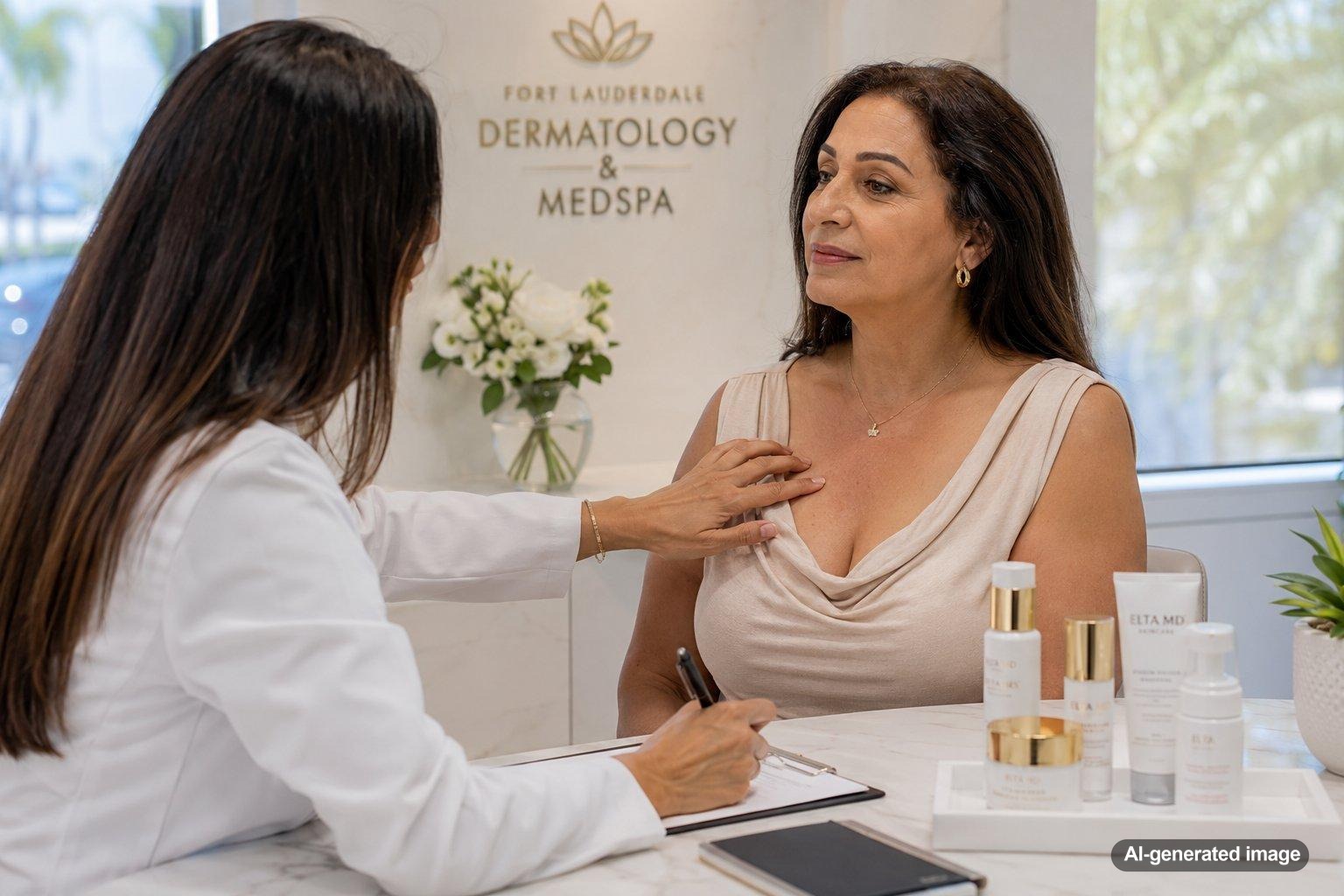
Chest acne can feel especially frustrating because it is easy to hide, easy to irritate, and often slower to notice than facial breakouts. The chest has oil glands and hair follicles, so clogged pores, sweat, friction, and certain products can all contribute to bumps in this area.
The good news is that many chest breakouts can be supported with practical routine changes. When acne is painful, widespread, recurring, or leaving marks, a dermatologist can evaluate whether it is acne, folliculitis, irritation, or another skin condition and help guide a more personalized plan.
Quick answer
- Chest acne is commonly linked with sweat, friction, oil, dead skin buildup, and pore-clogging products.
- Changing out of sweaty clothing, showering after workouts, and using non-comedogenic body products may help reduce flare-ups.
- Avoid scrubbing aggressively, which can irritate the skin barrier and make redness or bumps look worse.
- Persistent, painful, cyst-like, or scarring breakouts are worth discussing with a dermatologist.
What chest acne is
Chest acne happens when pores or hair follicles in the chest area become blocked by oil, dead skin cells, and debris. Some bumps may look like whiteheads, blackheads, inflamed pimples, or deeper tender nodules. Because the chest is often covered by clothing, sweat and friction can make the area more reactive.
Not every bump on the chest is acne. Heat rash, folliculitis, contact irritation, keratosis pilaris, and other skin concerns can sometimes look similar. If a breakout does not behave like your usual acne, or if it itches, burns, spreads quickly, or becomes painful, it is worth getting checked.
Common chest acne triggers
- Sweat and heat: Warm, humid conditions and sweaty clothing can create an environment where pores feel more congested.
- Friction: Sports bras, tight workout tops, backpack straps, uniforms, and synthetic fabrics can rub the chest repeatedly.
- Heavy body products: Thick lotions, oils, sunscreen, or fragrance-heavy products may contribute to clogged pores in acne-prone skin.
- Hair products: Conditioner, styling creams, and oils can run onto the chest in the shower or transfer from long hair.
- Hormonal shifts: Some people notice chest breakouts around menstrual cycles, stress changes, or other hormonal patterns.
- Medications or supplements: Certain medications and performance-related supplements can be associated with acne-like breakouts for some people. A clinician can help review possibilities safely.
- Over-cleansing: Harsh scrubs, frequent exfoliation, and drying soaps can irritate the skin barrier and make bumps appear more inflamed.
Prevention tips you can try at home
- Shower after sweating: Rinse as soon as practical after workouts, outdoor activity, or long periods in humid weather.
- Change clothing promptly: Avoid sitting in damp workout clothes or tight layers longer than necessary.
- Choose breathable fabrics: Soft, moisture-wicking, well-fitting clothing can reduce friction compared with tight or rough materials.
- Wash workout gear: Sports bras, compression tops, chest straps, and uniforms can collect sweat, oil, and product residue.
- Use acne-friendly body care: Look for non-comedogenic or oil-free products when possible, especially with sunscreen and body moisturizer.
- Rinse conditioner well: Wash and rinse hair products away from the chest, then cleanse the chest afterward if residue tends to linger.
- Be gentle with exfoliation: Skip harsh scrubbing. A mild cleanser and consistent routine are usually more skin-friendly than aggressive friction.
- Avoid picking: Picking can increase irritation and may raise the chance of lingering marks or texture changes.
What you can do at home
A simple chest acne routine often starts with a gentle body cleanser, clean clothing, and a light moisturizer if the skin feels dry or tight. Some over-the-counter acne washes contain ingredients such as benzoyl peroxide or salicylic acid, which may help some types of acne-prone skin. These ingredients can be irritating for some people, and benzoyl peroxide may bleach towels or clothing, so it is best to introduce products thoughtfully.
If your skin stings, peels, or becomes very dry, reduce frequency and simplify the routine. More product does not always mean better control. A dermatologist can help determine which ingredients make sense for your skin type, breakout pattern, and sensitivity level.
Professional options
When chest acne is persistent or more inflamed, professional guidance can help clarify what is happening. A dermatologist may discuss topical prescriptions, oral medications, hormonal considerations, or in-office options depending on the pattern and severity. If discoloration or texture changes remain after breakouts, your clinician can also explain safe ways to address those concerns without irritating active acne.
At Waverly DermSpa, we offer Chemical Peels and can help you understand whether they may be appropriate.
When to see a dermatologist
Consider booking an appointment if chest breakouts are painful, deep, recurring, spreading, leaving dark marks or scars, or not improving with a consistent gentle routine. You should also seek care if bumps are very itchy, look infected, develop drainage, or appear suddenly after a new medication, supplement, or skin product.
For patients in Fort Lauderdale, a dermatologist can be especially helpful when heat, humidity, sunscreen, outdoor activity, and frequent sweating all overlap. The goal is not just to calm current breakouts, but to create a routine that fits your lifestyle and skin.
FAQ
Is chest acne the same as face acne?
It can be similar because both may involve clogged pores, oil, and inflammation. However, the chest is more affected by clothing, sweat, friction, and body products, so prevention habits may need to be different.
Can sunscreen cause chest breakouts?
Some heavier or oil-rich formulas may feel congesting on acne-prone skin. Non-comedogenic sunscreen can be a helpful choice, especially in sunny climates where skipping sun protection is not a good tradeoff.
Should I scrub chest acne?
Usually, no. Scrubbing can irritate the skin and may make bumps look redder or more inflamed. A gentle cleanser and consistent habits are typically a better starting point.
Why do I break out after workouts?
Sweat, heat, tight clothing, friction, and delayed showering can all contribute. Changing out of sweaty clothes and rinsing the skin after exercise may help reduce workout-related flare-ups.
When is chest acne more than a cosmetic concern?
If breakouts are painful, cyst-like, widespread, leaving scars, or not responding to conservative care, it is worth seeing a dermatologist. A clinician can check whether the bumps are acne or another condition that needs a different approach.
Ready to get help?
Schedule an appointment or send a message and our team will get back to you.
Prefer to call? 954-666-3736
Disclaimer
This article is for educational purposes and is not medical advice. For diagnosis and personalized treatment, please book an appointment with a board-certified dermatologist.
Sources & further reading
- American Academy of Dermatology (AAD) – Acne Resource Center
- Cleveland Clinic – Acne: Types, Causes, Treatment & Prevention
- Mayo Clinic – Acne: Symptoms and Causes
