

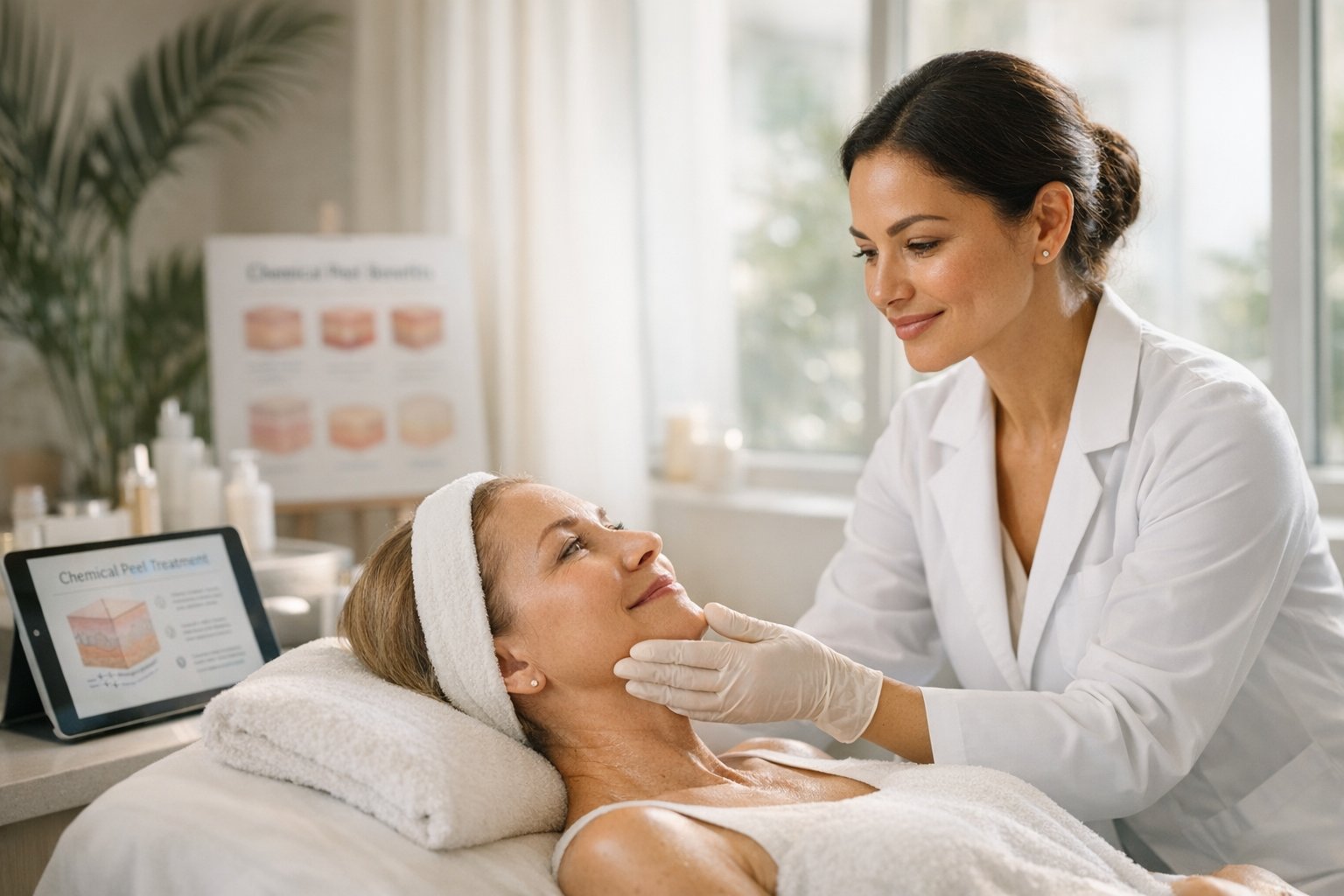
If your skin looks a little dull or feels less smooth than it used to, a chemical peel can be a calm, science-forward way to reset the surface and support a more even-looking glow.
Quick answer
- Chemical peels use carefully selected acids to exfoliate the outer layers of skin in a controlled way.
- They may help improve the look of dullness, uneven tone, clogged pores, and rough texture.
- Peel depth and ingredient choice matter, so a personalized evaluation is important.
- Sun protection and gentle aftercare are key for comfortable healing and best-looking results.
What it is (plain English)
A chemical peel is a dermatologist-guided exfoliation treatment that uses a solution (often made from alpha hydroxy acids, beta hydroxy acids, or other exfoliating ingredients) to loosen and shed older surface cells. As that top layer renews, skin can look brighter and feel smoother. Peels range from very light, refresh-style treatments to deeper options that target more significant texture or pigment concerns. The right choice depends on your skin type, goals, and how your skin tends to react.
Common causes and triggers (why skin can look dull or feel rough)
- Sun exposure that gradually leads to uneven tone and roughness
- Build-up of dead skin cells that can make skin look less radiant
- Clogged pores from excess oil, makeup residue, or heavier products
- Post-breakout marks that linger after acne calms down
- Natural slow-down in cell turnover with age
- Over-exfoliation or harsh products that disrupt the skin barrier
- Dehydration and environmental stress (heat, wind, travel, and frequent air conditioning)
What you can do at home
Good at-home habits help your skin respond more comfortably to professional treatments and help maintain results between visits.
- Keep it gentle: Use a mild cleanser and avoid stacking multiple exfoliants (scrubs, strong acids, and retinoids all at once) if you are getting irritated.
- Wear sunscreen every day: A broad-spectrum sunscreen is one of the most practical ways to protect brightness and even tone, especially in sunny climates.
- Moisturize with intention: A simple, fragrance-light moisturizer can support the skin barrier and reduce dryness and flaking.
- Be cautious with active ingredients: If you use acids or retinoids, consider spacing them out and stopping any product that causes stinging, redness, or peeling that feels excessive.
- Patch test new products: Especially if you have sensitive skin or you are adding something more active.
- Avoid picking and aggressive scrubbing: This can worsen uneven tone and prolong visible marks.
Professional options
In-office peels are typically selected by depth, ingredient family, and how your skin behaves. Your clinician can help you decide what fits your goals and your calendar.
- Light or superficial peels: Often used to refresh dullness, improve mild texture, and support clearer-looking pores with minimal downtime for many people (downtime varies).
- Medium-depth peels: May be considered for more noticeable uneven tone or texture concerns, with a more involved recovery period.
- Targeted peel strategies: Some plans focus on oil and congestion, others focus on tone and visible discoloration. Ingredient selection can be adjusted for sensitivity, dryness, or acne-prone skin.
- Combination care plans: Many people do best with a sequence of treatments and a simplified routine rather than one aggressive session.
At Waverly DermSpa, we offer Chemical Peels and can help you understand whether one may be appropriate.
When to see a dermatologist
It is worth booking a dermatology evaluation if you notice any of the following:
- Persistent redness, burning, or irritation that does not settle with gentle skincare
- Repeated reactions to skincare products or a history of very sensitive skin
- Darkening or uneven patches that are spreading or changing quickly
- Frequent breakouts that are leaving lingering marks or scarring concerns
- You are unsure which ingredients are safe for your skin or you have a history of complications from prior treatments
FAQ
Do chemical peels hurt?
Many people feel tingling, warmth, or mild stinging during application. Sensation depends on the peel type, your skin sensitivity, and the treatment plan.
How do I choose the right peel?
The best peel is the one matched to your skin type, goals, and tolerance. A clinician can evaluate your skin, review your routine, and recommend a depth and ingredient approach that makes sense.
Will I peel afterward?
Some peels cause little to no visible shedding, while others can lead to noticeable flaking for several days. Recovery varies, and your clinician can set expectations based on the peel selected.
Can I keep using my regular skincare after a peel?
Aftercare usually focuses on gentle cleansing, moisturizing, and sunscreen. Many active ingredients are paused for a period of time because skin can be more reactive while it is renewing.
Are chemical peels OK for acne-prone skin?
Some peels are commonly used to support clearer-looking pores and reduce congestion. The right choice depends on your acne pattern, sensitivity, and current products.
Ready to get help?
Schedule an appointment or send a message and our team will get back to you.
Prefer to call? 954-666-3736
Disclaimer
This article is for educational purposes and is not medical advice. For diagnosis and personalized treatment, please book an appointment with a board-certified dermatologist.
