

Acne and acne-like bumps on the buttocks can leave behind discoloration, uneven texture, and marks that linger long after the active breakout has settled. Because the skin in this area is exposed to friction, pressure, sweat, and tight clothing, improving its appearance often requires a thoughtful approach rather than aggressive scrubbing or frequent use of strong products.
Chemical peels are one professional option that may help improve surface texture and the appearance of post-breakout discoloration. The appropriate peel, strength, and treatment plan depend on your skin, the type of marks present, and whether active inflammation is still occurring.
Quick answer
- Chemical peels use carefully selected acids to exfoliate the outer layers of skin.
- They may help improve uneven tone, rough texture, and some superficial marks left after breakouts.
- Deeper or indented scars may require a different approach or a combination of treatments.
- The buttocks can be sensitive to friction and irritation, so professional evaluation can help reduce the risk of over-treatment.
What are chemical peels for the buttocks?
A chemical peel is a controlled exfoliation treatment in which a clinician applies a chemical solution to the skin. Depending on the formulation and depth, the treatment encourages shedding of surface skin cells and supports a smoother, more even-looking surface as the skin recovers.
On the buttocks, a peel may be considered for concerns such as roughness, uneven tone, lingering dark marks after breakouts, and certain superficial textural changes. Not every mark is the same, however. Flat discoloration, raised areas, and true indented scars can respond differently, which is why identifying the concern before choosing a treatment matters.
Common causes or triggers
Several factors can contribute to breakouts and uneven texture in this area:
- Friction and pressure: Tight clothing, prolonged sitting, and repetitive movement can irritate the skin.
- Sweat and occlusion: Damp workout clothes and non-breathable fabrics may create an environment where bumps are more likely to develop.
- Clogged follicles: Oil, dead skin cells, and product residue can contribute to follicular congestion.
- Picking or squeezing: Manipulating bumps may increase inflammation and make discoloration or scarring more noticeable.
- Repeated irritation: Harsh scrubs, aggressive exfoliation, or using multiple strong products at once can disrupt the skin barrier and worsen unevenness.
What you can do at home
Gentle, consistent care is usually more helpful than trying to scrub texture away. Consider changing out of sweaty clothing soon after exercise, choosing breathable fabrics when practical, and washing the area with a mild cleanser. Avoid picking at bumps or repeatedly using abrasive body scrubs.
If you use an exfoliating body product, introduce it gradually and watch for persistent stinging, redness, peeling, or worsening irritation. More exfoliation is not necessarily better, especially if you are also considering an in-office peel.
It can also be helpful to tell your clinician about any retinoids, exfoliating acids, prescription products, or recent procedures you use on the area. That information can influence how a professional treatment is planned.
Professional options for scars and uneven texture
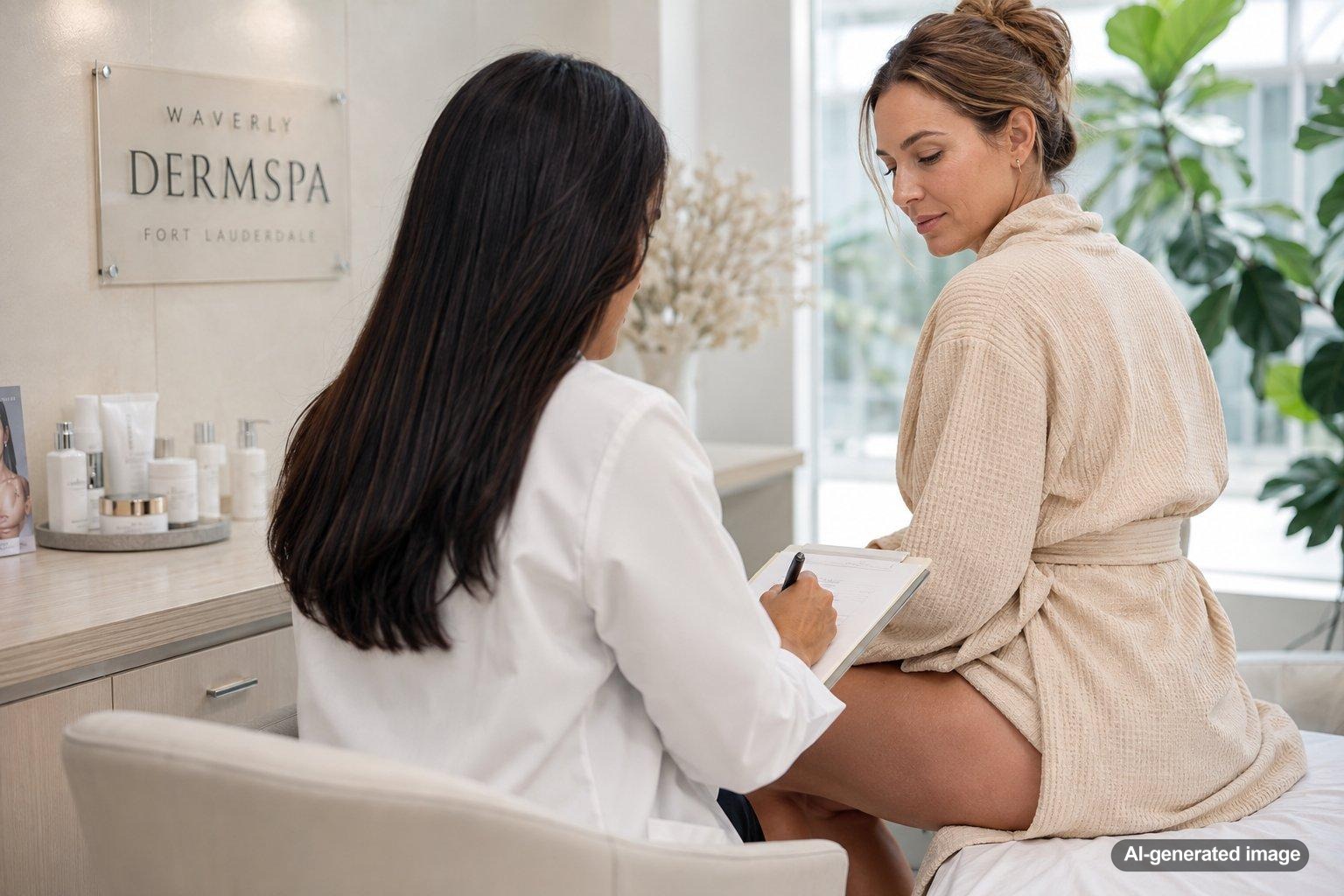
A dermatologist can evaluate whether the visible changes are mainly discoloration, superficial texture, active breakouts, or more established scarring. That distinction helps determine whether a chemical peel is a reasonable option.
Professional peels are available in different formulations and strengths. A clinician may select an approach based on skin tone, sensitivity, the condition of the skin barrier, and the depth of the concern. Some people may be better suited to other office-based approaches, particularly when scars are deeper or when active inflammation needs to be addressed first.
Because irritation itself can contribute to lingering discoloration, especially in skin that tends to develop dark marks after inflammation, treatment should be appropriately paced and individualized. Your clinician can help you decide how chemical peels fit within a broader plan rather than treating every type of scar or texture change the same way.
When to see a dermatologist
Consider a dermatologist evaluation if bumps are painful, repeatedly inflamed, draining, rapidly worsening, or leaving significant scars. It is also worth getting checked if you are unsure whether the bumps are actually acne, since several different skin concerns can look similar in this area.
A dermatologist can also evaluate persistent discoloration or texture before you begin stronger exfoliating treatments. This is particularly useful if your skin has reacted poorly to acids or peels in the past, or if over-the-counter products have caused prolonged irritation.
FAQ
Can a chemical peel remove acne scars on the buttocks?
Chemical peels may help improve the appearance of some superficial marks, discoloration, and uneven texture. Deeper or indented scars may respond differently and can require other treatment approaches. A dermatologist can evaluate the type of scarring before recommending an option.
Can chemical peels help dark marks after breakouts?
They may help improve the appearance of post-breakout discoloration by encouraging controlled surface exfoliation. The safest approach depends on skin tone, sensitivity, and the type of pigmentation present.
Should I scrub the area before a chemical peel?
Aggressive scrubbing can irritate the skin and may make a professional peel harder to tolerate. Follow the preparation instructions provided by your clinician and avoid adding strong exfoliating products unless they recommend them.
Can I have a peel if I still have active bumps?
That depends on what is causing the bumps and how inflamed the skin is. A dermatologist can evaluate active lesions and determine whether treating the underlying issue first would be more appropriate.
How many chemical peels are needed?
The number and spacing of treatments can vary based on the peel used, the concern being addressed, skin sensitivity, and how the skin responds. Your clinician can discuss a personalized plan after evaluating the area.
At Waverly DermSpa, we offer Chemical Peels and can help you understand whether it may be appropriate.
Ready to get help?
Schedule an appointment or send a message and our team will get back to you.
Prefer to call? 954-666-3736
This article is for educational purposes and is not medical advice. For diagnosis and personalized treatment, please book an appointment with a board-certified dermatologist.
