

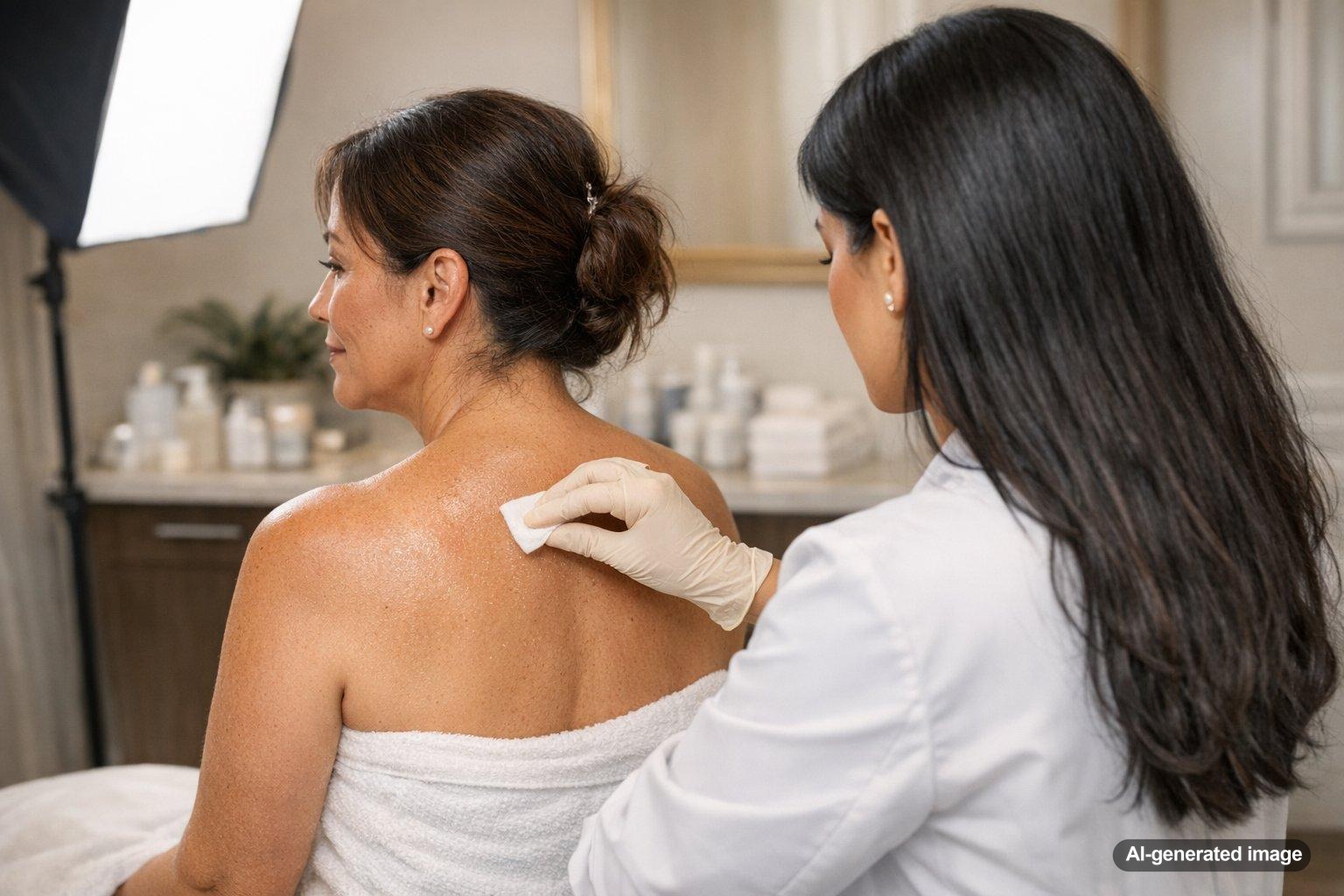
Back acne and chest breakouts can feel especially frustrating because they are often hidden, hard to reach, and easily aggravated by heat, sweat, tight clothing, sunscreen, backpacks, athletic gear, or travel routines. In Fort Lauderdale, where warm weather and active lifestyles are part of daily life, these breakouts can be more than a seasonal concern.
A chemical peel may help improve the look and feel of acne-prone skin on the back or chest by supporting exfoliation, helping clear clogged pores, and encouraging smoother-looking skin over time. The right plan depends on your skin type, breakout pattern, sensitivity, and whether there are signs of irritation, post-acne marks, or another skin condition that may need medical evaluation.
Quick answer
- Chemical peels may be used on the back or chest to support clearer-looking, smoother skin when breakouts are related to clogged pores, oil, sweat, and friction.
- Acne mechanica can be associated with repeated pressure, rubbing, heat, and trapped sweat from clothing, straps, sports gear, or equipment.
- Body skin is not the same as facial skin, so peel strength, timing, and aftercare should be selected carefully.
- If breakouts are painful, widespread, scarring, itchy, draining, or not improving, a dermatologist can evaluate whether acne or another condition is involved.
- In sunny South Florida, sun protection and post-peel care are especially important.
What is acne mechanica?
Acne mechanica is a type of breakout pattern that can occur when skin is repeatedly exposed to friction, pressure, heat, or sweat. It is common on areas where clothing, sports gear, bags, bras, seat belts, or workout equipment rub against the skin. On the back and chest, it may look like small bumps, clogged pores, inflamed pimples, or rough texture.
Because several skin concerns can resemble acne, it is helpful to avoid self-diagnosing based on appearance alone. Folliculitis, irritation, contact reactions, and other conditions can sometimes look similar. A dermatologist can evaluate the pattern and help guide the safest next step.
Why the back and chest are prone to breakouts
The back and chest have oil glands and can trap sweat and debris under fabric, especially in warm or humid climates. These areas are also more likely to experience friction from activewear, swimwear, uniforms, straps, and travel clothing.
Common causes or triggers
- Heat and humidity: Sweat can become trapped under clothing, especially after exercise or time outdoors.
- Friction: Tight shirts, bras, backpacks, athletic pads, and equipment may rub the skin repeatedly.
- Occlusive products: Heavy body oils, thick sunscreens, or hair products that touch the back or chest may contribute to clogged pores for some people.
- Delayed cleansing: Staying in sweaty clothing after workouts or beach days may worsen congestion.
- Hormonal patterns: Some people notice body breakouts that fluctuate with hormones, stress, or certain life stages.
- Picking or scrubbing: Aggressive exfoliation can irritate the skin barrier and may make redness or marks more noticeable.
How chemical peels may help body acne
Chemical peels use carefully selected exfoliating ingredients to help lift dull surface buildup and support clearer-looking pores. On the back or chest, a peel may be considered when breakouts are related to congestion, rough texture, or post-breakout discoloration. The goal is to support skin renewal in a controlled way, not to strip or inflame the skin.
Body peels should be approached thoughtfully. The chest can be more delicate and more prone to visible irritation than many people expect, while the back may tolerate treatment differently. Your clinician can consider skin tone, sensitivity, recent sun exposure, active inflammation, skincare products, medications, and history of pigmentation before recommending a peel plan.
What you can do at home
- Shower soon after sweating when practical, especially after workouts, beach days, or long walks in humid weather.
- Change out of tight or sweaty clothing promptly.
- Choose breathable fabrics when possible, particularly for workouts and travel.
- Keep hair products, heavy oils, and rich conditioners from sitting on the back or chest.
- Use gentle cleansing rather than harsh scrubbing, which may irritate skin.
- Avoid picking, squeezing, or scratching breakouts, as this may increase the chance of lingering marks.
- Use sunscreen on exposed areas, especially if you are treating post-acne discoloration or planning a peel.
Professional options
Professional care may include a dermatologist-guided evaluation, medical acne treatment when appropriate, in-office chemical peels, skincare adjustments, or maintenance treatments selected for your skin. If the breakout pattern suggests folliculitis, irritation, medication-related acne, or another concern, your provider may recommend a different approach.
For body acne, professional treatment is usually most effective when paired with practical daily habits. This may include adjusting workout clothing, cleansing routines, sunscreen choices, and product use on the back, shoulders, and chest.
At Waverly DermSpa, we offer Chemical Peels and can help you understand whether they may be appropriate.
When to see a dermatologist
It is worth scheduling an evaluation if breakouts are painful, deep, spreading, scarring, leaving persistent dark marks, or not responding to conservative care. You should also consider dermatology care if bumps are very itchy, look infected, drain fluid, appear suddenly, or occur with fever or other symptoms.
A dermatologist can help distinguish acne from look-alike conditions and can discuss options that fit your skin type, medical history, lifestyle, and goals.
FAQ
Can chemical peels be used on the back and chest?
Yes, chemical peels may be used on body areas such as the back or chest when clinically appropriate. The type and strength of peel should be selected carefully because body areas vary in sensitivity and healing response.
Is a peel right for acne mechanica?
A peel may help when friction-related breakouts are also associated with clogged pores, rough texture, or post-breakout discoloration. However, reducing friction, heat, and trapped sweat is also important, and some cases may need medical acne care.
Will one peel clear my back acne?
Response varies. Many people need a broader plan that may include skincare changes, lifestyle adjustments, professional treatments, or dermatologist-directed care. Your clinician can help set realistic expectations.
Can I work out after a body peel?
Your clinician may recommend avoiding heavy sweating, heat, friction, and direct sun for a period after treatment. The exact timing depends on the peel used and your skin’s response.
What if my chest breakouts are itchy?
Itchy bumps can have several causes and are not always acne. A dermatologist can evaluate whether acne, folliculitis, irritation, or another issue may be involved.
Is sun exposure a concern after a peel?
Yes. Freshly treated skin may be more sensitive to sun exposure. In Fort Lauderdale, careful sun protection is especially important after professional exfoliation.
Ready to get help?
Schedule an appointment or send a message and our team will get back to you.
Prefer to call? 954-666-3736
Disclaimer
This article is for educational purposes and is not medical advice. For diagnosis and personalized treatment, please book an appointment with a board-certified dermatologist.
