

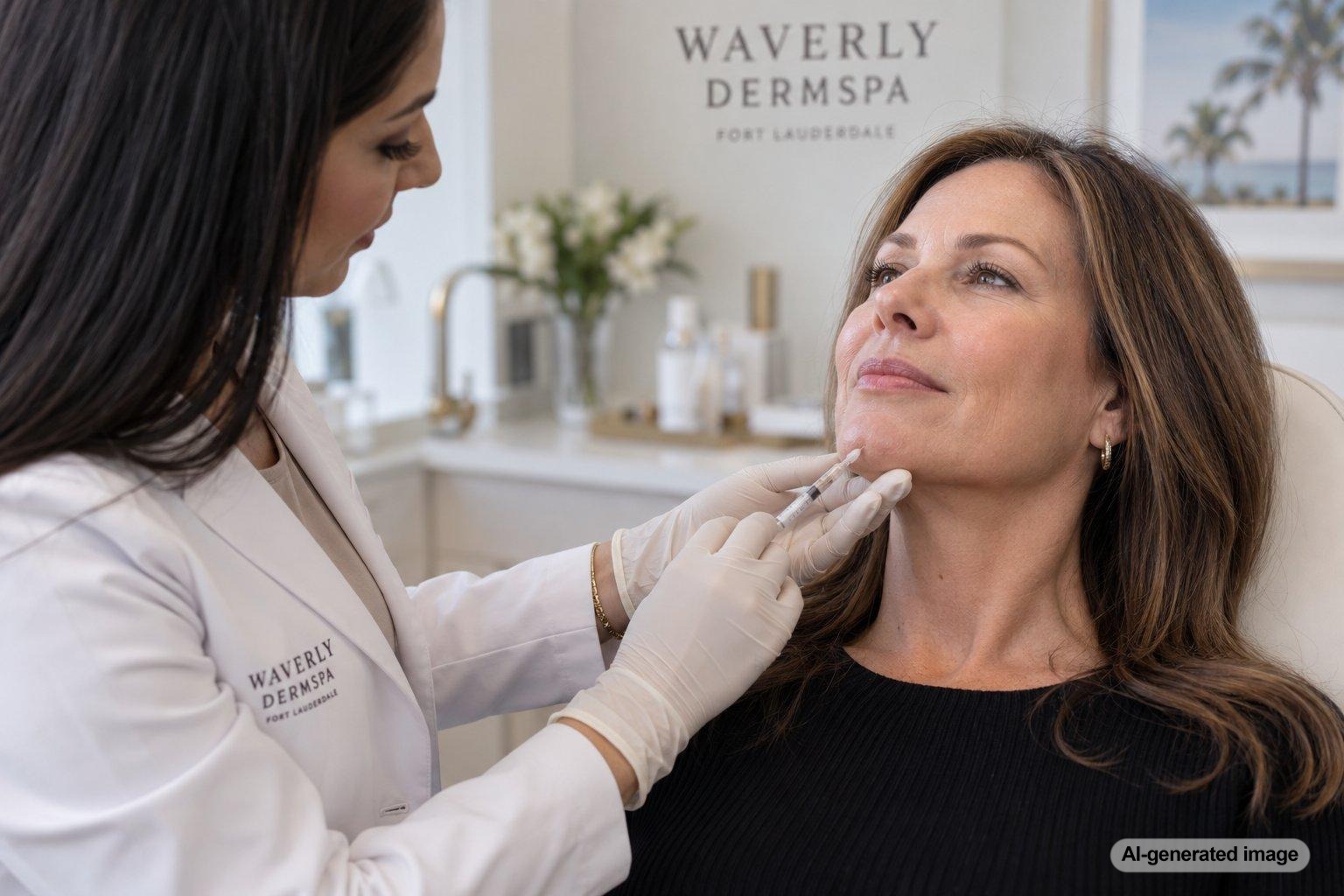
Chin dimpling, sometimes described as a pebbled or orange-peel texture, can become more noticeable when the mentalis muscle contracts strongly. Botox may be considered to temporarily reduce excessive muscle activity in carefully selected patients, which can soften the appearance of movement-related dimpling. Treatment in the chin requires thoughtful assessment because the mentalis sits close to muscles that help control lower-lip movement and expression.
Botox use in the mentalis for cosmetic chin dimpling is an individualized medical decision and is not one of the facial-line indications specifically listed in the FDA-approved Botox Cosmetic labeling. A board-certified dermatologist can evaluate whether muscle activity is actually contributing to the concern and discuss whether an off-label treatment approach may be appropriate.
Quick answer
- Chin dimpling can become more visible when the mentalis muscle contracts strongly.
- Botulinum toxin temporarily reduces activity in targeted muscles and may help soften movement-related chin texture.
- Cosmetic treatment of the mentalis is generally considered an off-label use rather than an FDA-approved Botox Cosmetic indication specifically for the chin.
- Placement and dose need to be individualized because nearby muscles affect the lower lip, smile, and mouth movement.
- A dermatologist can determine whether Botox, another approach, or no treatment is the most appropriate option.
What causes a dimpled or pebbled chin?
The mentalis is a paired muscle in the center of the chin. It helps elevate and project the lower lip and can wrinkle the skin over the chin when it contracts. Some people naturally activate this muscle more strongly than others, especially while speaking, closing the lips, concentrating, or making certain facial expressions.
When the mentalis contracts prominently, the skin may develop small depressions or an uneven, pebbled appearance. This texture is often most obvious during movement, although it can sometimes remain partially visible at rest. Facial anatomy, skin quality, aging, dental structure, prior procedures, and other factors can also influence the appearance of the chin.
How Botox may help with mentalis overactivity
Botox Cosmetic contains onabotulinumtoxinA, a prescription injectable medication that temporarily reduces communication between nerves and targeted muscles. When used cosmetically, the goal is typically to reduce selected muscle activity rather than eliminate normal facial movement.
For a patient whose chin texture is strongly related to mentalis contraction, carefully placed botulinum toxin may help the muscle contract less forcefully. As the muscle relaxes, the overlying skin may appear smoother during facial movement. The degree of change varies according to anatomy, muscle strength, skin characteristics, treatment technique, and other individual factors.
Because the FDA-approved cosmetic indications for Botox Cosmetic include specific facial areas such as glabellar lines, lateral canthal lines, and forehead lines rather than mentalis-related chin dimpling, use for the chin is generally considered off-label. Off-label prescribing is a medical decision that should be based on an appropriate evaluation and discussion of potential benefits, limitations, and risks.
Why precise placement matters in the chin
The lower face contains several small muscles that work together during smiling, speaking, eating, and lip movement. The mentalis is close to muscles involved in controlling the lower lip. For that reason, treatment is not simply a matter of injecting wherever dimpling is visible.
A dermatologist evaluating the area may look at the chin both at rest and during movement. You may be asked to purse your lips, close them gently, speak, or make specific expressions so the pattern of muscle activity can be assessed. Treatment planning may account for facial symmetry, previous injections, dental or jaw anatomy, and how much natural movement you want to preserve.
What can and cannot be improved with mentalis Botox?
Botulinum toxin is most directly suited to concerns driven by muscle activity. If the chin looks relatively smooth at rest but develops noticeable dimpling during contraction, muscle relaxation may be relevant. If texture remains prominent when the face is completely relaxed, other factors may also be contributing.
Botox does not add volume, reshape bone, tighten loose skin, or directly correct every type of chin irregularity. A dermatologist may determine that another approach is more appropriate when the primary concern involves volume, structural contour, skin texture, scarring, or another cause. In some situations, more than one factor contributes to the appearance, making an in-person examination especially useful.
What happens during treatment?
Before treatment, your clinician should review your goals, medical history, current medications and supplements, previous cosmetic procedures, and any prior experience with botulinum toxin. The chin is then examined while relaxed and moving so that the treatment plan can be individualized.
Botulinum toxin is administered through small injections into selected muscle areas. The exact number and location of injections can vary. There is no single treatment pattern that is appropriate for every face, and units from different botulinum toxin products are not considered interchangeable.
Following treatment, your clinician may provide instructions about touching the area, exercise, skincare, and other activities. Follow the specific aftercare recommendations provided by the medical professional who treated you.
When might changes become noticeable?
Botulinum toxin does not act like a filler and does not create an immediate structural change. Muscle relaxation develops gradually after treatment. The timing and degree of visible improvement vary from person to person, and your dermatologist can explain what is reasonable to expect based on your anatomy and treatment plan.
The effect of botulinum toxin is temporary. Muscle activity gradually returns over time, although the duration varies. Repeat treatment, when appropriate, should be discussed with your clinician rather than scheduled according to a one-size-fits-all timeline.
Possible side effects and safety considerations
Temporary injection-site effects can include redness, tenderness, swelling, or bruising. Because botulinum toxin reduces muscle activity, unintended weakness in a nearby muscle is also a consideration. In the lower face, unwanted spread could potentially affect lower-lip position, symmetry, speech, or other mouth movements.
FDA-approved botulinum toxin products carry a boxed warning regarding the potential for toxin effects to spread beyond the injection area. Symptoms associated with significant spread can include generalized weakness and problems with swallowing, speaking, or breathing. These symptoms require prompt medical attention.
Tell your dermatologist about medical conditions, medications, supplements, prior facial surgery or procedures, previous reactions to botulinum toxin, and whether you are pregnant, planning pregnancy, or nursing. Your clinician can determine whether treatment should be postponed or avoided based on your individual circumstances.
Why a medical evaluation matters
A dimpled chin is often a cosmetic concern, but not every irregularity in the chin is caused by mentalis overactivity. An evaluation helps distinguish movement-related dimpling from texture changes, volume differences, structural anatomy, scars, skin lesions, or other concerns that would not be addressed simply by relaxing a muscle.
Professional evaluation is also important because injectable botulinum toxin is a prescription treatment. The American Academy of Dermatology recommends receiving botulinum toxin injections from an appropriately qualified medical professional who understands facial anatomy and can assess individual risk.
Frequently asked questions
Is Botox FDA approved specifically for chin dimpling?
No. Botox Cosmetic has FDA-approved indications for certain facial lines, but cosmetic treatment of mentalis-related chin dimpling is not specifically listed among those approved indications. A clinician may sometimes consider off-label use after evaluating the patient and discussing the potential risks and benefits.
Can Botox make a dimpled chin completely smooth?
Results vary, and complete smoothing should not be assumed. Botox may help when strong mentalis activity is a significant cause of the dimpling, but skin texture, anatomy, volume, and other factors may continue to affect the appearance.
Will chin Botox affect my smile?
The goal of careful treatment is to target the mentalis while preserving normal expression. However, nearby muscles contribute to lower-lip and mouth movement, so unwanted weakness or asymmetry is a potential risk. This is one reason precise anatomical assessment is important.
Is chin Botox the same as chin filler?
No. Botox temporarily reduces selected muscle activity. Dermal fillers add volume and can be used for different contour concerns. They address different anatomical issues, and a dermatologist can help determine which approach, if either, fits the concern being evaluated.
Can mentalis Botox change the shape of my chin?
Its primary effect is on muscle activity rather than adding volume or changing bone structure. Relaxing an overactive mentalis may subtly change how the chin looks during expression, but it should not be viewed as a substitute for structural chin augmentation.
Who should evaluate chin dimpling before treatment?
A board-certified dermatologist or another appropriately trained medical professional can examine the lower face, determine whether muscle activity is contributing to the concern, and discuss treatment options and safety considerations.
At Waverly DermSpa, we offer Botox and can help you understand whether it may be appropriate.
Ready to get help?
Schedule an appointment or send a message and our team will get back to you.
Prefer to call? 954-666-3736
This article is for educational purposes and is not medical advice. For diagnosis and personalized treatment, please book an appointment with a board-certified dermatologist.
Sources & further reading
- U.S. Food and Drug Administration (FDA) – BOTOX Cosmetic Prescribing Information
- American Academy of Dermatology (AAD) – Botulinum toxin therapy: Preparation
