

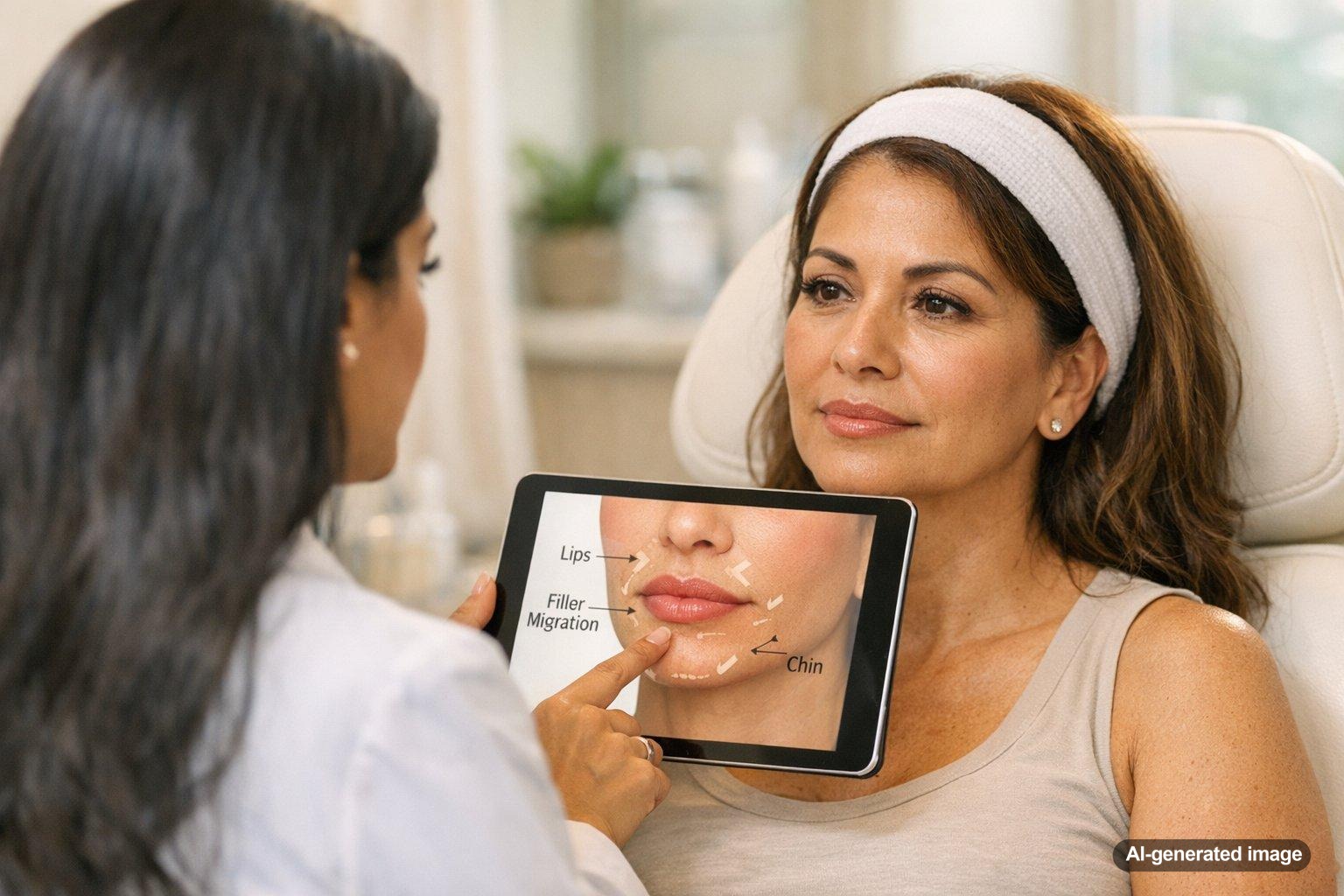
If you are thinking about filler in the lips or chin, one of the most common concerns is migration. In simple terms, that means filler can settle outside the area it was meant to enhance, softening definition instead of refining it. The good news is that thoughtful planning, conservative technique, and good follow-up can help lower that risk.
In Fort Lauderdale, many patients want natural-looking results that hold up well through travel, social events, heat, and an active lifestyle. A careful approach matters. While no cosmetic treatment comes with guarantees, there are practical ways to make lip and chin filler look cleaner, more balanced, and more predictable over time.
Quick answer
- Choose an experienced injector who understands facial anatomy and uses a conservative approach.
- Avoid overfilling, especially in areas that move constantly like the lips.
- Use the right product for the right area rather than treating every concern the same way.
- Follow aftercare instructions and allow time to see how filler settles before adding more.
- If something looks off, get evaluated early instead of repeatedly layering product.
What filler migration means
Filler migration generally refers to product appearing to spread beyond the intended treatment area. In the lips, this may show up as blurred borders, puffiness above the lip line, or an overdone look that was not part of the goal. In the chin, it may show up as fullness in a shape that looks less crisp than expected. Sometimes what people call migration can also be swelling, normal asymmetry, or buildup from multiple past treatments, which is why a professional assessment matters.
Common causes or triggers
- Too much filler placed in one session
- Frequent touch-ups before the previous product has fully settled
- Using a product that is not ideal for the lips or chin
- Placement that does not match the patient’s anatomy
- Treating an area with weakened support or poor balance from surrounding features
- Significant swelling, pressure, or repeated manipulation soon after treatment
What you can do at home
Your role starts before the appointment. Bring clear goals, but stay open to a conservative plan. Bigger is not always better, especially with lip filler. If your goal is refined shape rather than obvious volume, say that directly. It often leads to a better long-term outcome.
After treatment, follow the aftercare given by your clinician. Avoid pressing, massaging, or repeatedly checking the area in the mirror. Give swelling time to calm down before judging the result. It can also help to space treatments appropriately rather than chasing quick changes. Many people notice that patience leads to a cleaner, more natural result than repeated early touch-ups.
Professional options that may help lower risk
The first step is choosing a clinician who treats lips and chin with restraint and precision. A good plan often starts with facial balance, not just one isolated feature. For example, some patients asking for more lip volume may actually benefit from subtle support elsewhere, while some chin concerns may need shape and proportion reviewed before any product is added.
Common options include conservative filler placement, staged treatment over more than one visit, or reassessment of older filler if the area already looks crowded. In some cases, a dermatologist may recommend dissolving previously placed filler before starting fresh. That does not mean everyone needs that step, but it can be worth discussing when the borders look unclear or the area feels repeatedly overtreated.
When to see a dermatologist
If the lips or chin look increasingly blurred, uneven, or overly full after repeated treatments, it is worth getting checked. The same is true if you are unsure whether you are seeing swelling, normal settling, or true migration. A dermatologist can evaluate the area, review your filler history, and help you decide on the safest next step.
Seek prompt medical evaluation if you notice severe pain, unusual color change, marked worsening, or any symptom that feels concerning after an injection. Those issues are not the same as routine swelling and should not be ignored.
FAQ
Can filler migration happen even with a skilled injector?
It may still happen, because every face heals differently and high-movement areas can be unpredictable. Skill, product choice, and a conservative plan can help reduce the risk.
Are the lips more likely to migrate than the chin?
The lips move constantly, so they are often the area people worry about most. The chin can also look less defined if too much product is placed or if the treatment plan does not match the underlying anatomy.
Does more filler make the result last longer?
Not necessarily. Adding more than the tissue comfortably supports can create a heavier or less defined look. A measured approach is often more flattering and easier to maintain.
Should I keep adding filler if I do not love the shape?
Not always. If the result already looks blurred or bulky, layering more product may make things worse. Your clinician can help determine whether waiting, adjusting the plan, or discussing dissolving is more appropriate.
How do I talk to my injector about a natural look?
Be specific. Say you want definition, balance, and subtle enhancement rather than maximum volume. Bringing photos of your own face at angles you like can also help guide a more tailored conversation.
At Waverly DermSpa, we offer Dermal Fillers and can help you understand whether it may be appropriate.
Ready to get help?
Schedule an appointment or send a message and our team will get back to you.
Prefer to call? 954-666-3736
This article is for educational purposes and is not medical advice. For diagnosis and personalized treatment, please book an appointment with a board-certified dermatologist.
