

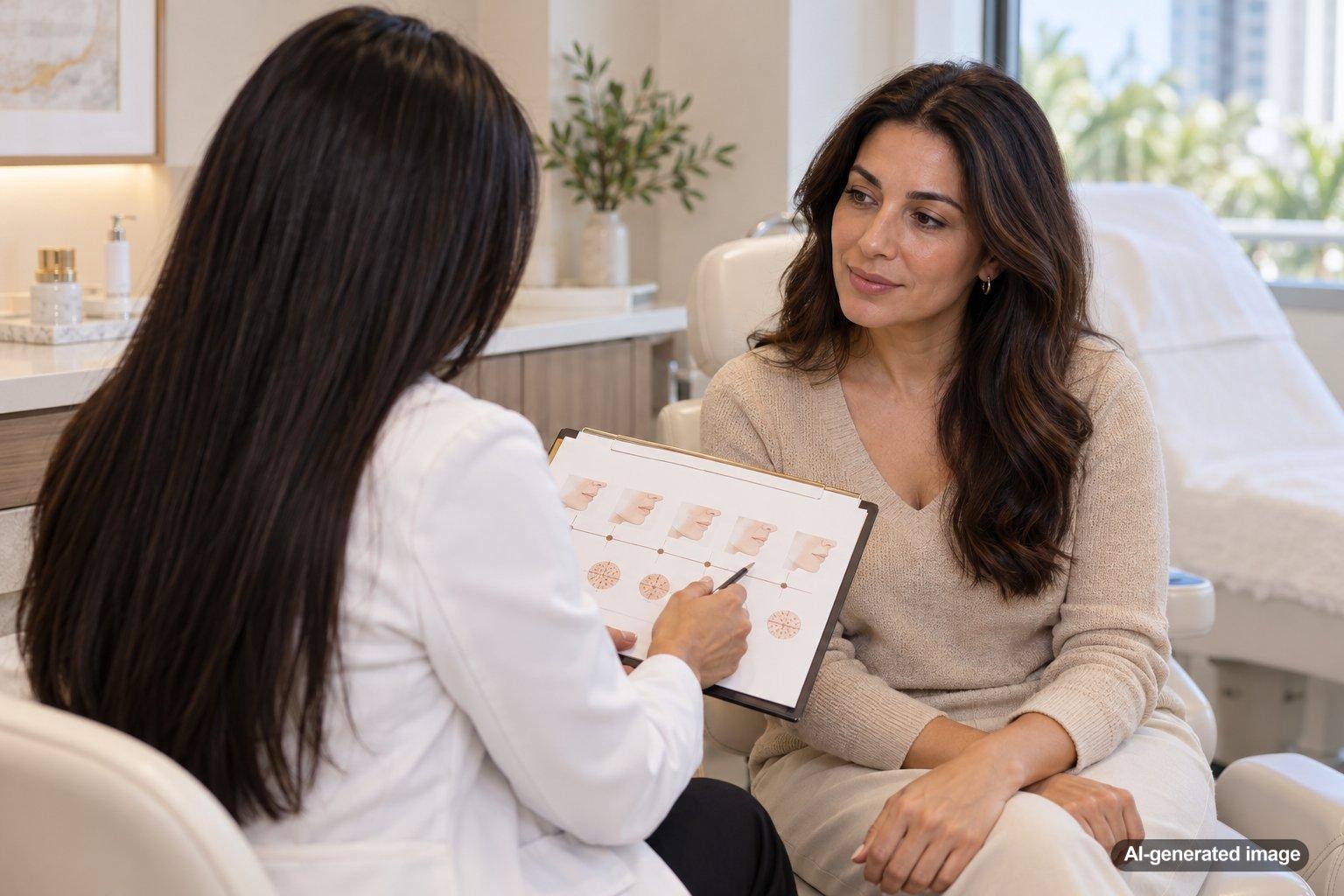
Collagen stimulation takes time to become visible because the skin must complete a gradual biological process before newly produced collagen can meaningfully influence its appearance. Unlike treatments that create an immediate change in volume or surface appearance, collagen-stimulating approaches work by encouraging the skin’s natural repair and remodeling processes. Those processes unfold over weeks and months rather than overnight.
This distinction matters when evaluating treatments intended to improve skin firmness, texture, and the appearance of fine lines. A treatment may initiate a biological response before a noticeable cosmetic change develops. Understanding what happens beneath the skin, why results vary, and how to evaluate progress can help establish realistic expectations without assuming that every treatment follows the same timeline.
Quick Answer: Why Collagen Stimulation Takes Time
- Collagen production is a biological process. Skin cells need time to respond to stimulation and produce structural proteins.
- New collagen must mature. Early collagen formation is followed by gradual organization and remodeling.
- Visible changes often lag behind cellular activity. The skin’s internal response may begin before improvements in firmness or texture become apparent.
- Different treatments produce different responses. Treatment method, intensity, skin characteristics, and the number of sessions can influence the timeline.
- Individual results vary. Age, skin condition, sun exposure, and other factors can affect how changes develop.
What Is Collagen Stimulation?
Collagen is an important structural protein found throughout the skin’s dermis, the layer beneath the epidermis. Alongside elastin and other components of the extracellular matrix, collagen helps provide structural support and contributes to the skin’s firmness and resilience.
Fibroblasts are specialized cells responsible for producing collagen and other materials that support the skin’s structure. Collagen stimulation refers to approaches that encourage biological activity associated with collagen production or remodeling.
Some aesthetic procedures create controlled, localized stimulation that activates repair-related signaling pathways. Others use injectable biostimulatory materials that encourage tissue responses over time. Although the mechanisms differ, the shared principle is that the resulting structural changes require biological activity rather than an immediate mechanical effect alone.
It is also important to distinguish collagen stimulation from treatments that directly add volume. Certain injectable treatments may create an early change in appearance because of the material itself, while collagen-related effects develop more gradually. These changes should not be interpreted as identical processes.
What Happens During the Collagen Remodeling Process?
Collagen remodeling is not a single event. It involves overlapping stages of cellular signaling, tissue repair, protein production, and structural reorganization. The precise response depends on the procedure and the tissue involved.
1. Initial cellular signaling
After an appropriately selected collagen-stimulating treatment, the skin may initiate repair-related signaling. Depending on the procedure, this can involve the release of chemical messengers that influence fibroblast activity and the behavior of surrounding tissue.
This early response is not the same as a visible improvement in collagen structure. It is part of the process that may eventually contribute to changes in the treated area.
2. Production of new structural material
Fibroblasts can produce new collagen and other components of the extracellular matrix as the tissue responds. Protein synthesis, processing, and incorporation into the surrounding tissue take time.
New collagen formation also does not occur uniformly across every treated area. Individual skin biology and the distribution of treatment effects can influence the response.
3. Collagen maturation and reorganization
Newly formed collagen undergoes gradual remodeling. Fibers may become more organized, and the surrounding extracellular matrix continues to change as the tissue adapts.
This stage helps explain why the cosmetic effects of collagen stimulation can continue evolving after the earliest recovery period has ended. A visible improvement may depend not only on how much new collagen develops but also on its distribution, organization, and relationship to the skin’s existing structures.
4. Gradual changes in visible skin appearance
As tissue remodeling progresses, some people may notice improvements in skin texture, the appearance of fine lines, or firmness. These changes are generally assessed over time rather than immediately after treatment.
Importantly, increased collagen activity does not automatically translate into a noticeable cosmetic improvement. Results depend on the treatment, the area being addressed, and the characteristics of the skin before treatment.
How Long Does It Take to See Results From Collagen Stimulation?
There is no single timeline that applies to every collagen-stimulating treatment. Some people notice early changes in skin appearance within several weeks, while more gradual improvements may develop over multiple months. Certain treatment plans involve a series of sessions, which can further extend the overall evaluation period.
The distinction between early appearance changes and collagen remodeling is especially important. Temporary swelling, hydration changes, and other short-term treatment effects can make the skin look different before meaningful collagen-related improvement has developed.
For that reason, an early photograph or mirror check may not accurately represent the eventual result. A clinician can explain when a particular treatment should reasonably be evaluated and whether additional sessions are part of the recommended approach.
These timeframes are general educational expectations, not predictions of an individual’s outcome. Some people experience subtle improvement, while others may notice little meaningful change.
Why Do Some Collagen Treatments Show Results Faster Than Others?
Different aesthetic procedures interact with the skin in different ways. The depth, location, and type of stimulation can influence both recovery and the development of visible results.
- Microneedling: Creates controlled microinjuries that initiate repair-related responses. Changes in texture and appearance may become more noticeable as remodeling progresses after treatment.
- Radiofrequency microneedling: Combines microneedling with controlled delivery of radiofrequency energy into tissue. Its biological effects and recovery profile differ from conventional microneedling.
- Laser resurfacing: Depending on the technology, laser treatment can affect surface texture, deeper tissue remodeling, or both. Early surface improvements and longer-term collagen changes may occur on different timelines.
- Biostimulatory injectables: Certain injectable materials are used to encourage gradual tissue responses. Immediate changes from product placement or temporary swelling should be distinguished from later collagen-related effects.
These treatments are not interchangeable. They differ in their intended uses, procedural risks, recovery requirements, and suitability for particular skin concerns. Choosing among them requires individualized assessment rather than selecting a treatment based only on how quickly results might appear.
What Factors Influence How Quickly Collagen Changes Become Noticeable?
Several factors can influence the visibility and progression of skin remodeling. They do not determine an exact outcome, but they help explain why two people receiving similar treatments may have different experiences.
- Age and baseline skin characteristics: Collagen organization, skin thickness, and cellular activity change over time. Existing skin structure can affect the appearance of improvement.
- Degree of the original concern: Mild texture changes may be evaluated differently from more pronounced wrinkles, scarring, or skin laxity.
- Type of treatment: Different procedures produce different patterns of tissue stimulation and remodeling.
- Treatment settings and technique: A clinician’s approach, including the area and depth of treatment, can influence both response and recovery.
- Number and spacing of sessions: Some procedures are planned as a series rather than a single appointment.
- Sun exposure and skin health: Ongoing ultraviolet exposure and certain skin conditions can affect skin appearance and the broader environment in which remodeling occurs.
- Individual biological variation: Skin repair and tissue responses differ among individuals, even when treatment approaches are similar.
No single factor can reliably predict how much improvement a person will experience. A dermatologist can evaluate the broader clinical picture and discuss what would constitute a meaningful result.
Why Skin Can Look Better Before New Collagen Has Fully Developed
Not every early improvement after an aesthetic procedure reflects newly formed collagen. Depending on the treatment, the skin may temporarily appear smoother, fuller, or more hydrated for reasons unrelated to long-term structural remodeling.
For example, mild swelling can temporarily alter the appearance of fine lines. Changes in surface hydration may also affect how light reflects from the skin. Certain resurfacing procedures can improve the appearance of the outer skin layers before deeper remodeling has fully progressed.
These early changes are not necessarily problematic, but they should be interpreted carefully. Similarly, a period of reduced swelling or temporary dryness during recovery does not automatically mean that a treatment has failed.
Understanding this distinction can help prevent premature conclusions based on how the skin looks immediately after a procedure.
What Can You Do at Home While Collagen Remodeling Takes Place?
Home care does not replace the biological process stimulated by an office treatment, but a consistent, gentle routine may support skin comfort and reduce avoidable irritation while the skin recovers.
- Follow procedure-specific aftercare. Instructions can vary significantly between microneedling, laser resurfacing, and injectable treatments.
- Use appropriate sun protection. Protecting skin from ultraviolet exposure is important for overall skin health and may be especially relevant after procedures that temporarily increase sensitivity.
- Keep skincare simple during recovery. Gentle cleansing and suitable moisturizers may be preferable to introducing multiple new active products.
- Avoid aggressive exfoliation without guidance. Scrubs, exfoliating acids, and certain active ingredients may be inappropriate during parts of the recovery period.
- Maintain realistic expectations. Avoid judging the outcome from daily mirror checks or temporary fluctuations in appearance.
- Attend recommended follow-up visits. These appointments provide an opportunity to assess healing, review progress, and discuss any concerns.
There is no reliable at-home shortcut that makes the skin complete collagen remodeling immediately. Products marketed as dramatically accelerating results should be approached cautiously, particularly when claims are not supported by appropriate evidence.
How Should You Evaluate Whether a Collagen-Stimulating Treatment Is Working?
Because collagen-related changes can be subtle and gradual, evaluating progress consistently is often more useful than relying on memory alone.
When appropriate, standardized photographs can help document changes in texture, fine lines, and overall skin appearance. Similar lighting, camera distance, facial expression, and positioning make comparisons more meaningful.
It also helps to identify the specific concern being treated. Someone seeking improvement in acne-scar texture may evaluate a different outcome from someone primarily concerned about mild facial laxity or fine lines.
A clinician may consider the treated area’s appearance, the patient’s experience, recovery, and the original treatment goals together. A lack of dramatic change does not necessarily mean there has been no biological activity, but biological activity alone does not establish that a procedure has produced a worthwhile cosmetic result.
If progress is less noticeable than expected, it is reasonable to discuss whether more time is appropriate, whether another session is justified, or whether a different treatment strategy would better match the concern.
Professional Options for Collagen-Related Skin Concerns
Professional evaluation can help determine whether a concern is related primarily to skin texture, loss of volume, reduced firmness, pigmentation, scarring, or a combination of factors. These distinctions matter because collagen stimulation is not the appropriate solution for every visible change in the skin.
Potential approaches include collagen induction procedures, energy-based treatments, resurfacing techniques, and selected injectable treatments. Some may emphasize surface texture, while others target deeper tissue changes or gradual support of the skin’s structure.
The appropriate choice depends on the treatment area, skin type, medical history, recovery preferences, and realistic goals. A dermatologist can also explain potential adverse effects, the expected healing period, and whether a series of treatments would be considered.
At Waverly DermSpa, we offer SkinPen and can help you understand whether it may be appropriate.
When Should You See a Dermatologist?
A dermatology consultation is useful when considering a collagen-stimulating treatment, particularly when the concern involves significant skin laxity, scarring, sensitivity, or a history of difficult healing.
Professional guidance is also appropriate if the skin develops unexpected symptoms after a procedure. Increasing pain, spreading redness, significant swelling, drainage, blistering, or changes that seem inconsistent with the recovery instructions deserve prompt evaluation. Severe or rapidly worsening symptoms may require urgent medical attention.
If a treatment has not produced the expected improvement by the follow-up period discussed with your clinician, an assessment can help clarify whether the outcome is consistent with the treatment’s limitations or whether another approach should be considered.
Because results and risks vary, decisions about repeating or combining procedures should be made with a qualified clinician rather than based solely on a general online timeline.
Frequently Asked Questions
Does collagen production start immediately after treatment?
Some repair-related signaling may begin relatively early after certain treatments, but collagen production and remodeling are gradual processes. The timing varies by procedure, and the beginning of a cellular response does not mean that visible cosmetic improvement has already occurred.
Why can’t I see collagen stimulation working right away?
New collagen formation occurs beneath the skin and requires time for synthesis, organization, and remodeling. These internal changes may not become noticeable until they affect the skin’s surface texture or structural support enough to produce a visible difference.
Can collagen results continue improving months after a procedure?
Yes. Some collagen-stimulating treatments are associated with gradual changes over several months as remodeling progresses. The duration and extent of improvement vary, and continued improvement is not assured for every person or procedure.
Does more swelling mean more collagen will form?
No. Swelling is not a reliable indicator of collagen production or eventual cosmetic results. It may reflect an immediate tissue response, and more swelling does not necessarily mean a treatment was more effective. Unexpected or worsening swelling should be assessed by a clinician.
Do collagen-stimulating treatments always require multiple sessions?
No. Some treatment plans involve a single procedure, while others may recommend a series of sessions. The number of appointments depends on the treatment method, clinical goals, skin characteristics, and response. Additional sessions should not be assumed necessary without professional evaluation.
Can skincare products speed up collagen remodeling after a procedure?
Appropriate skincare can support skin comfort and overall skin health, but no topical product can reliably eliminate the biological time required for collagen remodeling. Some active ingredients may also irritate recently treated skin, so it is important to follow procedure-specific guidance before resuming them.
Ready to get help?
Schedule an appointment or send a message and our team will get back to you.
Prefer to call? 954-666-3736
Disclaimer
This article is for educational purposes and is not medical advice. For diagnosis and personalized treatment, please book an appointment with a board-certified dermatologist.
