

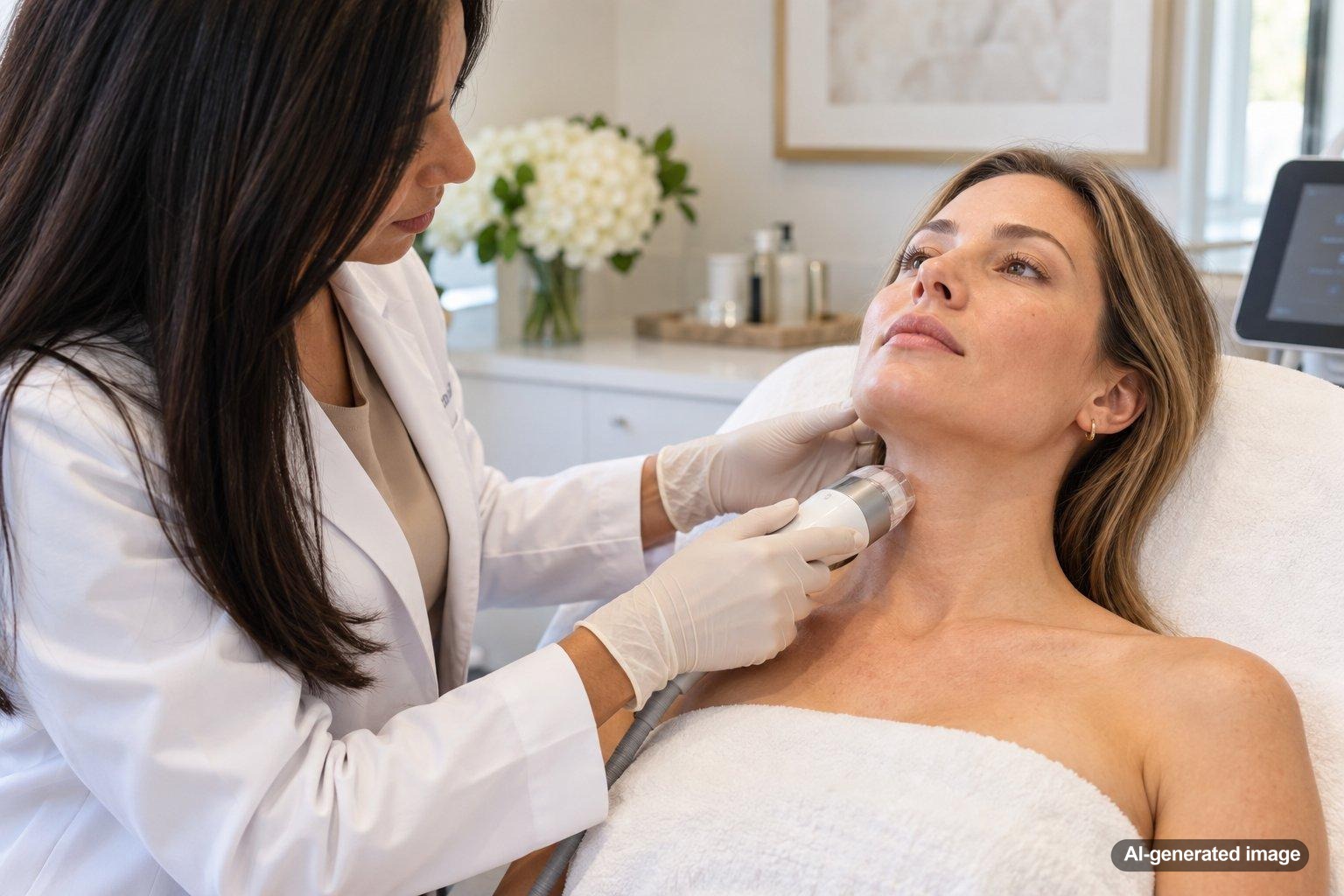
Fine lines beneath the chin and along the neck can become noticeable even when the skin on the face still looks relatively smooth. These delicate areas experience frequent movement, sun exposure, and gradual changes in collagen and elasticity. The result may be a collection of shallow horizontal creases, slightly uneven texture, or skin that looks less firm than it once did. Because the neck has different characteristics from the cheeks and forehead, choosing an appropriate treatment requires careful attention to the skin itself.
Vivace is a radiofrequency microneedling treatment that may help improve the appearance of certain fine lines and textural changes by encouraging collagen remodeling. It offers a nonsurgical approach for selected patients, but the degree of improvement depends on skin quality, the depth of the lines, and the amount of underlying laxity. Understanding what Vivace can realistically address is an important part of deciding whether it belongs in a neck rejuvenation plan.
Quick Answer: Can Vivace Help Fine Lines Under the Chin and Along the Neck?
- Vivace combines microneedling with radiofrequency energy to encourage a gradual remodeling response within the skin.
- Fine, superficial lines and uneven texture may respond more favorably than deep folds or substantial loose skin.
- Results develop gradually as collagen remodeling occurs, and individual responses vary.
- The neck requires individualized treatment planning because its skin and underlying anatomy differ from those of the face.
- A dermatologist can evaluate whether Vivace is appropriate or whether another approach better matches the concern.
What Is Vivace RF Microneedling?
Vivace is a minimally invasive aesthetic treatment that combines controlled microneedling with radiofrequency energy. During treatment, a specialized handpiece creates tiny, controlled channels in the skin while delivering thermal energy at selected depths. These effects are intended to stimulate the skin’s natural repair processes and support collagen remodeling over time.
Collagen provides structural support within the skin. As collagen changes with age and environmental exposure, the skin may develop fine wrinkles, reduced firmness, and a less uniform surface. Treatments that encourage collagen remodeling may soften the appearance of some of these changes, although improvement varies by patient and treatment area.
Vivace is not the same as a topical skin-tightening product or an at-home microneedling tool. It is a professional procedure requiring appropriate assessment, treatment settings, and aftercare.
Why Fine Lines Develop Beneath the Chin and Along the Neck
Neck lines do not all develop for the same reason. Recognizing the contributing factors helps distinguish concerns that may respond to skin-focused treatments from those involving deeper structural changes.
- Natural collagen changes: The skin gradually loses some of its structural support and elasticity with age.
- Repeated neck movement: Looking down, turning the head, and everyday movement can emphasize horizontal creases.
- Sun exposure: Ultraviolet radiation contributes to visible photoaging, including fine wrinkles and textural changes. In sunny locations such as Fort Lauderdale, consistent neck protection is particularly relevant.
- Dryness: Dehydrated skin may temporarily make shallow lines appear more pronounced.
- Skin laxity: Reduced firmness can create fine creasing, especially beneath the chin.
- Individual anatomy: Genetics, skin thickness, and natural neck contours influence how lines appear.
Some people have visible horizontal neck lines from an early age, while others develop them gradually. Their presence does not necessarily indicate a skin disorder or a need for treatment.
Which Types of Neck Lines May Respond to Vivace?
Fine, Superficial Wrinkles
Shallow wrinkles associated with changes in skin texture and collagen may be reasonable targets for RF microneedling. The goal is generally to soften their appearance rather than erase them completely.
Crepey Texture Beneath the Chin
Crepey skin may look thin, finely wrinkled, or slightly uneven, particularly when the neck moves. Vivace may improve certain aspects of this texture by encouraging remodeling within the treated skin. Results depend on the amount of laxity and the underlying skin condition.
Early Loss of Firmness
Some patients notice subtle looseness before developing deeper folds. RF microneedling may provide a modest improvement in skin firmness for selected individuals, but it does not remove excess skin or reposition deeper tissues.
Deeper Horizontal Neck Creases
Established horizontal lines may involve repeated movement, anatomy, and deeper tissue changes. Vivace may improve the surrounding skin’s texture without substantially changing the entire crease. A dermatologist can help determine whether expectations align with the treatment’s capabilities.
Why Treating the Neck Requires a Different Approach
The neck presents different anatomical and practical considerations from many facial treatment areas. Skin thickness, tissue support, mobility, and sensitivity vary across the neck and beneath the chin. The region also contains important underlying structures that make a sound understanding of anatomy essential.
For these reasons, a treatment plan appropriate for the cheeks should not automatically be applied to the neck. A qualified clinician must evaluate the area, select suitable parameters, and determine whether particular regions should be treated or avoided.
Factors considered during an assessment may include:
- Skin thickness and overall texture.
- The location and depth of visible wrinkles.
- The degree of laxity beneath the chin.
- Current skin irritation, inflammation, or other concerns.
- Relevant medical history and previous cosmetic procedures.
- Individual healing characteristics and pigmentation considerations.
Because radiofrequency microneedling is a medical procedure, professional training and appropriate patient selection are central to reducing avoidable risks.
What to Expect During a Vivace Consultation and Treatment
A consultation generally begins with a discussion of the changes that concern the patient. The clinician examines the treatment area and considers whether the primary issue involves superficial wrinkling, skin texture, laxity, or deeper anatomical features.
If Vivace is considered appropriate, the clinician explains the procedure, anticipated degree of improvement, potential risks, and aftercare requirements. Treatment settings and the number of sessions are individualized rather than identical for every patient.
A topical numbing product may be used for comfort. During treatment, the clinician moves the device over selected areas using an appropriate technique. Patients may experience pressure, warmth, or brief discomfort, although sensations differ between individuals.
Afterward, the skin may appear red or feel warm and sensitive. Mild swelling or temporary pinpoint marks can also occur. The extent and duration of these responses vary. Your clinician should provide specific aftercare instructions and explain which symptoms warrant a call to the office.
How Long Does It Take to Notice Changes?
Vivace is not intended to create an immediate transformation in neck wrinkles. Its potential benefits depend partly on the gradual biological processes involved in skin repair and collagen remodeling.
Some patients notice changes in texture as healing progresses, while more meaningful changes may take weeks to months to develop. The timeline varies with individual skin characteristics, treatment parameters, and whether multiple sessions are recommended.
It is also important to distinguish temporary changes in skin appearance from longer-term improvement. Initial swelling, hydration, and lighting differences can influence how the neck looks immediately after a procedure.
A dermatologist can recommend an appropriate interval for assessing progress and determining whether additional treatment would be worthwhile.
What Can You Do at Home to Support Neck Skin?
Professional treatment is only one aspect of maintaining the appearance and comfort of the neck. Conservative daily care may help address dryness and reduce avoidable environmental damage.
- Extend sun protection below the jawline: Apply broad-spectrum SPF 30 or higher sunscreen to exposed neck skin and reapply as appropriate during outdoor activities.
- Use a gentle moisturizer: Supporting the skin barrier may temporarily reduce the prominence of fine lines associated with dryness.
- Avoid aggressive exfoliation: Frequent scrubbing or layering strong products can irritate the delicate neck area.
- Cleanse gently: A mild cleanser is generally preferable to harsh products that leave the skin feeling tight or uncomfortable.
- Be cautious with active ingredients: Retinoids and exfoliating acids may be irritating on the neck. Discuss product selection with a dermatologist, particularly around cosmetic procedures.
- Follow individualized aftercare: If you undergo Vivace, use the products and timing recommended by your treating clinician rather than experimenting with additional treatments during recovery.
At-home care can support skin health, but it should not be expected to reproduce the effects of a professional collagen-remodeling procedure.
What Are the Limitations and Potential Risks of Vivace?
RF microneedling can be useful for certain cosmetic concerns, but it is not appropriate for every person or every type of neck aging.
Temporary redness, swelling, tenderness, and pinpoint bleeding may occur. More significant complications can include burns, infection, scarring, pigmentation changes, or unintended tissue injury. The likelihood of complications depends on multiple factors, including treatment technique, device settings, patient characteristics, and the area treated.
In October 2025, the American Academy of Dermatology acknowledged an FDA safety communication concerning potential risks associated with certain uses of RF microneedling. This reinforces the importance of having the procedure evaluated and performed by a qualified medical professional with appropriate anatomical expertise.
Vivace is also not a substitute for a surgical neck lift when substantial skin excess or deeper structural changes are the principal concern. A realistic consultation should address both what may improve and what is unlikely to change appreciably.
When to See a Dermatologist
A dermatology consultation is useful when neck lines are becoming more noticeable and you would like to understand your options. It is particularly valuable when you are unsure whether the changes involve surface texture, skin laxity, or underlying anatomy.
Schedule a medical evaluation before pursuing cosmetic treatment if the area has unexplained irritation, persistent inflammation, an unusual lump, a new or changing lesion, or another concerning symptom.
People with a history of problematic scarring, pigmentation changes, poor wound healing, or prior procedures involving the neck should discuss these details during their consultation. Relevant medical conditions and implanted medical devices should also be disclosed so the clinician can assess procedure-specific considerations.
If you experience severe or increasing pain, spreading redness, blistering, or other unexpected symptoms following a cosmetic procedure, contact your treating clinician promptly.
Frequently Asked Questions About Vivace for Neck Fine Lines
Can Vivace completely remove horizontal neck lines?
Complete removal should not be expected. Vivace may soften some fine lines and improve surrounding skin texture, but deeper horizontal creases can remain visible because they are influenced by anatomy and repeated movement.
Is Vivace appropriate for the area directly beneath the chin?
It may be considered for selected areas beneath the chin, depending on skin characteristics, anatomy, and the clinician’s assessment. Not every portion of the neck is an appropriate treatment site, so suitability must be determined individually.
Does Vivace tighten loose neck skin?
RF microneedling may produce modest improvements in firmness for some patients. It does not remove excess skin or provide the structural lifting associated with surgery. The degree of laxity is an important factor in treatment selection.
How many Vivace sessions are needed for neck wrinkles?
There is no single treatment schedule that fits everyone. Some patients may be advised to consider a series of sessions, while others may have concerns that are better addressed through a different approach. Recommendations depend on examination findings, treatment response, and goals.
Is Vivace downtime significant?
Some patients experience temporary redness, warmth, swelling, or sensitivity, with recovery varying from person to person. More persistent reactions or complications are possible. Your clinician can explain what to anticipate based on the treatment area and planned settings.
Can Vivace be combined with a neck skincare routine?
Yes, a gentle skincare routine can complement professional treatment. However, the timing of retinoids, exfoliating products, and other potentially irritating ingredients should be discussed with the treating clinician. Post-procedure skin care should prioritize healing and barrier support.
Choosing the Right Approach for Neck Rejuvenation
Fine lines under the chin and along the neck can reflect a combination of skin texture, collagen changes, movement, and natural anatomy. Vivace may offer a nonsurgical way to address selected superficial wrinkles and early textural changes, but outcomes are individualized and more substantial laxity may require a different treatment discussion.
At Waverly DermSpa, we offer Vivace and can help you understand whether it may be appropriate.
A thoughtful assessment with a dermatologist can clarify which concerns are most likely to respond and establish realistic expectations before proceeding.
Ready to get help?
Schedule an appointment or send a message and our team will get back to you.
Prefer to call? 954-666-3736
This article is for educational purposes and is not medical advice. For diagnosis and personalized treatment, please book an appointment with a board-certified dermatologist.
Sources & Further Reading
- American Academy of Dermatology (AAD) – Microneedling can fade scars, uneven skin tone, and more
- American Academy of Dermatology (AAD) – Statement on the FDA Safety Briefing about Radiofrequency Microneedling Risks
- Cleveland Clinic – Radio Frequency (RF) Microneedling
