

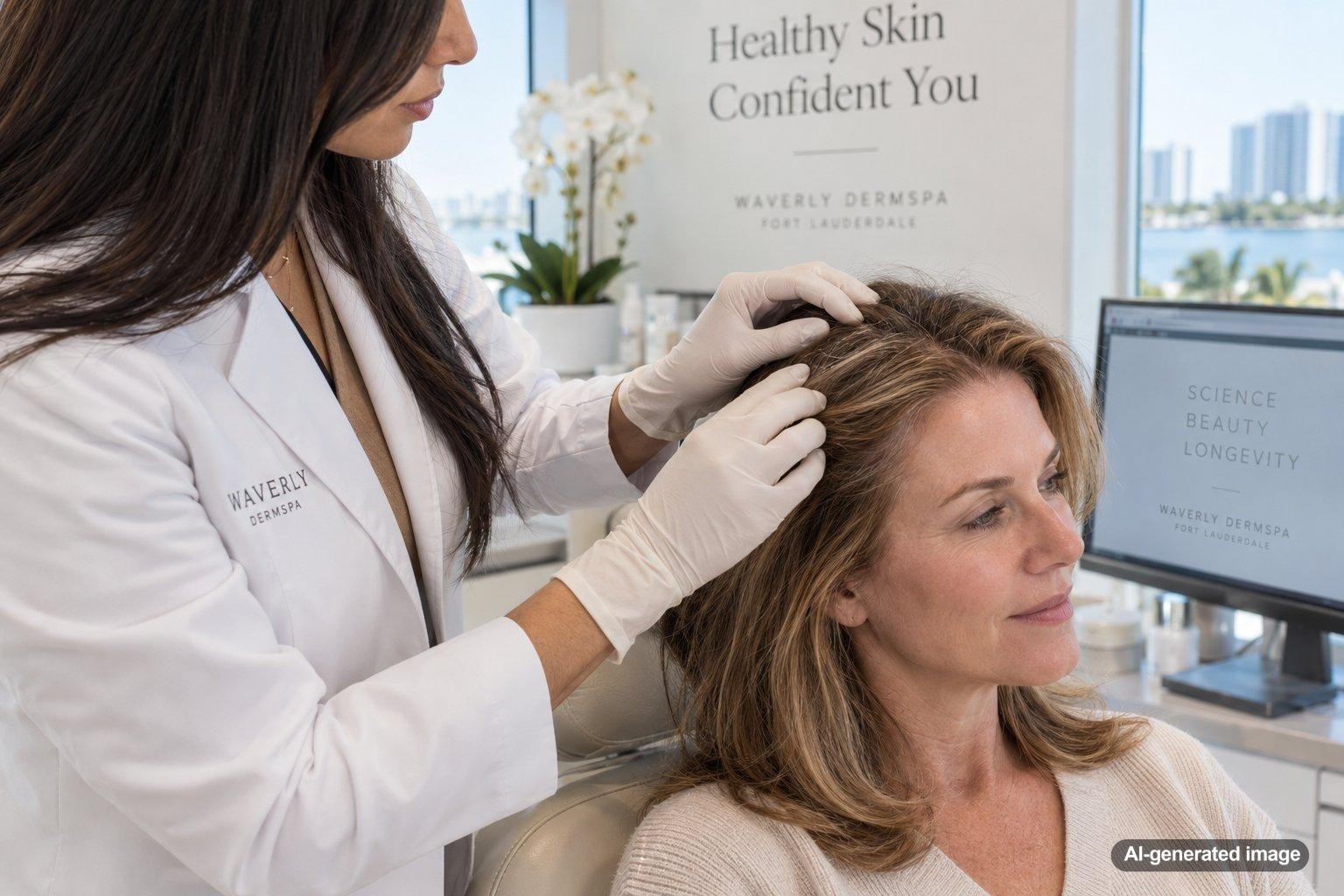
Hair transplant surgery can relocate healthy follicles into areas of thinning, but the final appearance depends on more than simply placing grafts. Follicle survival, the condition of the surrounding scalp, ongoing hair loss, and the natural growth cycle can all influence how dense the result looks over time. PRFM, or platelet-rich fibrin matrix, is one regenerative option that may be discussed as an adjunct after transplantation.
PRFM does not create new transplanted follicles or replace the work performed during surgery. Instead, it uses a concentrated preparation made from a patient’s own blood to deliver platelets and signaling proteins to the scalp. For selected patients, a dermatologist may consider it as part of a broader plan intended to support the scalp and existing or transplanted hair.
Quick answer
- PRFM is an autologous platelet-based treatment prepared from a patient’s own blood.
- It may be considered after hair transplant surgery to support the environment around transplanted and existing follicles.
- PRFM cannot compensate for poor graft placement, insufficient donor hair, or every cause of continued thinning.
- Research on platelet-based treatments for hair loss is encouraging in some settings, but evidence specifically for PRFM after transplantation remains limited.
- A dermatologist can help determine whether PRFM fits the type of hair loss, transplant history, scalp condition, and overall treatment plan.
What is PRFM?
PRFM stands for platelet-rich fibrin matrix. A small amount of blood is drawn and processed to concentrate platelets within a fibrin-based preparation. The resulting material contains components naturally involved in tissue signaling and healing.
PRFM is related to other platelet-based approaches, including platelet-rich plasma, or PRP, but the preparations are not identical. Processing methods can influence the concentration, consistency, and release of platelet-associated growth factors. Because protocols vary, it is important not to assume that findings involving one platelet preparation automatically apply to every PRFM technique.
How PRFM may fit after hair transplant surgery
A hair transplant moves follicles from a donor area, commonly the back or sides of the scalp, into areas where greater coverage is desired. After placement, transplanted follicles enter a healing and growth process that unfolds gradually. Some transplanted hairs commonly shed before new growth becomes visible.
PRFM may be used as an adjunct during the months surrounding this process. The goal is not to add follicles, but to support the biological environment of the scalp. Depending on the patient and treatment plan, a dermatologist may also consider platelet-based therapy for thinning native hair that remains between or around transplanted grafts.
Can PRFM increase hair density after a transplant?
PRFM may help selected patients improve the appearance of hair density, but expectations need to be realistic. The visible density of a transplant depends on several factors, including the number and distribution of grafts, hair caliber, curl or texture, color contrast between hair and scalp, continued loss of non-transplanted hair, and the health of the scalp.
Platelet-based therapies have been studied for androgenetic hair loss, and related platelet preparations have also been investigated as adjuncts to hair transplantation. Some findings suggest potential improvements in measures such as hair density or follicle support. However, transplantation-specific evidence is less extensive and treatment methods are not fully standardized. PRFM should therefore be viewed as a possible supportive therapy rather than a predictable way to increase graft numbers or guarantee greater density.
Why existing hair still matters after transplantation
A transplant does not necessarily stop the underlying process that caused hair thinning in the first place. In people with pattern hair loss, non-transplanted follicles may continue to miniaturize. This can gradually change the balance between transplanted and native hair and make an area appear less dense even when transplanted follicles remain present.
That is one reason a dermatologist may look beyond the grafts themselves. Evaluating the pattern of continued thinning, scalp health, family history, and previous treatments can help determine whether PRFM or another strategy should be considered as part of long-term hair maintenance.
What happens during a PRFM treatment?
The exact protocol can vary by practice and by the system used to prepare the platelet concentrate. In general, treatment begins with a blood draw. The sample is processed to separate and concentrate the desired platelet-containing component, which is then placed into selected areas of the scalp.
Patients may experience temporary tenderness, redness, swelling, pressure, or pinpoint bleeding at treated areas. Individual recovery experiences vary. Your clinician can explain preparation instructions, aftercare, and whether anything about your transplant history changes the timing or technique.
When can PRFM be considered after a hair transplant?
There is no single post-transplant schedule that is appropriate for everyone. Timing can depend on how recently surgery was performed, how the scalp is healing, whether there is lingering irritation, the type of transplant performed, and the goals of treatment.
If a transplant was performed by another physician or in another country, bring as much information as possible about the procedure to your consultation. This can include the surgery date, graft count if known, donor and recipient areas, previous photographs, medications, and any post-operative concerns. For patients visiting Fort Lauderdale seasonally or internationally, having those records available can make an evaluation more useful.
What PRFM cannot do
PRFM has important limitations. It cannot replace follicles that were never transplanted, correct the design or placement of grafts, restore an exhausted donor supply, or address every medical cause of hair loss. It also should not be used as a substitute for evaluating unexpected shedding, inflammation, scarring, or another scalp problem.
If density is lower than expected after transplantation, the first step is often understanding why. Possible explanations can include normal timing within the hair growth cycle, progressive loss of native hair, differences in hair caliber, scalp conditions, or limitations related to the original procedure. A dermatologist can evaluate these possibilities before recommending additional treatment.
What can you do at home?
Simple scalp and hair-care habits can support comfort while you follow the instructions given by your transplant surgeon or dermatologist.
- Follow your surgeon’s post-operative washing and scalp-care directions, especially during the early healing period.
- Avoid aggressively scratching, picking, or manipulating healing areas.
- Use gentle hair-care practices when the scalp is sensitive.
- Protect the scalp from excessive sun exposure as directed by your clinician.
- Keep a consistent photo record if you want to track changes in coverage over time. Similar lighting, hair length, angle, and styling make comparisons more useful.
- Tell your dermatologist about medications, supplements, and other hair-loss treatments you are using before beginning a new procedure.
Other professional options may also be discussed
If thinning continues after a transplant, PRFM is only one possible component of management. Depending on the diagnosis and individual circumstances, a dermatologist may discuss topical or oral therapies, other platelet-based approaches, light-based treatments, treatment of an underlying scalp condition, or additional surgical evaluation.
The appropriate option depends on the cause of hair loss, medical history, current scalp examination, transplant pattern, and treatment preferences. Prescription therapies and medical procedures should be discussed with a qualified clinician who can review potential benefits, limitations, and risks for the individual patient.
When to see a dermatologist
Consider a dermatology evaluation when hair density seems to be changing unexpectedly, when native hair continues to thin around transplanted areas, or when you are unsure whether the scalp has healed normally. An evaluation is also worthwhile before starting PRFM if the original transplant was performed elsewhere and your current scalp condition has not been assessed recently.
Prompt medical evaluation is particularly appropriate for persistent pain, drainage, significant redness, open areas, worsening swelling, marked scalp inflammation, or rapidly changing patches of hair loss. These findings should not simply be assumed to be part of routine post-transplant shedding.
Frequently asked questions
Is PRFM the same as PRP?
No. Both begin with the patient’s own blood and concentrate platelet-related components, but PRFM incorporates a fibrin matrix and is prepared differently. Protocols also vary among practices, so the terms should not be treated as interchangeable.
Does PRFM make transplanted grafts multiply?
No. PRFM does not create additional transplanted follicles. Any improvement in the appearance of density would come from changes involving the existing transplanted or native hairs rather than an increase in the original number of grafts.
Can PRFM help native hair between transplanted grafts?
It may be considered for selected patients with thinning native hair, depending on the underlying diagnosis and follicle health. A dermatologist can determine whether those hairs appear likely to benefit from a platelet-based approach or whether another strategy is more appropriate.
How many PRFM treatments are needed after a transplant?
There is no universal schedule. Recommendations can vary according to the patient’s hair-loss pattern, transplant history, response, scalp condition, and the protocol used by the treating practice. A series of treatments may be discussed, but the plan should be individualized.
Can PRFM replace another hair transplant?
Not when the issue is insufficient graft coverage that requires additional follicles. PRFM is a non-surgical supportive treatment. Determining whether additional surgery, medical management, PRFM, or observation makes the most sense requires an examination of the donor area, recipient area, and ongoing pattern of hair loss.
How soon should I judge my transplant density?
Hair transplantation develops over an extended growth cycle, and early appearance may not represent the eventual cosmetic result. The appropriate time to assess density varies with the procedure and individual healing pattern. Your transplant surgeon or dermatologist can help determine when an assessment is meaningful rather than relying on a fixed timeline.
At Waverly DermSpa, we offer PRFM for Hair Loss and can help you understand whether it may be appropriate.
Ready to get help?
Schedule an appointment or send a message and our team will get back to you.
Prefer to call? 954-666-3736
This article is for educational purposes and is not medical advice. For diagnosis and personalized treatment, please book an appointment with a board-certified dermatologist.
