

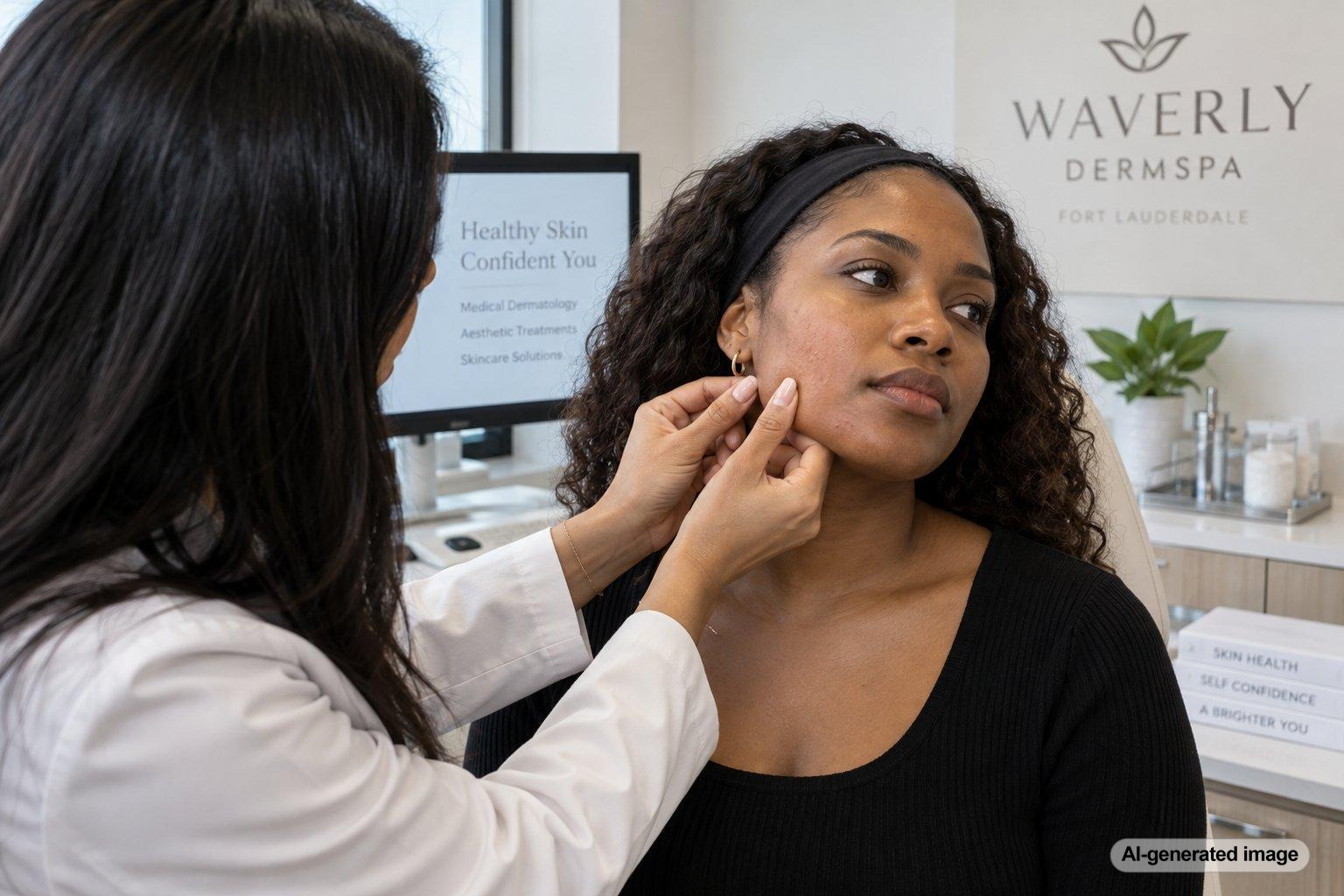
A small, firm bump beneath an old acne scar can happen for several reasons. Sometimes the texture comes from dense scar tissue that formed as the original blemish healed. In other cases, a pore or follicle beneath the scar may become clogged again, or a small cyst-like growth may develop below the surface.
The appearance and feel alone usually aren’t enough to determine exactly what it is. A dermatologist can examine the area and help distinguish ordinary scar-related changes from a new growth that may need treatment or closer evaluation.
Quick answer
- Firmness can come from collagen and scar tissue left behind after deeper acne inflammation.
- A blocked pore or small cyst can sometimes form beneath or next to an older scar.
- A new bump in the same location isn’t necessarily part of the original scar.
- Changes in size, color, pain, bleeding, or drainage are good reasons to have the spot checked.
What can cause a firm bump beneath an acne scar?
Acne that extends deeper into the skin can trigger a substantial healing response. As the area repairs itself, collagen may become thicker or more concentrated than the surrounding tissue. That can leave a firm or raised area even after the active acne has been gone for a long time.
However, an old scar doesn’t prevent new activity from occurring underneath it. Oil, dead skin cells, and keratin can still collect within nearby pores or follicles. This means a bump that seems to be part of the scar may actually be a separate process developing in the same spot.
Common possibilities
- Thickened scar tissue: Some acne scars contain dense collagen that feels firmer than normal skin.
- A clogged pore: A pore beneath or beside the scar can become congested and create a small palpable bump.
- A small cyst-like growth: Keratin can sometimes collect beneath the skin and form a smooth, firm nodule.
- Recurrent inflammation: Acne can occasionally return in an area that previously scarred, creating tenderness or swelling beneath the old mark.
- An unrelated skin growth: Not every bump appearing within a scar is caused by the scar itself, which is why persistent or changing areas are worth evaluating.
What you can do at home
Avoid repeatedly squeezing, digging at, or trying to puncture the bump. Manipulating a firm lesion can increase irritation and may make discoloration or scarring more noticeable.
Keep the area clean with a gentle cleanser and follow a simple skincare routine that doesn’t cause stinging or excessive dryness. If you already use acne products that your skin tolerates well, continue them as directed rather than aggressively spot-treating the bump with multiple new products at once.
It can also help to take a clear photo every few weeks under similar lighting. This gives you a simple way to notice whether the bump is staying stable or changing.
Professional options
The appropriate approach depends on what is actually causing the bump. A dermatologist may examine the texture, mobility, surface appearance, and surrounding skin before recommending anything.
If the firmness is primarily related to scar tissue, options may focus on improving the scar’s texture or thickness. If there is trapped material beneath the skin, management may be different. Persistent inflammation may call for an acne-focused approach. A growth that doesn’t behave like typical acne or scar tissue may need additional evaluation before treatment is considered.
Because these possibilities can look similar from the outside, having the area examined is often more useful than trying to choose a treatment based only on appearance.
When to see a dermatologist
It’s worth scheduling an evaluation if the bump is new, persists, becomes noticeably larger, or simply doesn’t seem consistent with the rest of the scar. You should also have it checked if you notice:
- Increasing pain or tenderness
- Redness, warmth, or repeated swelling
- Drainage or recurrent crusting
- Bleeding without an obvious reason
- A change in color or surface texture
- Steady enlargement over time
These changes don’t automatically indicate something serious, but they give a dermatologist useful reasons to look more closely.
FAQ
Can old acne scars become hard?
Yes. Some scars develop denser collagen than the surrounding skin and may feel firm, thick, or raised. The texture can remain long after the original acne has resolved.
Can a cyst form underneath an old acne scar?
A cyst-like bump can develop beneath or near previously scarred skin if material becomes trapped within a follicle or beneath the surface. An examination can help determine whether that is actually what is happening.
Should I squeeze a firm bump under a scar?
It’s generally better not to squeeze or puncture it. A deep or firm bump may not contain material that can be safely expressed, and repeated pressure can worsen inflammation, discoloration, or scarring.
Why would a bump appear years after the acne healed?
The bump may not be a delayed part of the original acne. Pores and follicles in the area can still become clogged, and unrelated skin growths can also appear in previously scarred skin.
Can a dermatologist remove or flatten the bump?
That depends on the cause. Once a dermatologist identifies whether the bump is scar tissue, inflammation, trapped material, or another type of growth, your clinician can help you decide which options may be appropriate.
Ready to get help?
Schedule an appointment or send a message and our team will get back to you.
Prefer to call? 954-666-3736
This article is for educational purposes and is not medical advice. For diagnosis and personalized treatment, please book an appointment with a board-certified dermatologist.
