

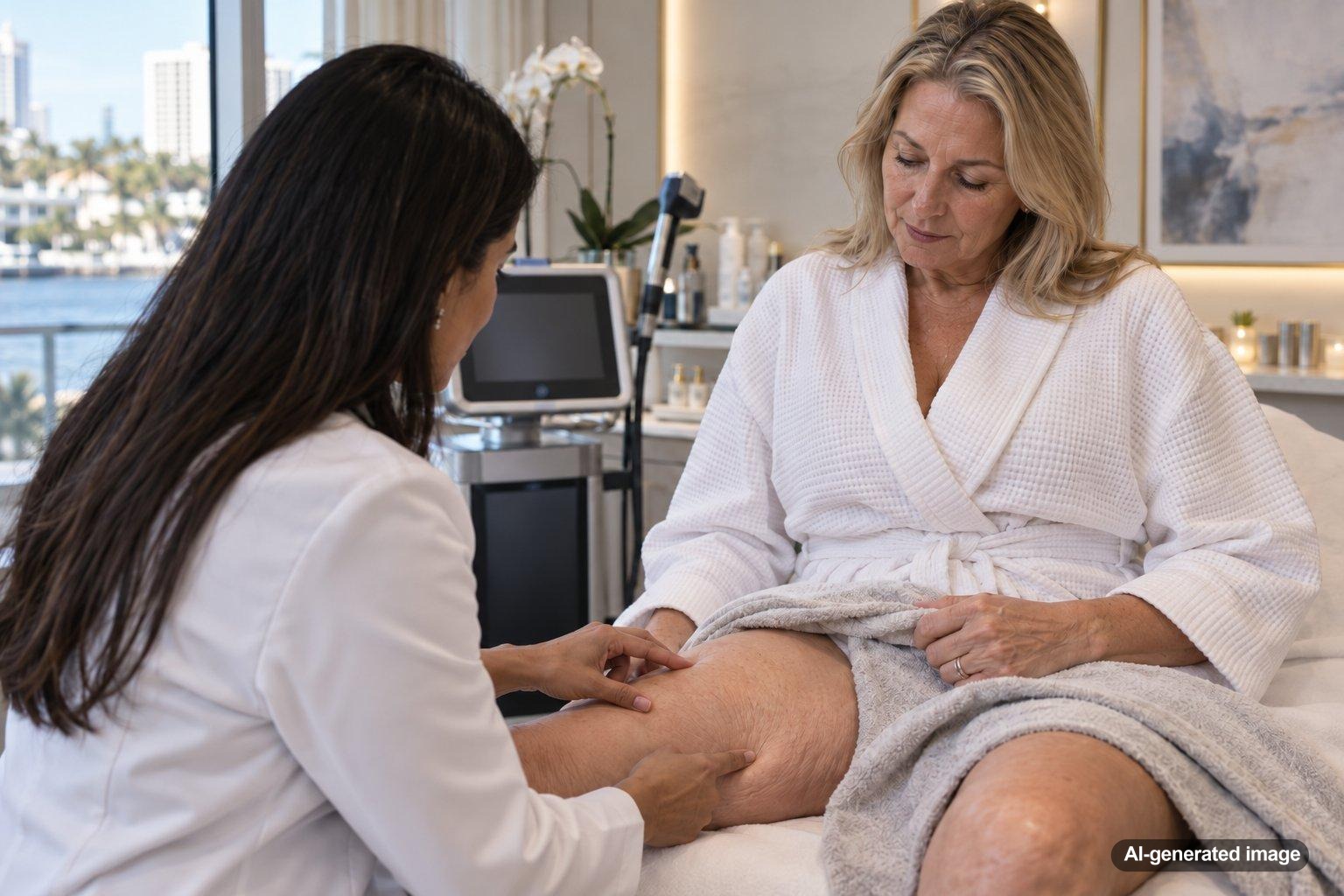
Losing weight can be an important accomplishment, but changes in body size do not always mean the skin immediately follows the new contours. The inner thighs are one area where thinner, wrinkled, or crepey-looking skin may become more noticeable after weight loss. Morpheus8, a form of radiofrequency microneedling, may be considered when the goal is to improve skin texture and mild laxity without surgery.
The important distinction is that Morpheus8 is not a substitute for removing substantial excess skin. Whether it is a reasonable option depends on how much laxity is present, the condition and thickness of the skin, the amount of underlying tissue, and your individual goals. A dermatologist can examine the area and help determine what level of improvement is realistic.
Quick answer
- Morpheus8 combines microneedles with radiofrequency energy delivered into the skin and underlying tissue.
- It may help improve the appearance of crepey texture and mild skin laxity by triggering a controlled tissue response associated with collagen remodeling.
- Results vary, and significant hanging or redundant skin generally cannot be corrected to the same degree as it can with surgery.
- RF microneedling is a medical procedure with potential risks, so treatment planning, device settings, and provider experience matter.
- A consultation is the best way to determine whether the inner thighs are appropriate for treatment and whether another approach would better match your goals.
What Morpheus8 is
Morpheus8 is an RF microneedling treatment. Small needles enter the skin and deliver radiofrequency energy at controlled depths, producing localized heat within targeted tissue. This differs from traditional microneedling, which creates microscopic channels without delivering radiofrequency energy.
The controlled injury and heating response can stimulate remodeling processes in the skin. For someone bothered by a finely wrinkled or crepey appearance after weight loss, the objective is typically gradual improvement in texture and firmness rather than dramatic removal of loose tissue.
Because the inner thigh has different anatomy and tissue characteristics than the face, treatment should be planned specifically for that body area rather than approached as though every location can be treated with identical settings.
Why inner thigh skin can look crepey after weight loss
Skin stretches and contracts as body volume changes. After weight loss, some skin may not fully conform to the smaller underlying contour. The degree of visible laxity can vary substantially from person to person.
Factors that can influence the appearance of the area include:
- The amount of weight lost: Larger changes in body size may leave more redundant skin.
- Age and skin quality: Skin structure and elasticity change over time.
- How long the skin was stretched: Long-standing tissue expansion can affect how well skin retracts afterward.
- Genetics: Natural differences in skin thickness, elasticity, and collagen structure influence how skin responds to weight changes.
- Sun exposure: Cumulative ultraviolet exposure can contribute to visible changes in skin quality.
- Remaining fat distribution: The contour underneath the skin can influence whether an area appears loose, folded, or crepey.
These factors help explain why two people who lose a similar amount of weight may have very different skin concerns afterward.
What Morpheus8 may improve
Morpheus8 may be most relevant when the concern involves skin texture, fine crepiness, and a modest degree of laxity. RF microneedling creates controlled heat below the surface while the needles produce a microneedling effect. The treatment is intended to encourage remodeling rather than physically remove excess skin.
That distinction matters for expectations. A person with relatively mild looseness and a crinkled texture may be considering a very different problem from someone who has folds of redundant skin after major weight loss. The more the concern involves actual excess skin rather than skin quality alone, the more important it becomes to discuss the limitations of nonsurgical procedures.
Improvements from collagen remodeling are generally gradual rather than immediate. The number and spacing of treatments, treatment depth, energy settings, and expected degree of change should be individualized after an examination.
What Morpheus8 cannot do
No nonsurgical energy-based procedure can recreate what surgical removal of substantial excess skin accomplishes. Morpheus8 does not cut away redundant tissue, and it should not be presented as an equivalent alternative when significant skin excess is present.
It also cannot guarantee a completely smooth inner thigh or erase every fold, line, or textural change associated with weight loss. Some patients may be more appropriate candidates for other nonsurgical approaches, while others may benefit from discussing surgical body contouring if the primary concern is substantial loose skin.
A useful consultation should therefore focus not only on whether Morpheus8 can be performed, but whether the likely degree of improvement is worthwhile for the specific concern.
What you can do at home
Home care cannot remove meaningful excess skin, but supporting the skin barrier and avoiding unnecessary irritation can help the area look and feel healthier. A simple routine is usually preferable to aggressively layering products.
- Use a gentle cleanser rather than harsh scrubs on the inner thighs.
- Apply a fragrance-free moisturizer regularly if the skin feels dry or rough.
- Protect exposed thigh skin from excessive sun exposure.
- Avoid repeatedly picking, scrubbing, or using strong acids in an attempt to tighten the area.
- If friction is a problem, choose clothing and skin-care habits that reduce rubbing and irritation.
Topical products may support hydration and surface texture, but they should not be expected to reproduce the structural changes associated with an in-office procedure or surgery.
Professional options for crepey inner thigh skin
The right treatment depends on whether the dominant issue is texture, laxity, volume, excess skin, or a combination of these concerns. Professional options can include energy-based procedures, microneedling-based treatments, other skin-resurfacing approaches, or surgical body contouring for more significant excess tissue.
RF microneedling is one option within that broader spectrum. During an evaluation, a dermatologist can assess the quality of the skin, the amount of laxity, previous procedures, medical history, medications, tendency toward pigment changes or scarring, and the result you are hoping to achieve.
It is also reasonable to discuss whether your weight has stabilized. Continuing substantial changes in body size can alter the contour of the thighs and affect how you evaluate the outcome of a cosmetic treatment.
Safety considerations with RF microneedling
RF microneedling should be treated as a medical procedure rather than a casual beauty treatment. In October 2025, the U.S. Food and Drug Administration issued a safety communication after receiving reports of serious complications associated with certain uses of RF microneedling devices. Reported complications included burns, scarring, fat loss, disfigurement, and nerve damage.
The FDA recommends discussing the benefits and risks with a licensed health care provider who has training and experience using RF microneedling devices. The agency also advises patients to ask which device will be used and to seek medical care if concerning problems develop afterward.
This does not mean every patient will experience a serious complication. It does mean that thoughtful patient selection, knowledge of anatomy, appropriate treatment parameters, and qualified medical oversight are important parts of the decision.
When to see a dermatologist
A dermatologist can help when you are unsure whether what you are seeing is primarily loose skin, a texture change, irritation, pigment alteration, or another skin concern. An in-person examination is especially useful before an elective device procedure because the treatment plan needs to account for your skin and anatomy rather than relying on a standard setting.
Seek medical attention promptly if you develop unexpected blistering, significant burns, worsening pain, signs of infection, persistent numbness, unusual weakness, severe swelling, or another concerning reaction following an RF microneedling procedure.
If your concern is substantial hanging skin after major weight loss, a dermatologist can also help clarify whether a nonsurgical skin treatment is likely to meet your expectations or whether discussing a surgical consultation would be more appropriate.
FAQ
Can Morpheus8 tighten loose skin on the inner thighs?
It may help improve mild laxity and crepey texture in appropriately selected patients, but the degree of change varies. It does not remove substantial redundant skin in the way surgery can.
Is Morpheus8 the same as regular microneedling?
No. Both use needles, but RF microneedling also delivers radiofrequency energy into targeted tissue. That additional energy creates controlled heating beneath the skin.
How many Morpheus8 treatments are needed for the thighs?
There is no universal treatment number that applies to everyone. A clinician may recommend a treatment plan based on skin quality, the severity of laxity, treatment settings, response to previous sessions, and your goals.
How quickly will I see a difference?
Changes associated with tissue remodeling develop over time rather than appearing all at once. Timing and the amount of visible improvement vary by patient, treatment plan, and the condition of the skin before treatment.
Can Morpheus8 replace a thigh lift after major weight loss?
Not when substantial excess skin needs to be physically removed. RF microneedling may be considered for skin quality and mild laxity, while significant redundant tissue may require a surgical discussion if the goal is a larger contour change.
Is Morpheus8 appropriate for everyone with crepey thigh skin?
No. Candidacy depends on factors such as skin condition, anatomy, medical history, medications, previous treatments, and treatment goals. A dermatologist can evaluate these factors and discuss whether RF microneedling or another approach is appropriate.
At Waverly DermSpa, we offer Morpheus8 and can help you understand whether it may be appropriate.
Ready to get help?
Schedule an appointment or send a message and our team will get back to you.
Prefer to call? 954-666-3736
This article is for educational purposes and is not medical advice. For diagnosis and personalized treatment, please book an appointment with a board-certified dermatologist.
Sources & further reading
- U.S. Food and Drug Administration (FDA) – Potential Risks with Certain Uses of Radiofrequency (RF) Microneedling – FDA Safety Communication
- American Academy of Dermatology (AAD) – Statement on the FDA Safety Briefing about Radiofrequency Microneedling Risks
- Cleveland Clinic – Radio Frequency (RF) Microneedling
