

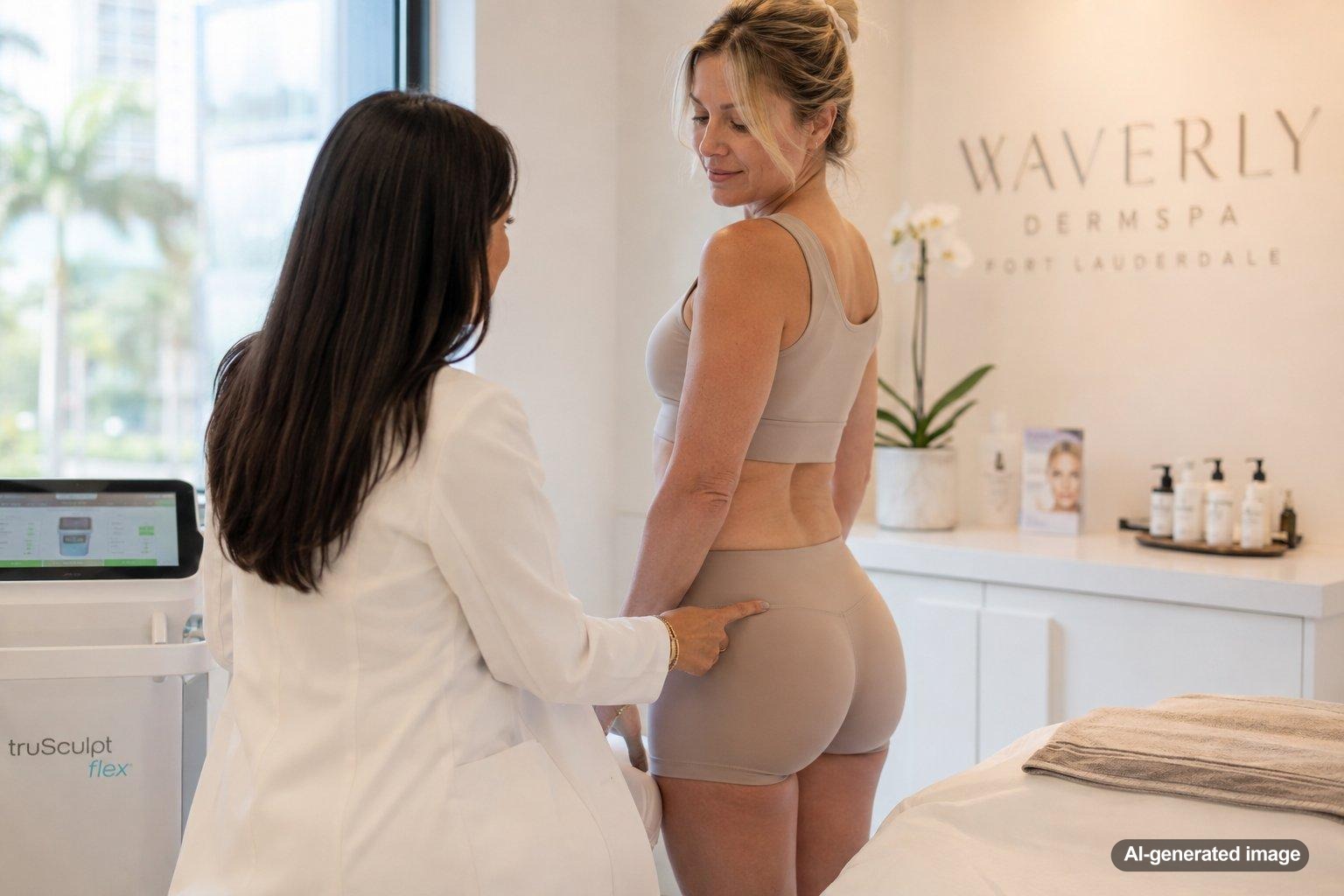
Spending long hours sitting at a desk can leave the gluteal muscles feeling weaker, less engaged, or less defined over time. When the concern involves muscle conditioning rather than simply body fat or skin texture, truSculpt Flex is one office-based option that may be considered as part of a broader plan.
truSculpt Flex uses externally applied muscle stimulation to produce repeated muscle contractions during a treatment session. It is not a substitute for diagnosing the cause of significant muscle loss, and it does not replace regular movement, resistance training, or medical evaluation when weakness is new, progressive, or unexplained.
Quick answer
- Long periods of sitting may contribute to reduced gluteal activation and deconditioning.
- truSculpt Flex is designed to stimulate muscle contractions during an in-office session.
- The treatment may be considered for people interested in improving muscle conditioning or definition without surgery.
- Visible flattening of the buttocks can have more than one cause, so an evaluation helps determine whether muscle conditioning is actually the main issue.
- Exercise, adequate nutrition, and regular movement remain important parts of maintaining gluteal strength.
What sedentary work can do to the gluteal muscles
The gluteal muscles help stabilize the pelvis, extend the hips, and support many everyday movements. A desk-heavy routine does not automatically cause true medical muscle atrophy, but spending much of the day seated can reduce how frequently these muscles are challenged.
Over time, some people notice less strength, endurance, or muscle definition, particularly if their workday is combined with little resistance exercise. Changes in posture, overall activity level, body weight, aging, previous injuries, nutrition, and other health factors can also influence the appearance and function of the gluteal region.
How truSculpt Flex works
truSculpt Flex is an external muscle stimulation treatment. Applicators are positioned over selected muscle groups, where the system creates a sequence of muscle contractions during the session.
The goal is muscle conditioning rather than direct replacement of lost tissue. Because the appearance of the buttocks reflects muscle, fat distribution, skin, connective tissue, and skeletal structure, results and treatment goals can vary considerably from person to person.
Someone whose main concern is reduced muscle engagement may have a different treatment plan from someone primarily concerned about loose skin, localized fat, or loss of soft-tissue volume.
Who might consider this type of treatment?
A person may ask about truSculpt Flex when they feel that prolonged desk work or a less active lifestyle has contributed to reduced gluteal tone or conditioning. Potential reasons for discussing the treatment include:
- Wanting additional muscle stimulation alongside an established exercise routine.
- Feeling that the glutes are difficult to activate effectively during workouts.
- Noticing reduced definition after a prolonged period of inactivity.
- Wanting a non-surgical approach focused specifically on muscle conditioning.
- Returning to a more active lifestyle after a sedentary period and wanting to understand available office-based options.
A consultation is particularly useful when the concern is described as “atrophy,” because true muscle wasting can have causes that should not simply be assumed to result from sitting.
What truSculpt Flex does not replace
Muscle stimulation is not a replacement for the basic habits that support long-term strength and mobility. Regular walking, resistance exercise, progressive strength training, adequate protein and overall nutrition, and breaking up long periods of sitting can all play meaningful roles in maintaining muscle function.
If exercise is appropriate for you, movements such as squats, hip hinges, step-ups, bridges, and other resistance exercises can directly challenge the gluteal muscles. A qualified fitness or rehabilitation professional can help with technique when pain, previous injury, or movement limitations make exercise more complicated.
Why an evaluation matters before treating gluteal volume loss
Not every change in buttock shape comes from the same underlying issue. Reduced projection or fullness may reflect muscle deconditioning, changes in body fat, age-related tissue changes, weight loss, asymmetry, previous injury, or a combination of factors.
That distinction matters because a muscle-focused treatment will not address every possible cause of reduced volume. During an evaluation, the clinician can discuss what appears to be contributing to the concern and whether muscle stimulation fits the goal.
What can you do at home?
For many people with desk-based jobs, a practical first step is simply increasing how often the gluteal muscles are used throughout the week. Conservative habits may include:
- Standing up and walking periodically during long work sessions.
- Adding resistance exercises that challenge the hips and glutes.
- Progressing exercise gradually rather than suddenly increasing intensity.
- Paying attention to adequate nutrition and overall protein intake.
- Changing positions throughout the workday instead of remaining seated continuously.
If activity causes persistent pain, significant weakness, numbness, or difficulty walking, it is better to seek an appropriate medical evaluation than to simply push through increasingly difficult exercise.
Professional options depend on what is causing the change
Office-based options for the buttock area vary depending on whether the primary concern is muscle conditioning, fat distribution, skin laxity, or soft-tissue volume. Muscle stimulation is one category. Other approaches may focus on body contouring, skin quality, or volume, but these are not interchangeable treatments.
A clinician can help separate these concerns and discuss realistic goals. In some cases, the most appropriate recommendation may be continued exercise rather than an aesthetic procedure. In others, an office-based treatment may complement an existing fitness routine.
When should you see a dermatologist or other medical professional?
Gradual loss of conditioning after a less active period is different from sudden or unexplained muscle weakness. Consider medical evaluation if you notice new or progressive weakness, substantial asymmetry, persistent pain, numbness, difficulty walking, unexplained weight loss, or muscle loss that seems out of proportion to changes in your activity level.
A dermatologist can also help evaluate aesthetic concerns involving skin and soft tissue and determine whether another specialist would be more appropriate when symptoms suggest a musculoskeletal or neurologic issue.
FAQ
Can sitting all day make my glutes look flatter?
A highly sedentary routine may contribute to reduced muscle conditioning, particularly when it is paired with little resistance exercise. However, changes in buttock shape can also reflect body composition, weight changes, skin, aging, and individual anatomy.
Is truSculpt Flex the same as exercising?
No. The treatment produces externally stimulated muscle contractions, while exercise involves voluntary movement and provides broader benefits for strength, coordination, cardiovascular health, bone health, and daily function. An office treatment is better viewed as a potential complement rather than a replacement for physical activity.
Can truSculpt Flex rebuild muscle lost from years of desk work?
Individual responses vary, and the degree and cause of apparent muscle loss matter. A clinician can evaluate whether the concern appears consistent with deconditioning and discuss whether muscle stimulation may be appropriate for your goals.
Does truSculpt Flex treat loose skin or lost buttock volume?
Its primary focus is muscle stimulation. Loose skin, localized fat, and loss of soft-tissue volume are different concerns and may require different approaches.
Should I exercise if I am considering truSculpt Flex?
For people who can exercise safely, maintaining an appropriate strength and movement routine remains important. Your clinician can help you understand how an office-based muscle treatment may fit alongside your existing habits.
Where can I ask about truSculpt Flex in Fort Lauderdale?
At Waverly DermSpa, we offer truSculpt Flex and can help you understand whether it may be appropriate.
Ready to get help?
Schedule an appointment or send a message and our team will get back to you.
Prefer to call? 954-666-3736
Disclaimer
This article is for educational purposes and is not medical advice. For diagnosis and personalized treatment, please book an appointment with a board-certified dermatologist.
