

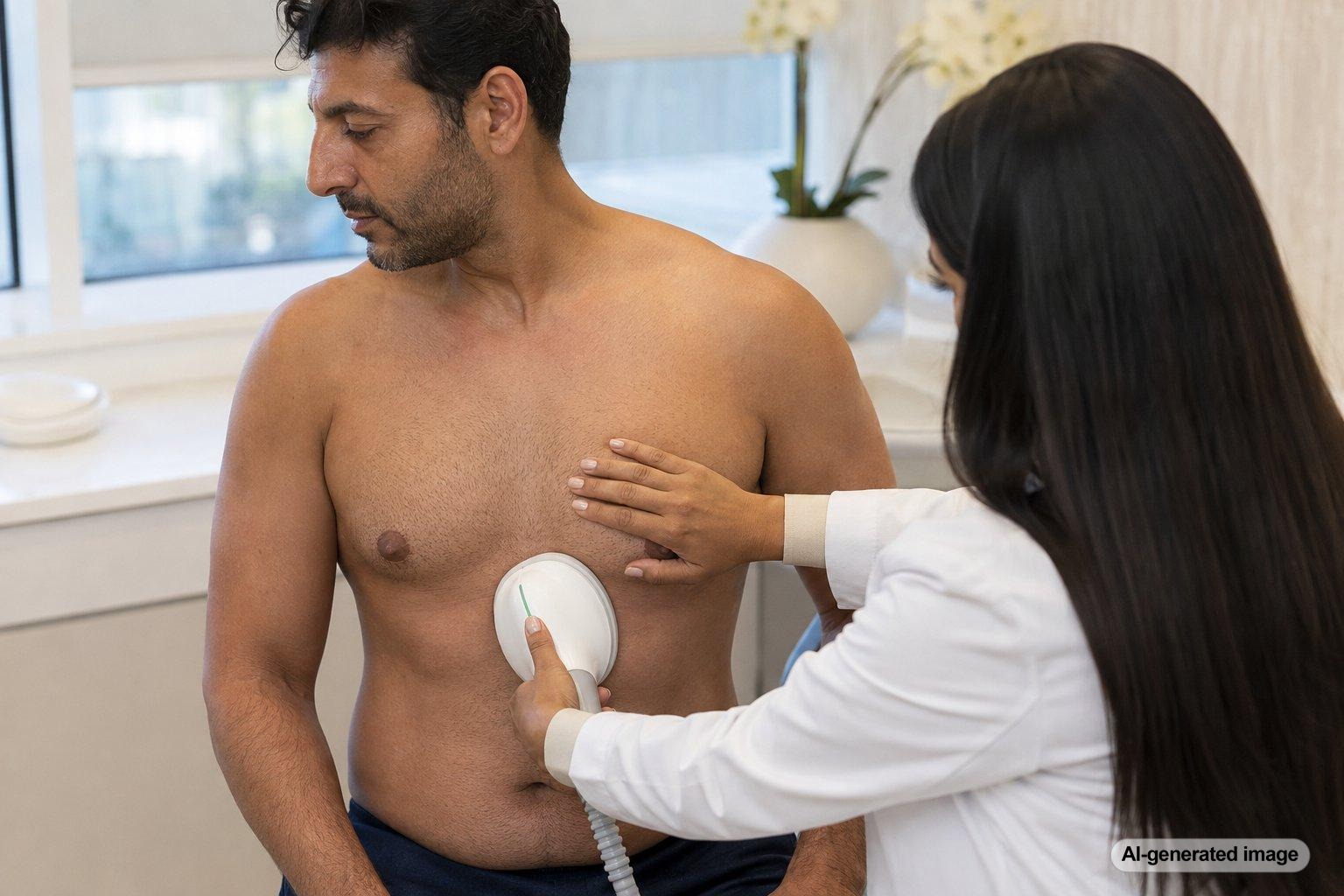
Fullness in the male chest can be frustrating, especially when it remains despite consistent exercise and balanced eating habits. In some cases, the fullness is primarily caused by localized fat, a pattern often called pseudogynecomastia. In other cases, glandular tissue or a combination of fat and glandular tissue may be involved.
truSculpt iD is a noninvasive body contouring option designed to address localized fat using controlled radiofrequency energy. It may be appropriate for selected patients with fat-dominant chest fullness, but it does not replace a medical evaluation. Understanding the type of tissue involved is an important first step toward choosing a sensible treatment plan.
Quick answer
- truSculpt iD may help contour localized, pinchable fat in the male chest.
- It is not intended to remove glandular breast tissue or diagnose the cause of chest enlargement.
- Results, treatment plans, and the number of sessions needed vary by individual.
- A dermatologist can evaluate the area and help determine whether noninvasive contouring is appropriate.
What pseudogynecomastia is
Pseudogynecomastia refers to male chest fullness that is mainly related to fatty tissue. This differs from gynecomastia, which involves enlargement of glandular breast tissue. The two can look similar, and some people may have a combination of both.
A physical examination helps clarify whether the fullness appears fat-dominant, glandular, or mixed. This distinction matters because a fat-reduction treatment may improve contour when localized fat is the primary concern, but it is not designed to treat glandular tissue or an underlying medical cause.
Common causes or contributing factors
Male chest fullness can develop for several reasons. Common contributing factors include:
- Genetic patterns of fat storage
- Changes in overall body weight
- Age-related changes in body composition
- Localized fat that remains despite healthy habits
- Glandular enlargement associated with hormonal changes, certain medications, or health conditions
Because appearance alone cannot always identify the type of tissue involved, it is worth getting checked before selecting a cosmetic procedure.
What you can do at home
Regular movement, strength training, adequate sleep, and balanced nutrition can support overall health and weight management. Chest exercises may strengthen the underlying muscles and improve posture, but exercise cannot selectively remove fat from one specific area.
Avoid aggressive massage, unverified supplements, or products marketed as rapid solutions for chest fat. If the fullness developed suddenly, feels different on one side, or appeared after a medication change, speak with a qualified medical professional rather than trying to address it independently.
How truSculpt iD may fit into a professional plan
truSculpt iD is designed to deliver controlled radiofrequency energy to a selected treatment area. For an appropriate candidate, it may help refine the contour of localized fat without incisions. Treatment planning depends on the amount and distribution of fatty tissue, skin quality, anatomy, health history, and personal goals.
Noninvasive contouring is not a weight-loss treatment, and individual responses vary. Some patients may be better served by another approach, including observation, medical evaluation, or consultation with a surgeon when glandular tissue or more substantial contouring needs are present. Your clinician can explain the limitations and expected treatment experience before you decide.
When to see a dermatologist
Schedule a medical evaluation if chest fullness is new, rapidly changing, painful, firm, distinctly one-sided, or associated with nipple discharge, skin changes, or a noticeable lump. These findings do not automatically indicate a serious condition, but they should be assessed before cosmetic treatment.
A dermatologist can also review relevant health conditions, medications, and supplements and determine whether additional evaluation may be appropriate. Even without concerning symptoms, an in-person assessment can help distinguish fatty tissue from glandular tissue and set realistic expectations.
Frequently asked questions
Can truSculpt iD treat gynecomastia?
truSculpt iD is designed for localized fat, not glandular breast tissue. If true gynecomastia or mixed tissue is present, a dermatologist can discuss whether another form of evaluation or treatment would be more suitable.
Is truSculpt iD a weight-loss treatment?
No. It is a body contouring option intended for selected areas of localized fat. It does not replace nutrition, exercise, or medical weight-management care.
How many sessions might be needed?
The recommended plan varies with anatomy, treatment goals, and the clinician’s assessment. Some people may be advised to have one session, while others may discuss a different plan. Outcomes cannot be predicted with certainty.
Will chest exercises provide the same result?
Chest exercises can build muscle and support a more defined appearance, but they cannot target the removal of fat from a single area. Exercise and body contouring serve different purposes.
Who should evaluate male chest fullness?
A board-certified dermatologist can assess the tissue, review relevant medical factors, and help determine whether the concern is appropriate for cosmetic contouring or needs further evaluation.
At Waverly DermSpa, we offer truSculpt iD and can help you understand whether it may be appropriate.
Ready to get help?
Schedule an appointment or send a message and our team will get back to you.
Prefer to call? 954-666-3736
This article is for educational purposes and is not medical advice. For diagnosis and personalized treatment, please book an appointment with a board-certified dermatologist.
