

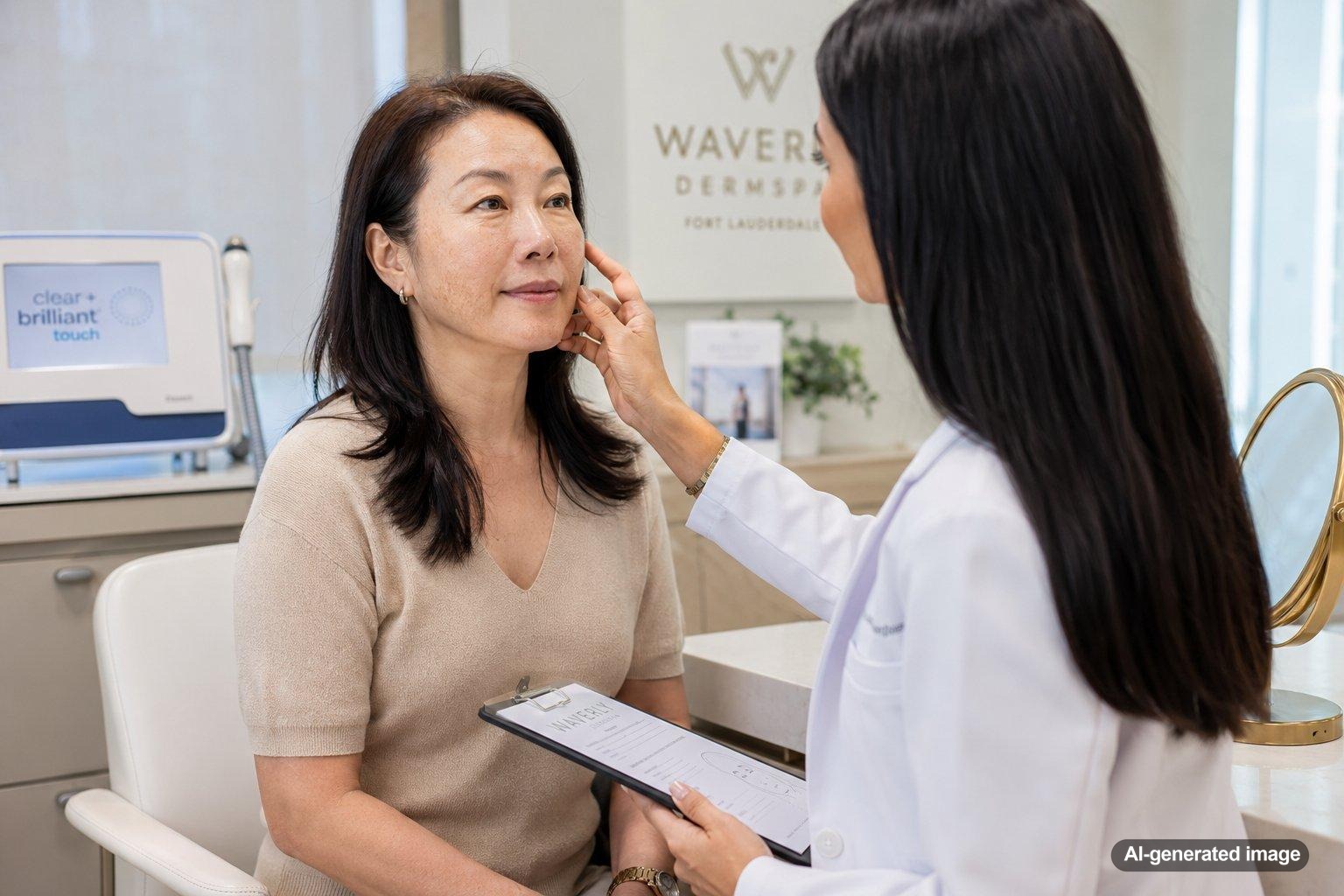
Many adults need a series of Clear + Brilliant Touch sessions rather than a single treatment when addressing mild acne-related texture or uneven tone. A commonly discussed starting plan may involve several appointments spaced apart, followed by an evaluation of how the skin is responding. The right number is not universal.
Scar type, depth, skin tone, active acne, sensitivity, treatment settings, and personal goals can all affect the plan. Clear + Brilliant Touch may be more appropriate for subtle textural irregularities and discoloration than for deep, sharply defined acne scars, which may require a different or combined approach.
Quick answer
- Many treatment plans begin with approximately three to six sessions.
- Sessions are often scheduled several weeks apart to allow the skin time to recover and renew.
- Mild texture and uneven pigmentation may respond differently from deep ice pick, boxcar, or rolling scars.
- Maintenance sessions may be considered after the initial series, depending on the response and goals.
- A dermatologist should evaluate active acne and scar type before recommending a treatment plan.
What is Clear + Brilliant Touch?
Clear + Brilliant Touch is a fractional laser treatment designed to create controlled microscopic treatment zones in the skin while leaving surrounding tissue intact. This approach supports gradual renewal and may help improve the appearance of mild uneven texture, enlarged-looking pores, sun-related discoloration, and post-acne marks.
The treatment is generally less intensive than deeper resurfacing procedures. That can make it appealing to adults who prefer a gradual approach with a more manageable recovery period, but it also means that meaningful changes often develop through a series rather than one appointment.
Why the number of sessions varies
The number of Clear + Brilliant Touch sessions considered for acne scars depends on several factors:
- Scar type: Shallow textural changes may be more responsive than deep or tethered scars.
- Scar severity: More visible or widespread scarring may require additional sessions or another procedure.
- Skin tone: Treatment settings and preparation may need to be adjusted to reduce the risk of unwanted pigment changes.
- Active acne: Ongoing breakouts may need to be controlled before focusing on scar treatment.
- Primary concern: Brown marks, redness, uneven texture, and true depressed scars are different concerns and may not respond in the same way.
- Downtime preference: A gentler series may suit someone who cannot accommodate the recovery associated with a more intensive resurfacing procedure.
Is three to six sessions always enough?
No fixed number applies to every person. Three to six sessions can be a useful general reference for an initial series, but it should not be treated as a predetermined endpoint. Some adults may be satisfied with subtle improvement after fewer appointments, while others may need a longer plan or a different treatment strategy.
Your clinician may reassess progress after several sessions by looking at texture, pigmentation, tolerance, healing, and whether the treatment is addressing the type of scarring present. Standardized photographs can also make gradual changes easier to evaluate.
Which acne scars may need another approach?
Clear + Brilliant Touch may help with mild surface irregularities and post-acne discoloration, but deeper scars often require more targeted treatment. These may include narrow ice pick scars, sharply edged boxcar scars, or rolling scars caused by fibrous bands beneath the skin.
Depending on the examination, professional options may include microneedling, deeper fractional resurfacing, chemical reconstruction techniques, subcision, injectable support, chemical peels, or a carefully planned combination. These procedures are not interchangeable, and suitability depends on scar structure, skin type, medical history, and recovery preferences.
What to expect during a treatment series
A typical appointment may include cleansing, topical numbing when appropriate, laser treatment, and calming post-treatment care. Temporary redness, warmth, dryness, or a sandpaper-like texture can occur as the skin renews. The intensity and duration of these effects vary.
Changes usually appear gradually. Acne scars often require patience because collagen remodeling and surface renewal take time. It is helpful to judge the series as a whole rather than expecting one appointment to represent the final result.
How to support your skin between sessions
- Use a gentle cleanser and simple moisturizer recommended for your skin.
- Apply broad-spectrum sunscreen consistently and limit unnecessary sun exposure.
- Avoid picking at active acne, flakes, or healing skin.
- Pause irritating exfoliants or active products when instructed by your clinician.
- Tell your clinician about recent tanning, cold sores, medications, procedures, or changes in your skin.
- Follow the personalized pre-treatment and aftercare instructions provided by the practice.
When to see a dermatologist
A dermatologist can determine whether the concern is true scarring, lingering pigmentation, persistent redness, active acne, or a combination. This distinction matters because each may need a different plan.
Schedule an evaluation if acne continues to create new marks, scars are deep or painful, pigmentation is worsening, or previous treatments have caused prolonged irritation or uneven color. Seek prompt medical guidance for blistering, significant swelling, increasing pain, drainage, or other unexpected symptoms after any procedure.
Frequently asked questions
Can one Clear + Brilliant Touch session improve acne scars?
One session may provide subtle changes in brightness or texture for some people, but acne-related texture is usually approached as a series. The response depends on the scar type and the treatment settings used.
How far apart are sessions scheduled?
Appointments are often separated by several weeks. Your clinician may adjust the interval based on skin sensitivity, recovery, treatment intensity, and how the skin responds.
Does Clear + Brilliant Touch treat active acne?
It is primarily used to address skin tone and texture rather than serve as a complete acne-management plan. Active acne should be evaluated so new breakouts and future scarring can be addressed appropriately.
Can it help dark marks left by acne?
It may help improve some forms of uneven pigmentation, but treatment must be selected carefully. Brown marks, red marks, and depressed scars are different concerns, so an examination is important before choosing a procedure.
Will maintenance treatments be needed?
Some people choose periodic maintenance after completing an initial series. The timing depends on skin goals, sun exposure, skincare habits, acne activity, and the durability of the observed improvement.
Can Clear + Brilliant Touch be combined with other treatments?
Combination plans may be considered when a person has multiple scar types or concerns. A dermatologist can help sequence treatments safely and avoid unnecessary irritation.
At Waverly DermSpa, we offer Clear + Brilliant Touch and can help you understand whether it may be appropriate.
Ready to get help?
Schedule an appointment or send a message and our team will get back to you.
Prefer to call? 954-666-3736
This article is for educational purposes and is not medical advice. For diagnosis and personalized treatment, please book an appointment with a board-certified dermatologist.
