

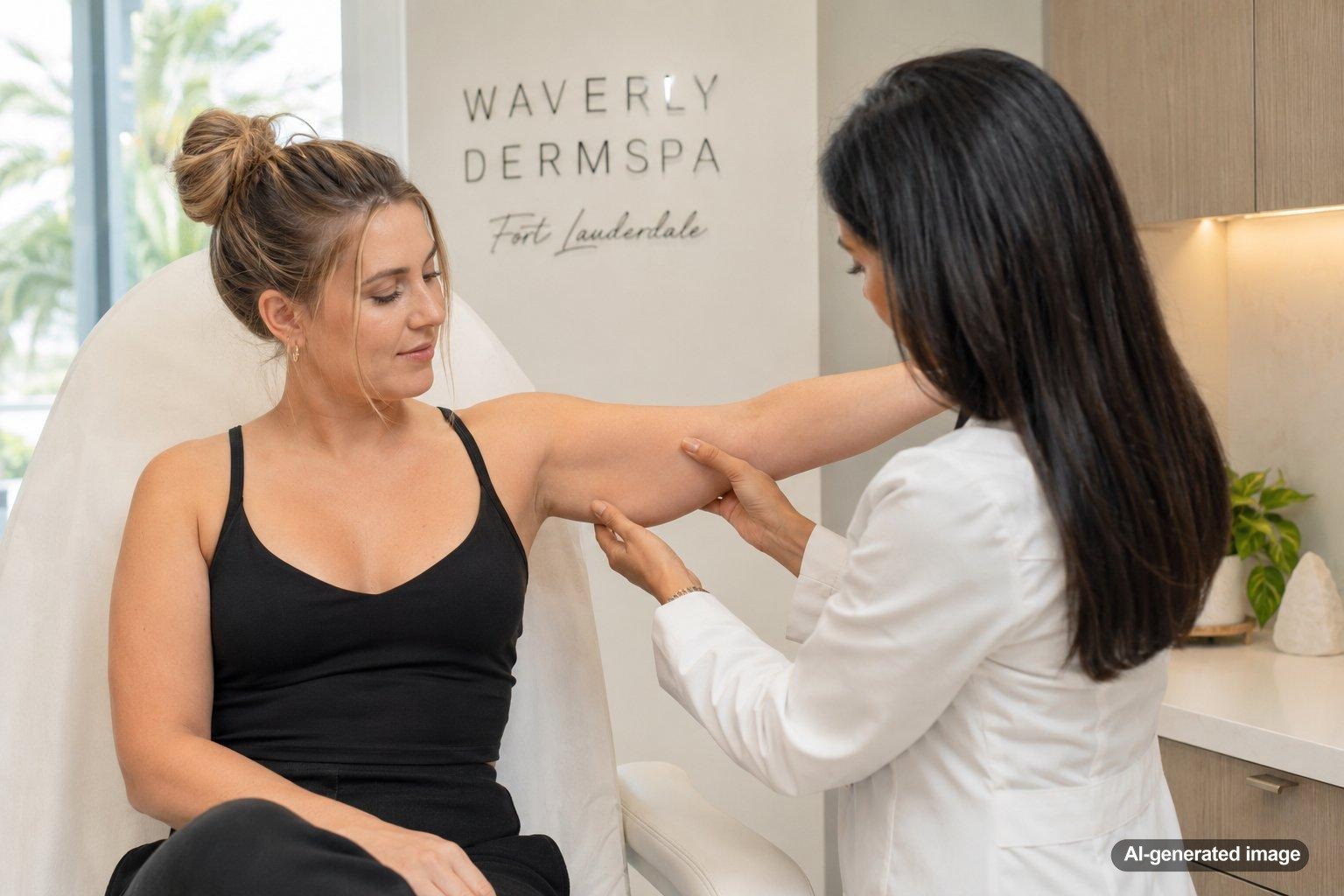
Loose skin along the inner upper arms is common after weight changes, natural aging, sun exposure, or gradual collagen loss. Often called “bat wings,” this concern can remain even when someone exercises regularly and maintains a stable weight. XERF is a non-surgical energy-based treatment that may help improve the appearance of mild to moderate skin laxity by delivering controlled radiofrequency energy beneath the skin.
XERF does not remove a large amount of excess skin, and it is not a substitute for arm lift surgery. Its role is generally more subtle: supporting firmer-looking skin and improved contour without incisions. A dermatologist can examine the area and help determine whether the degree of laxity is appropriate for a non-surgical approach.
Quick answer
- XERF uses radiofrequency energy to heat targeted tissue beneath the skin.
- The treatment may encourage gradual collagen remodeling and a firmer appearance.
- It is generally better suited to mild or moderate laxity than a large amount of hanging skin.
- Results vary based on age, skin quality, weight stability, and the amount of existing looseness.
- A consultation is important because some people may benefit more from another treatment or a surgical evaluation.
What is XERF?
XERF is a non-invasive radiofrequency treatment designed to deliver controlled heat at selected depths below the skin’s surface. This thermal energy is intended to support collagen contraction and remodeling while leaving the outer surface of the skin intact.
For the inner arms, the treatment is performed by moving the applicator systematically across the planned area. Your clinician adjusts the treatment pattern based on the size of the area, tissue thickness, skin condition, and your individual goals. The sensation and treatment experience can vary from person to person.
Why does loose inner-arm skin develop?
Upper-arm laxity is rarely caused by one factor alone. Common contributors include:
- Natural aging: Collagen and elastin gradually decline, making skin less resilient.
- Weight loss: Skin may not fully contract after a significant or rapid change in body size.
- Genetics: Some people naturally develop thinner or less elastic skin in the upper arms.
- Sun exposure: Cumulative ultraviolet exposure can weaken the skin’s supporting structure.
- Hormonal changes: Changes over time may affect skin thickness, hydration, and elasticity.
- Loss of underlying volume: Reduced fat or muscle volume can make lax skin appear more noticeable.
Strength training can improve muscle definition, but exercise cannot directly remove excess skin or restore lost collagen. This is why a person may feel strong and fit while still noticing looseness along the inner arms.
What can XERF do for bat wings?
XERF may help create a smoother, somewhat firmer appearance when skin laxity is mild to moderate. The goal is usually refinement rather than a dramatic reduction in skin. Because collagen remodeling is gradual, any visible change may develop over time and can differ considerably among patients.
The amount of improvement depends on several factors, including skin thickness, the degree of laxity, age, previous weight changes, and how the tissue responds to treatment. A dermatologist can assess whether the concern is primarily loose skin, localized fat, reduced muscle tone, or a combination of these factors.
Who may be a reasonable candidate?
XERF may be considered for adults who have mild to moderate upper-arm laxity, prefer a non-surgical option, and understand that results are variable and generally more modest than surgery. Candidates are often most satisfied when they have realistic expectations and a relatively stable body weight.
The treatment may be less suitable when there is a large amount of hanging skin, substantial tissue redundancy after major weight loss, or a medical factor that changes how an energy-based procedure should be approached. During a consultation, share your complete medical history, medications, implanted devices, prior procedures, and any changes in sensation or circulation in the treatment area.
What can you do at home?
Home care cannot duplicate an in-office skin-tightening treatment, but consistent habits can support the skin and help protect existing collagen:
- Use broad-spectrum sunscreen on exposed arms and reapply during extended outdoor activity.
- Moisturize regularly to reduce dryness and improve the skin’s temporary smoothness.
- Avoid aggressive scrubbing or irritating products on thin or sensitive upper-arm skin.
- Maintain a stable weight when possible, since repeated weight fluctuations can stretch the skin.
- Include resistance exercise for overall strength and arm definition, while recognizing that exercise does not directly tighten loose skin.
Topical products may improve hydration and texture, but they generally cannot remove significant excess skin. Be cautious with products that promise surgical-level tightening from a cream alone.
What other professional options may be considered?
The right approach depends on whether the main concern is skin laxity, fat, texture, or a combination. Professional options may include other energy-based treatments, collagen-stimulating procedures, body-contouring treatments, or referral for a surgical arm lift when excess skin is substantial.
A dermatologist can help distinguish between treatments that target skin quality and those intended to address localized fat or muscle tone. Combining procedures is not automatically necessary, and more treatment does not always mean a better result. The plan should be based on an examination, medical history, comfort with downtime, and realistic goals.
When should you see a dermatologist?
Schedule an evaluation when you want a personalized assessment of upper-arm laxity or are unsure which type of treatment addresses your concern. You should also seek medical evaluation if the area has a new lump, persistent swelling, unusual pain, numbness, a changing skin lesion, unexplained bruising, or a rash that does not improve.
A consultation is particularly helpful after major weight loss because skin redundancy can vary widely. Your dermatologist can explain the likely limitations of non-surgical treatment and whether a surgical opinion may be more appropriate.
Frequently asked questions
Does XERF remove excess skin?
No. XERF does not cut away or physically remove skin. It may help improve the appearance of mild to moderate laxity through controlled radiofrequency energy and gradual collagen remodeling.
Can XERF replace an arm lift?
It generally cannot provide the same degree of change as an arm lift when there is substantial hanging skin. Surgery physically removes excess tissue, while XERF is intended for non-surgical improvement. A dermatologist or plastic surgeon can help clarify which category fits your anatomy and goals.
Does XERF help with upper-arm fat?
XERF is primarily discussed as a skin-firming treatment rather than a direct replacement for fat-reduction procedures. If localized fat is contributing to the contour, your clinician may discuss other options after examining the area.
How many treatments are needed?
The recommended treatment plan varies based on the device protocol, the degree of laxity, the size of the area, and individual response. Your clinician can outline a personalized plan after an in-person assessment.
Are the changes immediate?
Some people may notice an early change in how the area looks or feels, but collagen remodeling is gradual. The extent and timing of visible improvement vary, and no specific outcome can be guaranteed.
Can loose arm skin return?
Natural aging continues, and later weight changes can affect the contour. Healthy skin care, sun protection, and weight stability may help support the appearance of the area, but they cannot stop normal aging.
At Waverly DermSpa, we offer XERF and can help you understand whether it may be appropriate.
Ready to get help?
Schedule an appointment or send a message and our team will get back to you.
Prefer to call? 954-666-3736
This article is for educational purposes and is not medical advice. For diagnosis and personalized treatment, please book an appointment with a board-certified dermatologist.
