

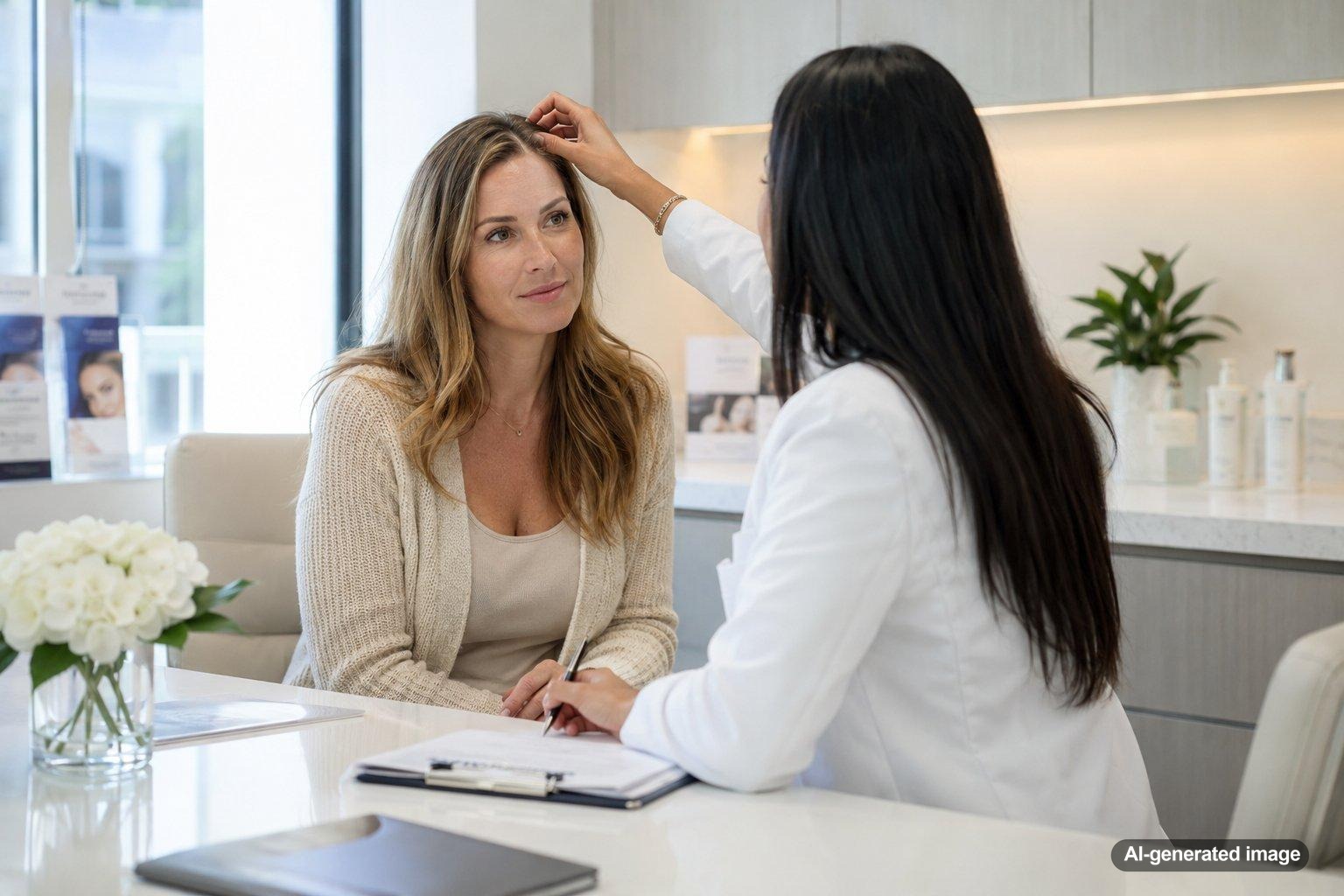
Hair shedding can feel personal, stressful, and confusing, especially when it seems to happen suddenly. A dermatologist may ask about iron and thyroid levels because hair is often influenced by what is happening inside the body, not just by what is applied to the scalp.
Low iron stores, anemia, thyroid imbalance, recent illness, stress, hormones, medications, nutrition changes, and genetic pattern hair loss can all play a role in shedding or thinning. The goal is not to blame one lab result for every hair concern. It is to look carefully at the pattern, timeline, scalp, and medical context so the next step is more thoughtful.
Quick answer
- A dermatologist may ask about iron because low iron stores or anemia can be associated with increased shedding in some people.
- Thyroid imbalance may affect hair texture, density, and shedding patterns.
- Hair loss can have more than one cause, so labs are only one part of the evaluation.
- Do not start iron or thyroid treatment on your own. Testing and interpretation should be guided by a clinician.
- Seeing a dermatologist can help distinguish shedding, pattern thinning, scalp inflammation, breakage, and other hair concerns.
Why iron and thyroid come up during a hair visit
Hair follicles are active structures. They respond to nutrition, hormones, inflammation, stress, illness, and medications. When a patient describes diffuse shedding, a wider part, changes in hair texture, or a noticeable change after a major health event, a dermatologist may ask about recent bloodwork or recommend targeted testing.
Iron and thyroid are common parts of that conversation because both can be connected to whole-body symptoms as well as hair changes. A dermatologist may ask about fatigue, cold intolerance, heavy periods, recent pregnancy, weight change, diet pattern, digestive issues, family history, and the timing of the shedding.
What iron has to do with hair
Iron helps the body make healthy red blood cells and supports many normal body functions. When iron is low, some people may notice fatigue, brittle nails, reduced stamina, or increased hair shedding. A clinician may evaluate iron with a complete blood count and iron-related labs such as ferritin, depending on the situation.
Ferritin is often discussed because it reflects stored iron. A low ferritin level may be one clue, but it is not a diagnosis by itself. The number has to be interpreted with the full clinical picture, including inflammation, diet, menstrual history, gastrointestinal symptoms, and other health factors.
What thyroid has to do with hair
The thyroid helps regulate metabolism through thyroid hormones. When thyroid function is underactive or overactive, hair may become drier, finer, more brittle, or more prone to shedding. Some patients also notice skin dryness, nail changes, temperature sensitivity, fatigue, heart rate changes, or weight changes.
A dermatologist does not replace your primary care clinician or endocrinologist, but may recognize when thyroid testing is worth discussing. If thyroid labs are abnormal, your clinician can help decide whether additional testing, monitoring, or referral is appropriate.
Common causes or triggers your dermatologist may consider
- Telogen effluvium: A shedding pattern that may follow illness, surgery, fever, emotional stress, weight change, childbirth, or other body stressors.
- Genetic pattern hair loss: Gradual thinning that often affects the part line, crown, temples, or overall density over time.
- Low iron stores or anemia: One possible contributor, especially when there are symptoms or risk factors.
- Thyroid imbalance: A possible contributor when hair changes occur with other thyroid-related symptoms or abnormal labs.
- Scalp conditions: Dandruff, inflammation, itching, scaling, or tenderness may point to a scalp-specific issue.
- Hair breakage: Heat styling, chemical processing, tight hairstyles, and friction can create thinning that is actually breakage rather than shedding from the root.
- Medication or supplement changes: Some changes can be relevant, so bring an updated list to your visit.
What you can do at home
At-home care should be gentle and conservative while you are sorting out the cause. Avoid panic-starting multiple products at once, because that can make it harder to know what is helping or irritating your scalp.
- Use a gentle shampoo routine that keeps the scalp clean without aggressive scrubbing.
- Minimize tight ponytails, extensions, heavy tension styles, and repeated heat exposure.
- Eat a balanced diet with enough protein, iron-containing foods, and overall calories unless a clinician has advised otherwise.
- Avoid starting iron supplements unless your clinician recommends them, because too much iron can be harmful.
- Take clear photos of your part line, temples, and hairline every few weeks in similar lighting if you want to track change.
- Write down when the shedding started and any major health, medication, diet, or stress changes in the prior few months.
Professional options
A dermatologist can examine the scalp, review your history, look for signs of inflammation or breakage, and decide whether labs are useful. Testing may include iron studies, thyroid labs, vitamin-related labs, hormone-related labs, or other testing depending on your symptoms and exam.
Professional options may include treating an underlying scalp condition, addressing an identified deficiency with the right clinician, discussing topical or prescription therapies, reviewing hair-care practices, or considering in-office hair support options when appropriate.
At Waverly DermSpa, we offer PRFM for Hair Loss and can help you understand whether it may be appropriate.
When to see a dermatologist
It is worth scheduling a dermatology visit if shedding is sudden, heavy, persistent, or emotionally distressing. You should also be evaluated if you have scalp itching, burning, pain, redness, scaling, patchy loss, bald spots, eyebrow loss, or signs of scarring such as shiny areas where follicles seem absent.
Because hair loss can overlap with medical conditions, hormones, nutrition, medications, and scalp health, early evaluation may help clarify what is happening before the pattern becomes harder to interpret.
FAQ
Can low iron cause hair loss?
Low iron stores or iron deficiency anemia can be associated with shedding in some people, but hair loss usually needs a broader evaluation. A dermatologist can help decide whether iron testing is relevant and how to interpret results with your medical history.
Can thyroid problems affect hair?
Thyroid imbalance may be associated with shedding, dryness, brittleness, or changes in hair texture. If thyroid symptoms or abnormal labs are present, your clinician may recommend additional evaluation or coordination with primary care or endocrinology.
Should I take iron if my hair is shedding?
Do not start iron just because your hair is shedding. Iron supplementation should be based on appropriate testing and clinician guidance, since unnecessary iron can cause problems.
Will fixing iron or thyroid levels make hair return?
Hair response varies. If low iron or thyroid imbalance is contributing, addressing it may help support healthier hair cycling over time, but there may be other causes present too. A dermatologist can help set realistic expectations.
What should I bring to a hair loss appointment?
Bring recent labs if you have them, your medication and supplement list, photos that show changes over time, and a timeline of shedding, illness, pregnancy, stress, diet changes, or new hair-care practices.
Ready to get help?
Schedule an appointment or send a message and our team will get back to you.
Prefer to call? 954-666-3736
Disclaimer
This article is for educational purposes and is not medical advice. For diagnosis and personalized treatment, please book an appointment with a board-certified dermatologist.
Sources & further reading
- American Academy of Dermatology (AAD) – Hair loss: Diagnosis and treatment
- Cleveland Clinic – Telogen Effluvium
- MedlinePlus (NIH) – Iron deficiency anemia
- Mayo Clinic – Hypothyroidism
