

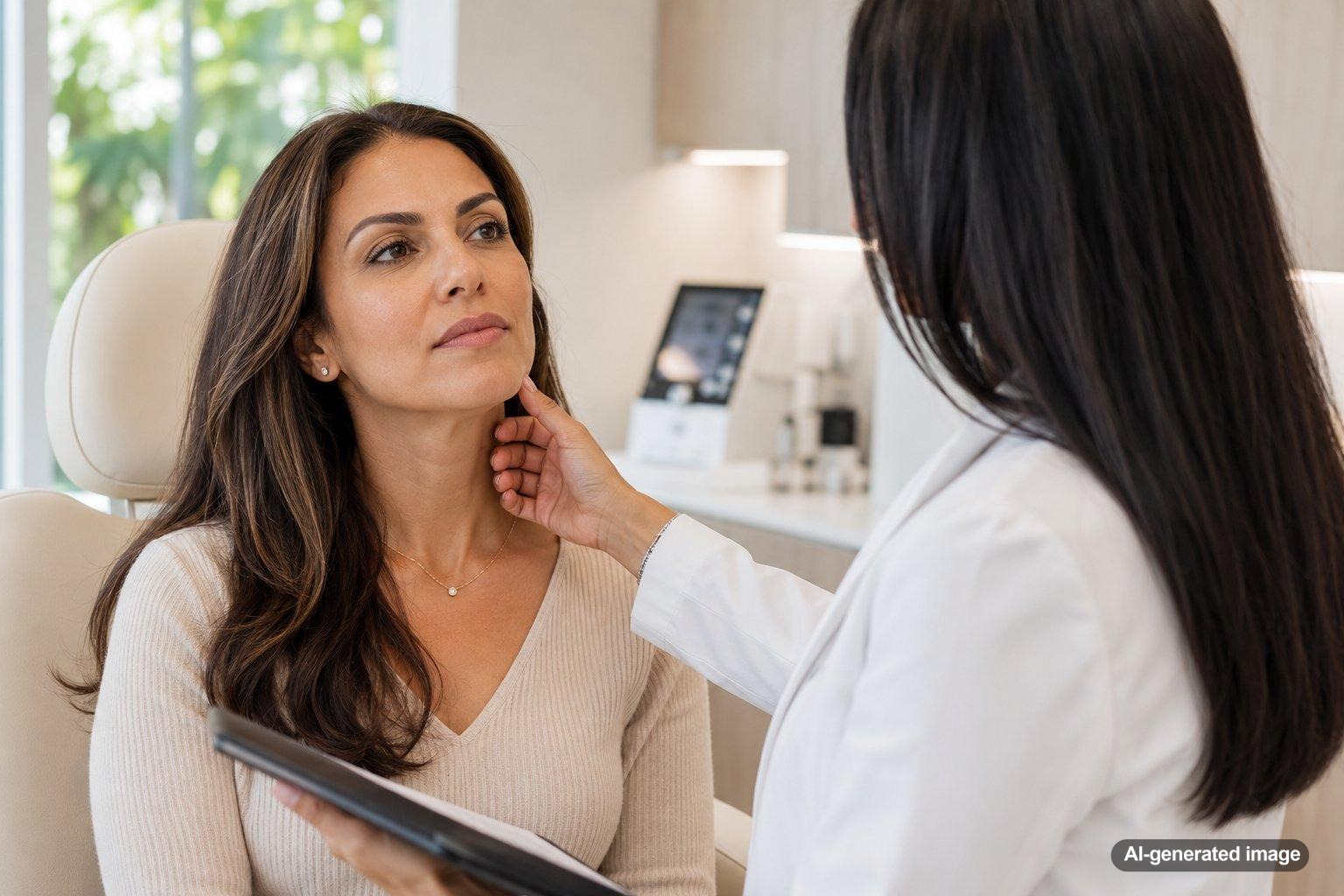
The best skin tightening for sagging skin is not one single treatment. It depends on where the skin feels loose, how much laxity is present, your skin tone, sun history, facial volume, downtime preferences, and whether the concern is mostly texture, collagen support, or deeper sagging.
For many people in Fort Lauderdale, especially those balancing year-round sun exposure, seasonal travel, and a busy social calendar, the most practical plan begins with a dermatologist evaluation. A thoughtful consultation can help separate mild laxity from volume loss, sun damage, or changes that may need a different approach.
Quick answer
- Mild skin laxity: Energy-based treatments, such as radiofrequency or certain laser approaches, may help support collagen remodeling over time.
- Texture plus looseness: Fractional resurfacing or microneedling-based options may be considered when crepiness, fine lines, and uneven texture are part of the concern.
- Volume loss: Fillers or biostimulatory injectables may help when sagging appears related to facial deflation rather than skin looseness alone.
- More advanced sagging: Dermatologic treatments may improve skin quality, but surgical consultation may be more appropriate for significant laxity.
- Best first step: A board-certified dermatologist can evaluate your skin and help match the option to your goals, health history, and downtime tolerance.
What skin tightening can and cannot do
Skin tightening treatments are designed to improve the appearance of mild to moderate laxity by supporting collagen, smoothing texture, or creating a firmer look over time. These treatments are generally not the same as surgery, and they should not be expected to lift heavier tissue in the way a facelift, neck lift, or eyelid surgery can.
That distinction matters because many people use the phrase “sagging skin” to describe several different changes. Some are truly loose skin. Others are related to volume loss, sun damage, thinning skin, muscle movement, or changes in facial fat pads. The most natural-looking plans usually begin by identifying which of those factors is most important.
Common reasons skin may look looser
- Collagen changes: Skin can gradually look thinner or less firm as collagen and elastin support changes with age.
- Sun exposure: Fort Lauderdale sun can contribute to texture changes, uneven tone, fine lines, and a crepey look.
- Volume loss: Cheeks, temples, jawline, and under-eye areas may look less supported when facial volume shifts.
- Weight changes: Skin may not always contract fully after weight fluctuation.
- Genetics: Some people naturally notice laxity earlier than others.
- Skin quality: Dehydration, barrier stress, smoking history, and inconsistent sun protection may make laxity look more noticeable.
Fort Lauderdale options to discuss with a dermatologist
Radiofrequency microneedling
Radiofrequency microneedling combines controlled microneedling with heat-based energy. It may be discussed for mild to moderate laxity, fine lines, acne scarring, and texture concerns, depending on the device, settings, skin type, and treatment area. Because it is a procedure with real medical considerations, evaluation and experienced technique matter.
Laser resurfacing
Laser treatments may be considered when sagging is accompanied by sun damage, fine lines, rough texture, or crepiness. Some laser approaches focus more on surface renewal, while others are selected for collagen support. Your clinician can help determine whether downtime, pigment risk, and sun exposure habits make this a reasonable option.
Noninvasive energy-based tightening
Some noninvasive devices use heat-based energy to support a firmer-looking appearance over time. These options may appeal to people who want less downtime, although results are typically more subtle and vary by person. They are often best for early laxity rather than heavier sagging.
Biostimulatory injectables and fillers
When sagging is partly related to facial volume loss, collagen-stimulating injectables or dermal fillers may be part of the conversation. These treatments do not simply “tighten” skin; instead, they may help restore support or improve contour when placed carefully and conservatively.
Surgical consultation when needed
For more advanced laxity, office-based skin treatments may improve skin quality but may not provide the degree of lifting someone wants. In those cases, a dermatologist can help you understand when a surgical consultation is worth considering.
What you can do at home
At-home care cannot replace an in-office procedure, but it can support healthier-looking skin and help protect your investment if you choose professional treatment.
- Use broad-spectrum sunscreen daily and reapply during extended outdoor time.
- Consider sun-protective hats and shade, especially during peak Fort Lauderdale sun.
- Keep your routine consistent and avoid over-exfoliating crepey or sensitive areas.
- Ask your dermatologist whether a retinoid, antioxidant, or barrier-supporting moisturizer is appropriate for your skin.
- Avoid choosing aggressive at-home devices without clinician guidance, especially if you have melasma, darker skin tones, a history of scarring, or recent procedures.
How a dermatologist helps choose the right option
A dermatologist will usually look at your skin quality, degree of laxity, pigment tendency, facial structure, medical history, medications, past cosmetic treatments, and tolerance for downtime. The right choice for neck crepiness may not be the right choice for jowling, under-eye looseness, or sun-damaged cheeks.
This is why the strongest answer is personalized: the best skin tightening approach is the one that fits the type of laxity you have, not the one that sounds most dramatic online. At Waverly DermSpa, we offer Morpheus8 and can help you understand whether it may be appropriate.
When to see a dermatologist
- If sagging is new, asymmetric, or associated with swelling, pain, or a visible skin change.
- If you have a history of keloids, poor wound healing, melasma, or post-inflammatory hyperpigmentation.
- If you have had recent cosmetic injections, laser treatments, peels, or surgery.
- If you are pregnant, nursing, immunosuppressed, or taking medications that may affect healing.
- If you are unsure whether you need skin tightening, volume restoration, resurfacing, or a surgical opinion.
FAQ
What is the best skin tightening treatment for the face?
The best option depends on whether the concern is true skin laxity, texture change, sun damage, or volume loss. Many people benefit from a plan that combines skin-quality treatments with conservative volume support, but a dermatologist should evaluate the skin before recommending an approach.
Can skin tightening help the neck?
It may help some people with mild to moderate neck laxity or crepey texture. More significant neck sagging may require a different discussion, including whether surgery would better match the desired degree of change.
Is radiofrequency microneedling the same as a facelift?
No. Radiofrequency microneedling may support collagen remodeling and improve texture or mild laxity for some patients, but it does not replace surgical lifting for more advanced sagging.
How much downtime should I expect?
Downtime varies by treatment type, intensity, area treated, skin type, and personal healing response. Your clinician can explain what is typical for the specific option being considered and how to plan around travel, sun exposure, and events.
Can I do skin tightening if I spend a lot of time in the sun?
Possibly, but sun exposure needs to be discussed honestly before any laser, resurfacing, or energy-based treatment. Recent tanning or sunburn may increase the risk of irritation, discoloration, or delayed healing.
Ready to get help?
Schedule an appointment or send a message and our team will get back to you.
Prefer to call? 954-666-3736
Disclaimer
This article is for educational purposes and is not medical advice. For diagnosis and personalized treatment, please book an appointment with a board-certified dermatologist.
Sources & further reading
- American Academy of Dermatology (AAD) – Many ways to firm sagging skin
- U.S. Food and Drug Administration (FDA) – Potential Risks with Certain Uses of Radiofrequency Microneedling
