

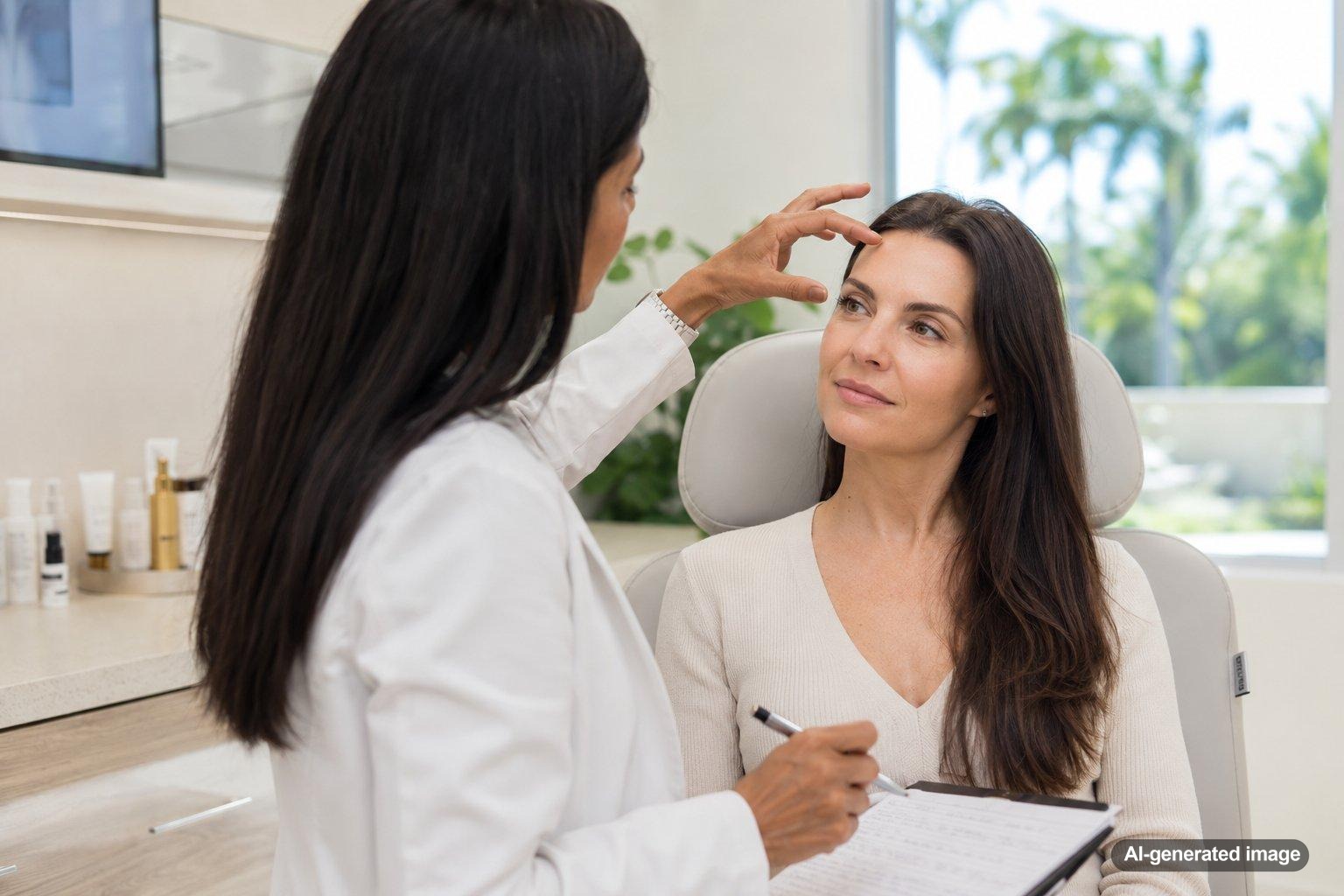
Trying Botox for the first time can feel exciting, but it can also raise very reasonable questions. Most first-time patients are not looking for a frozen or obvious look. They usually want to appear rested, softer, and still like themselves.
Botox Cosmetic is a prescription treatment used in carefully selected facial muscles to soften certain expression lines temporarily. The most natural-looking outcomes often begin with a thoughtful consultation, conservative dosing, and a clear discussion about your facial movement, goals, medical history, and comfort level.
Quick answer
- Natural-looking Botox usually starts with a personalized plan, not a one-size-fits-all dose.
- First-timers often benefit from a conservative approach that can be adjusted at future visits.
- Dosing depends on anatomy, muscle strength, treatment area, prior treatment history, and aesthetic goals.
- Avoid bargain injections, unclear product sourcing, and providers who skip a medical history review.
- A board-certified dermatologist can help evaluate whether Botox is appropriate for your concerns.
What Botox is and how it works
Botox Cosmetic is a brand name for onabotulinumtoxinA, a purified botulinum toxin medication used cosmetically to improve the look of certain facial lines for a temporary period. In aesthetic dermatology, it is injected in small amounts into targeted muscles that contribute to expression lines, such as frown lines, forehead lines, or crow’s feet.
The goal is not to erase personality from the face. The goal is to soften selected movement while preserving balance, proportion, and expression. For a first-time treatment, your clinician may evaluate how your face moves at rest and during expression, then discuss where treatment may help and where it may be better to leave movement alone.
How natural results happen
A natural-looking Botox result is usually the product of restraint, experience, and careful placement. The face has many small muscles that work together, so tiny changes in one area can affect the way another area looks. This is why an injector’s understanding of facial anatomy matters.
Natural results often come from treating the areas that bother you most while avoiding unnecessary treatment in areas where movement keeps the face expressive. A first visit should include a discussion of your desired level of movement. Some patients prefer very soft movement. Others prefer a more relaxed look. Your clinician can help translate that preference into a treatment plan.
What to know about dosing
Botox dosing is measured in units, but the number of units is not the whole story. Placement, dilution, muscle strength, facial shape, and symmetry all matter. Two people can receive a similar number of units and have different outcomes because their anatomy and movement patterns are different.
For first-timers, a conservative starting plan may be appropriate when the goal is subtle softening. Your clinician may recommend treating fewer areas at first or using a measured approach, especially if you are unsure how much movement you want to keep. Follow-up planning can help determine whether future dosing should stay similar or be adjusted.
What to avoid before and after Botox
- Avoid scheduling treatment with an injector who does not review your medical history, medications, allergies, pregnancy or nursing status, prior reactions, and aesthetic goals.
- Avoid choosing a provider based only on the lowest price. Product quality, training, and medical judgment matter.
- Avoid unclear product names or vague sourcing. You should know what is being injected.
- Avoid assuming that more units automatically means a better result. Conservative, targeted dosing can be more elegant for first-time patients.
- Avoid pressing, rubbing, or manipulating the treated areas right after your visit unless your clinician gives you specific instructions.
- Avoid planning treatment immediately before a major event. Timing can vary, and mild swelling, redness, bruising, or adjustment needs are possible.
Common first-time concerns
Many first-time patients worry about looking stiff, asymmetric, or unlike themselves. These concerns are valid, and they are exactly why consultation matters. A careful injector should ask what you want to soften, what you want to preserve, and whether you have had previous cosmetic procedures or medical conditions that could affect treatment planning.
It is also reasonable to ask how your clinician approaches conservative dosing, what side effects are possible, and when to contact the office with concerns. Botox Cosmetic labeling includes safety information, including warnings about possible distant spread of toxin effect, so the discussion should be medical as well as aesthetic.
Professional options
Professional treatment options may include Botox Cosmetic or another neuromodulator, depending on your goals, anatomy, and clinician’s recommendation. Some lines are mainly caused by repeated facial movement and may be a fit for neuromodulator discussion. Other lines are present at rest, related to volume change, or related to skin texture, and may call for a different conversation.
At Waverly DermSpa, we offer Botox and can help you understand whether it may be appropriate.
When to see a dermatologist
Consider seeing a board-certified dermatologist if you are new to injectables, have medical conditions that may affect treatment, have had prior reactions to cosmetic procedures, are pregnant or nursing, or are unsure whether Botox matches your goals. You should also seek medical guidance promptly if you experience symptoms that feel unusual or concerning after any injectable treatment.
FAQ
Will Botox make me look frozen?
A frozen look is not the goal for many first-time patients. A conservative plan, precise placement, and a clear discussion about how much movement you want to keep may help create a softer result.
How much Botox do first-timers need?
There is no universal first-time dose. Your clinician can evaluate your muscle movement, facial anatomy, treatment areas, and goals before recommending a plan.
Can I start small?
Many patients prefer to begin conservatively. Your dermatologist can discuss whether that approach makes sense for your anatomy and goals.
Is Botox only for wrinkles?
Botulinum toxin treatments are used in dermatology for cosmetic concerns and certain medical conditions. For cosmetic use, Botox is commonly discussed for expression-related facial lines.
What should I ask at my first appointment?
Ask about the product being used, the areas recommended, the dosing approach, possible side effects, aftercare, and how the plan supports a natural-looking result.
Ready to get help?
Schedule an appointment or send a message and our team will get back to you.
Prefer to call? 954-666-3736
Disclaimer
This article is for educational purposes and is not medical advice. For diagnosis and personalized treatment, please book an appointment with a board-certified dermatologist.
Sources & further reading
- U.S. Food and Drug Administration (FDA) – BOTOX Cosmetic Medication Guide
- American Academy of Dermatology (AAD) – Botulinum toxin therapy: Overview
- Cleveland Clinic – Botox Cosmetic: Uses and Side Effects
