

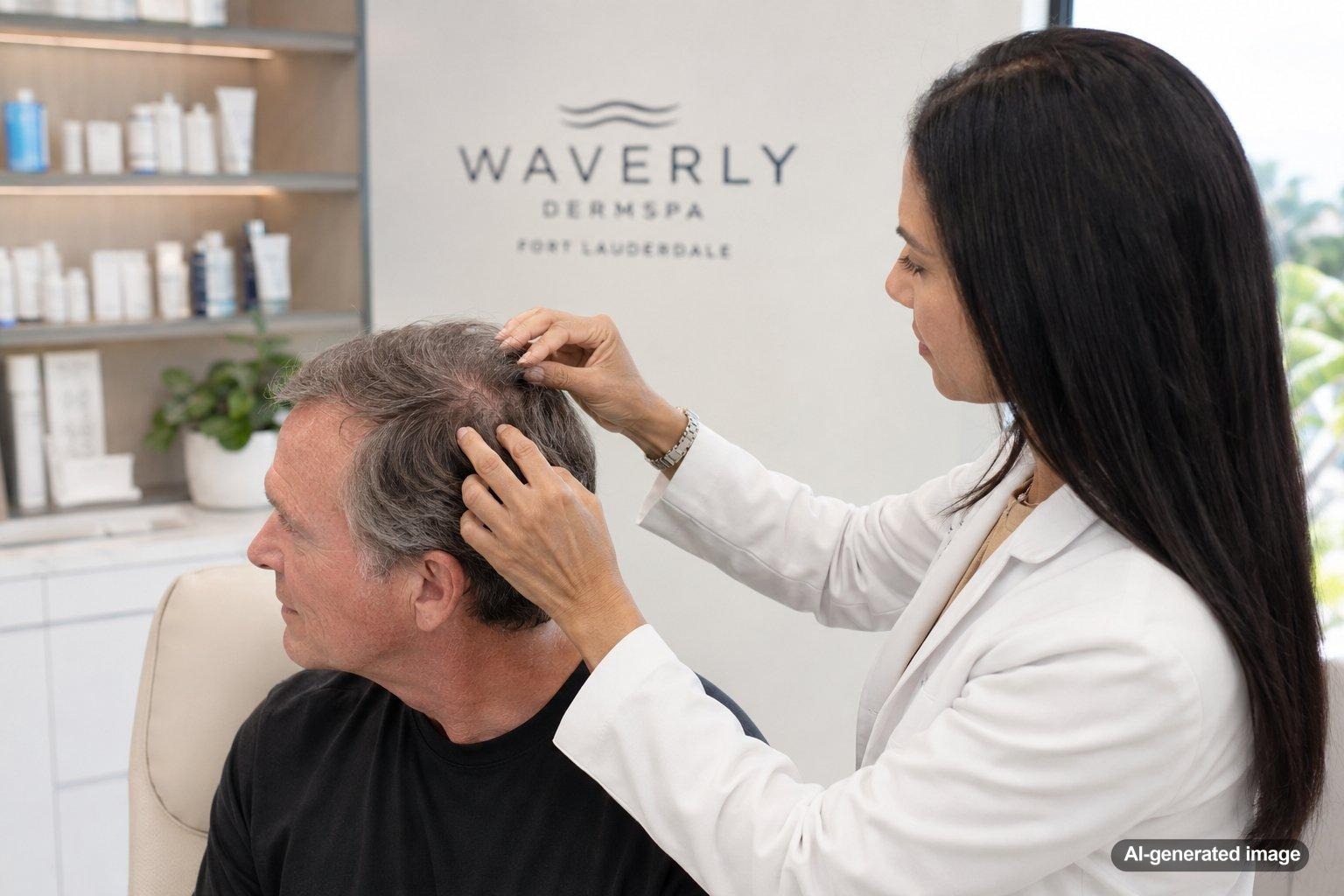
Pattern hair loss often starts quietly. You may notice a slightly wider part, a hairline that looks different in photos, or more scalp showing under bright light. These changes can feel personal and frustrating, but noticing them early can make the conversation with a dermatologist more useful.
Hair changes can have many causes, including genetics, hormones, stress, nutrition, scalp inflammation, medications, and other health factors. A board-certified dermatologist can evaluate your scalp, review your history, and help you understand what may be contributing to the change.
Quick answer
- Early pattern hair loss may look like gradual thinning at the crown, temples, or part line.
- More hair in the shower is not always the same as pattern hair loss, especially if shedding started suddenly.
- Photos taken in the same lighting can help you track subtle changes over time.
- A dermatologist can evaluate whether pattern hair loss, shedding, scalp irritation, or another condition may be involved.
- Early evaluation may help you understand your options before thinning becomes more noticeable.
What pattern hair loss is
Pattern hair loss is a common type of gradual hair thinning that can be influenced by genetics and hormones. It often develops slowly, which means the first signs may be easy to overlook. In many women, the part may look wider or the ponytail may feel less dense. In many men, the hairline, temples, or crown may change first. The pattern is not the same for everyone, and a professional evaluation can help separate pattern hair loss from other causes of shedding or scalp concerns.
Common early signs to watch for
- A widening part: The part may look broader than it used to, especially under overhead lighting.
- More visible scalp: You may notice more scalp at the crown, temples, or along the hairline.
- A changing hairline: The hairline may appear higher, more uneven, or less dense at the temples.
- Less volume: Hair may feel flatter, finer, or less full when styling.
- A smaller ponytail: Many people first notice that their ponytail feels thinner than before.
- Short, fine hairs in thinning areas: Some strands may look more delicate or miniaturized compared with nearby hair.
Common causes or triggers
Pattern hair loss is often gradual, but other factors can make thinning or shedding more noticeable. These may include:
- Family history of hair thinning
- Hormonal changes
- Stress, illness, or major life changes
- Low iron or certain nutritional concerns
- Scalp irritation, flaking, or inflammation
- Certain medications or medical conditions
- Hair practices that create repeated tension on the scalp
What you can do at home
Gentle habits can support the scalp and reduce unnecessary breakage while you arrange care. Try to avoid tight hairstyles that pull on the same areas repeatedly, use gentle detangling, and limit harsh styling practices that make breakage worse. Taking clear photos every few weeks in the same lighting can also help you document whether the change seems stable, gradual, or sudden.
It is also helpful to notice context. Did shedding begin after an illness, stress, travel, a medication change, or a major hormonal shift? Did the scalp become itchy, tender, flaky, or red? These details can help your clinician decide what to evaluate.
Professional options
A dermatologist may begin with a scalp exam, medical history, hair-pull assessment, dermoscopy, or lab testing when appropriate. Common options may include topical treatments, prescription therapies, treatment of scalp inflammation, lifestyle or nutrition guidance when a deficiency is suspected, or in-office regenerative approaches. The right path depends on the cause, pattern, medical history, and goals.
At Waverly DermSpa, we offer PRFM for Hair Loss and can help you understand whether it may be appropriate.
When to see a dermatologist
If you are unsure, it is worth getting checked. Consider scheduling a dermatology visit if thinning is progressing, the part is widening, the hairline is changing, or shedding feels unusual for you. You should also seek care promptly if hair loss is sudden, patchy, painful, associated with scalp redness or scaling, or accompanied by other symptoms. These patterns can be associated with causes that need a more specific evaluation.
FAQ
Is shedding the same as pattern hair loss?
Not always. Shedding often means more hairs are falling out, while pattern hair loss usually involves gradual thinning in predictable areas. A dermatologist can help distinguish between the two.
Can pattern hair loss start before it is obvious?
Yes. Many people notice small changes in density, styling, or scalp visibility before the thinning is obvious to others.
Should I wait to see if it gets worse?
You do not have to wait. Early evaluation can help clarify what is happening and what options may fit your situation.
Can stress cause hair loss?
Stress can be associated with increased shedding in some people, but it is not the only possible cause. Timing, pattern, scalp symptoms, and health history all matter.
Are in-office hair loss treatments right for everyone?
No. Suitability depends on the cause of hair loss, medical history, expectations, and exam findings. Your clinician can help you decide whether an in-office option makes sense.
Ready to get help?
Schedule an appointment or send a message and our team will get back to you.
Prefer to call? 954-666-3736
Disclaimer
This article is for educational purposes and is not medical advice. For diagnosis and personalized treatment, please book an appointment with a board-certified dermatologist.
