

Nail changes can feel frustrating, especially when they make everyday tasks uncomfortable or make you self-conscious about your hands or feet. Nail psoriasis can be associated with small dents, lifting, thickening, color changes, and brittle texture, but these signs can overlap with other nail conditions, including fungus or trauma.
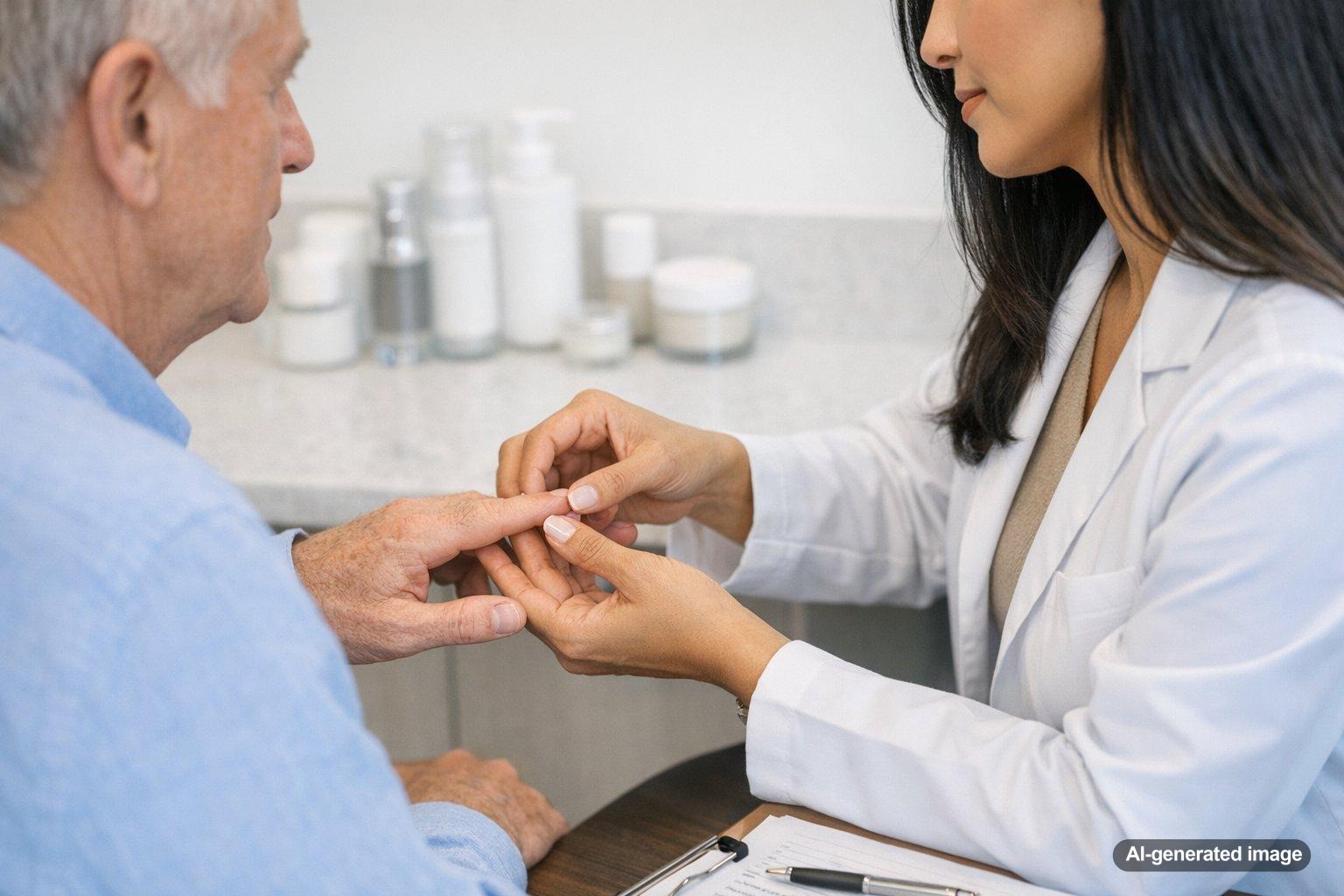
The calm next step is not to guess. A board-certified dermatologist can examine the nails, look for related skin or joint clues, and help determine whether the changes fit nail psoriasis or another concern.
Quick answer
- Nail psoriasis can affect fingernails, toenails, or both.
- Common signs include pitting, lifting, discoloration, thick buildup under the nail, ridging, and crumbling.
- Nail changes do not always mean psoriasis; fungal infection, injury, eczema, and other conditions can look similar.
- Gentle nail care and avoiding trauma may help reduce irritation while you arrange evaluation.
- Seek dermatology care sooner if the nail is painful, rapidly changing, separating, bleeding, or paired with joint pain.
1. Tiny pits in the nail surface
One of the classic signs of nail psoriasis is pitting, which can look like small pinprick dents across the nail plate. Some people notice only a few shallow pits, while others may see many tiny depressions that give the nail a rough or uneven texture.
2. Yellow, white, or brown discoloration
Nail psoriasis may cause areas of white discoloration, yellow-brown spots, or an oil-drop type color change under the nail. Because color changes can also occur with fungal infection, staining, trauma, or other nail disorders, an exam is helpful before choosing treatment.
3. Nail lifting from the nail bed
A nail may begin to separate from the skin underneath, a change called onycholysis. This can create a pale or whitish area near the tip or side of the nail and may leave space where debris can collect.
4. Thick buildup under the nail
Some people develop thick scaling or keratin buildup under the nail, which can make the nail feel raised, tight, or harder to trim. Keeping nails short and avoiding picking at buildup can help reduce additional irritation.
5. Ridges, grooves, or rough texture
Nail psoriasis can affect the way the nail grows, leading to ridges, grooves, uneven texture, or a nail that looks less smooth than usual. These changes may be subtle at first and can become more noticeable over time.
6. Brittle, crumbly, or fragile nails
Nails affected by psoriasis may become brittle, split more easily, or crumble at the edge. If the nail is painful, catching on clothing, or interfering with daily activities, it is worth discussing options with a dermatologist.
What you can do at home
Home care cannot diagnose or replace medical treatment, but gentle habits may help reduce irritation around sensitive nails.
- Keep nails trimmed short and file rough edges gently.
- Wear gloves for wet work, cleaning, gardening, or tasks that may injure the nails.
- Avoid picking under the nail or forcing lifted nail areas back into place.
- Use moisturizer around the nails and cuticles if the surrounding skin feels dry.
- Skip harsh nail treatments if they seem to worsen tenderness, lifting, or brittleness.
Professional options
A dermatologist can evaluate whether nail psoriasis, fungus, injury, or another condition is more likely. Depending on the exam and your history, common options may include prescription topicals, injections into affected nail areas, light-based approaches, or systemic medications for more extensive psoriasis. Your clinician can help you decide which path is appropriate for your nails, skin, comfort level, and overall health.
When to see a dermatologist
It is especially worth getting checked if nail changes are new, painful, spreading, causing the nail to lift, or paired with swelling or stiffness in the fingers or toes. You should also schedule an evaluation if you are not sure whether the change is psoriasis, fungus, trauma, or something else. Earlier guidance can help reduce guesswork and support a more personalized plan.
FAQ
Is nail psoriasis contagious?
No. Nail psoriasis itself is not contagious. However, some nail infections can look similar, so a dermatologist may evaluate for other causes when needed.
Can nail psoriasis happen without obvious skin psoriasis?
It can. Some people notice nail changes even when skin symptoms are mild or not obvious. A full skin, scalp, nail, and joint history can help clarify the picture.
Can nail fungus and nail psoriasis look alike?
Yes. Both can cause thickening, discoloration, lifting, or brittle nails. They require different approaches, so testing or clinical evaluation may be recommended before treatment.
Should I cover affected nails with polish?
Cosmetic coverage may be reasonable for some people, but avoid products that sting, irritate, or make lifting worse. If nails are painful, separating, or possibly infected, ask your dermatologist before covering them.
How long does nail psoriasis take to improve?
Nails grow slowly, so improvement can vary and may take patience. Your clinician can set realistic expectations based on which nails are involved and which treatment approach is chosen.
Ready to get help?
Schedule an appointment or send a message and our team will get back to you.
Prefer to call? 954-666-3736
Disclaimer
This article is for educational purposes and is not medical advice. For diagnosis and personalized treatment, please book an appointment with a board-certified dermatologist.
Sources & further reading
- American Academy of Dermatology (AAD) – What is nail psoriasis, and how can I treat it?
- National Psoriasis Foundation – Nail Psoriasis: Symptoms, Causes & Treatment
- DermNet – Nail psoriasis
