

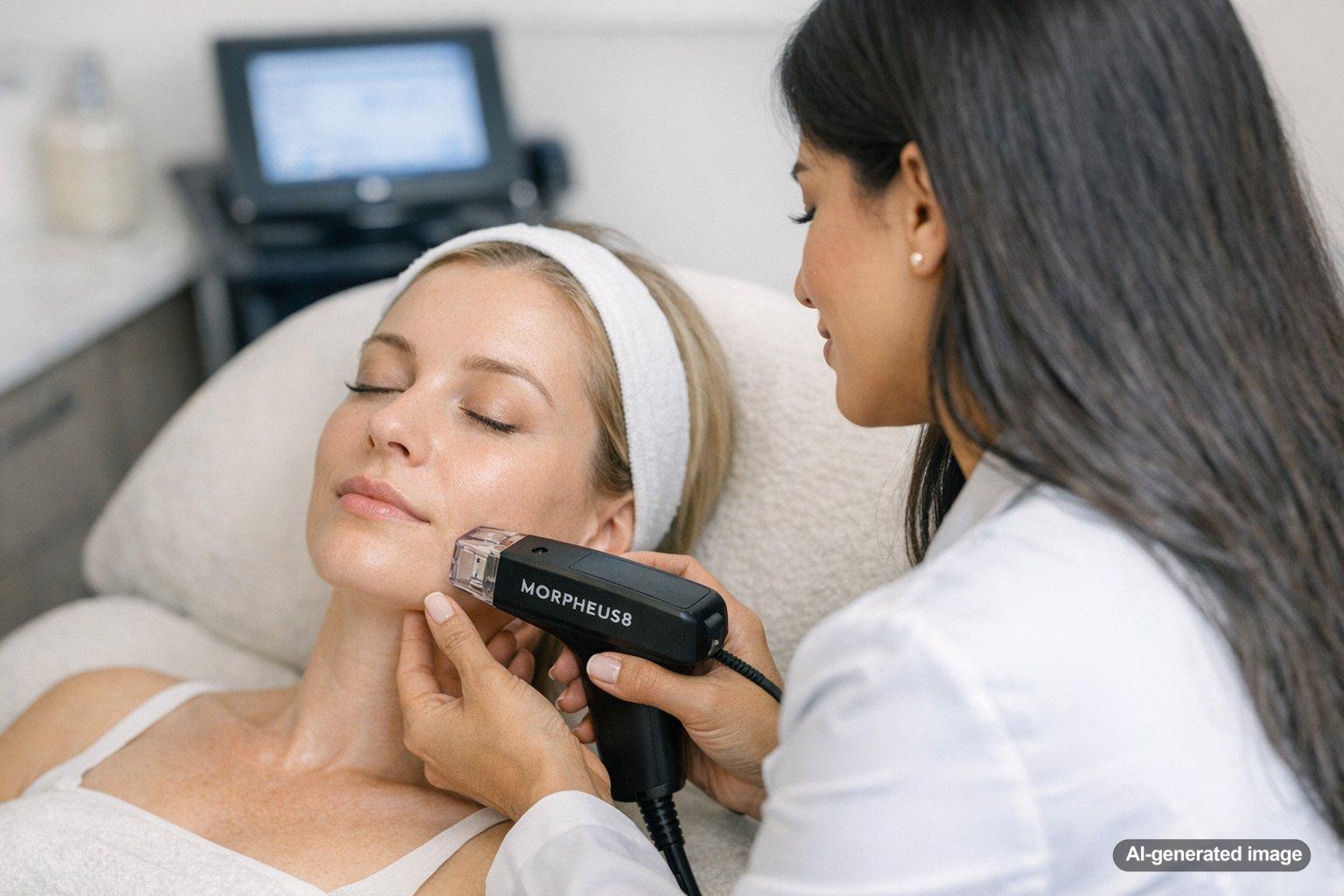
Morpheus8 is often described as a skin tightening or texture treatment, but that can sound vague if you are trying to understand what is actually happening beneath the surface. In plain terms, Morpheus8 combines microneedling with radiofrequency energy to create controlled treatment zones in the skin. Those controlled zones may help support the skin’s natural remodeling response over time.
It is not a filler, a laser resurfacing treatment, or a quick facial. It is a professional, energy-based treatment that may be considered for concerns such as mild laxity, uneven texture, acne scarring, enlarged-looking pores, and crepey skin, depending on your skin type, goals, and medical history.
Quick answer
- Morpheus8 is a type of radiofrequency microneedling.
- It uses tiny needles to deliver heat below the skin’s surface.
- The goal is to support collagen remodeling and improve the look of texture, firmness, and scars over time.
- Results vary, and the right plan depends on your skin, goals, and how your clinician evaluates you.
- It should be performed by an appropriately trained professional who understands energy-based device treatments.
What Morpheus8 is
Morpheus8 is a professional treatment that belongs to a category called radiofrequency microneedling. Microneedling creates small, controlled channels in the skin, while radiofrequency energy adds targeted heat below the surface. Together, these actions are intended to encourage a natural repair and remodeling process.
Because the treatment works below the surface, it is often discussed for concerns that are related to texture and firmness rather than only surface glow. Many people ask about it for the face, neck, jawline, and areas where skin looks less smooth or less resilient than it used to.
What it may help improve
Morpheus8 may be considered when the main concern is skin quality rather than adding volume. Common reasons people ask about it include:
- Fine lines and crepey-looking texture
- Mild skin laxity or softening along the lower face and jawline
- Uneven skin texture
- Acne scars or other textural acne marks
- Enlarged-looking pores
- Skin that looks less firm or less refined with age
It is important to keep expectations realistic. Morpheus8 may help improve the appearance of certain concerns, but it does not replace surgery, filler, laser resurfacing, or a consistent skincare plan when those are better suited to the goal.
How the treatment works in simple terms
During treatment, the device uses a microneedling tip to reach selected depths in the skin. Radiofrequency energy is then delivered into those treatment zones. The controlled heat is designed to stimulate remodeling in the deeper layers while leaving much of the surrounding tissue intact.
Your clinician may adjust settings based on the treatment area, skin thickness, skin tone, comfort, and the concern being addressed. This is one reason consultation matters. The same device can be approached differently depending on whether someone is focused on acne scarring, lower-face laxity, neck texture, or overall skin refinement.
What Morpheus8 is not
Morpheus8 is not an instant tightening procedure, and it is not meant to change your facial structure. It does not add volume the way filler can, and it does not remove skin the way surgery can. It also does not replace daily sun protection, barrier-supportive skincare, or dermatology care for active rashes, acne, infections, or suspicious lesions.
Think of it as a remodeling treatment. The aim is to support the skin’s natural renewal process in a controlled, professional setting. The degree of visible change can vary based on age, skin quality, treatment settings, number of sessions, aftercare, and individual biology.
What you can do at home before and after treatment
At-home care is usually about helping your skin stay calm and resilient. Your clinician may give you specific instructions, but conservative basics often include:
- Use a gentle cleanser and simple moisturizer.
- Be consistent with broad-spectrum sunscreen when your skin is exposed to daylight.
- Avoid harsh scrubs, strong exfoliating acids, or retinoids right around treatment unless your clinician says otherwise.
- Do not pick at treated skin while it is calming down.
- Tell your clinician about recent tanning, cold sores, active breakouts, pregnancy or nursing, medications, and any history of keloids or poor wound healing.
These steps are not a substitute for personalized instructions. They are simply the kind of practical skin support that helps your clinician build a safer, more thoughtful plan.
Professional options and how Morpheus8 fits in
Morpheus8 is one option within a broader menu of cosmetic dermatology and aesthetic treatments. Depending on your concern, a clinician may also discuss microneedling without radiofrequency, laser resurfacing, chemical peels, injectable treatments, medical skincare, or a combination approach. The best choice depends on what you want to improve and what your skin can safely tolerate.
At Waverly DermSpa, we offer Morpheus8 and can help you understand whether it may be appropriate.
When to see a dermatologist first
A dermatologist should evaluate you before energy-based cosmetic treatments if you have an active rash, infection, new or changing growth, unexplained pigmentation change, a history of abnormal scarring, or a medical condition that affects healing. You should also mention if you are pregnant, nursing, immunosuppressed, using prescription skin medications, or have had recent procedures in the same area.
If a spot is changing, bleeding, painful, or not healing, that should be evaluated medically rather than covered with a cosmetic treatment plan.
FAQ
Is Morpheus8 the same as regular microneedling?
No. Morpheus8 is radiofrequency microneedling, so it combines microneedling with controlled heat energy. Traditional microneedling does not use the same RF energy component.
Does Morpheus8 tighten skin?
It may help improve the appearance of mild laxity and skin firmness for some people. The amount of change varies, and it is not a substitute for surgical lifting when significant loose skin is the main concern.
Can Morpheus8 help acne scars?
Radiofrequency microneedling may be considered for certain acne scars, especially textural scars. A dermatologist can evaluate scar type, active acne, pigmentation risk, and whether a combination plan would make more sense.
Is there downtime?
Downtime varies. Many people experience temporary redness, swelling, sensitivity, or a rough texture as the skin calms. Your clinician should review what to expect based on your treatment settings and skin type.
How do I know if I am a candidate?
A consultation is the best way to decide. Your clinician can look at your skin, review your health history, discuss your goals, and explain whether Morpheus8 or another option is better aligned with what you want to improve.
Ready to get help?
Schedule an appointment or send a message and our team will get back to you.
Prefer to call? 954-666-3736
Disclaimer
This article is for educational purposes and is not medical advice. For diagnosis and personalized treatment, please book an appointment with a board-certified dermatologist.
Sources & further reading
- American Academy of Dermatology (AAD) – Statement on the FDA Safety Briefing about Radiofrequency Microneedling Risks
- Cleveland Clinic – Radio Frequency (RF) Microneedling
- American Academy of Dermatology (AAD) – Microneedling Can Fade Scars, Uneven Skin Tone, and More
