

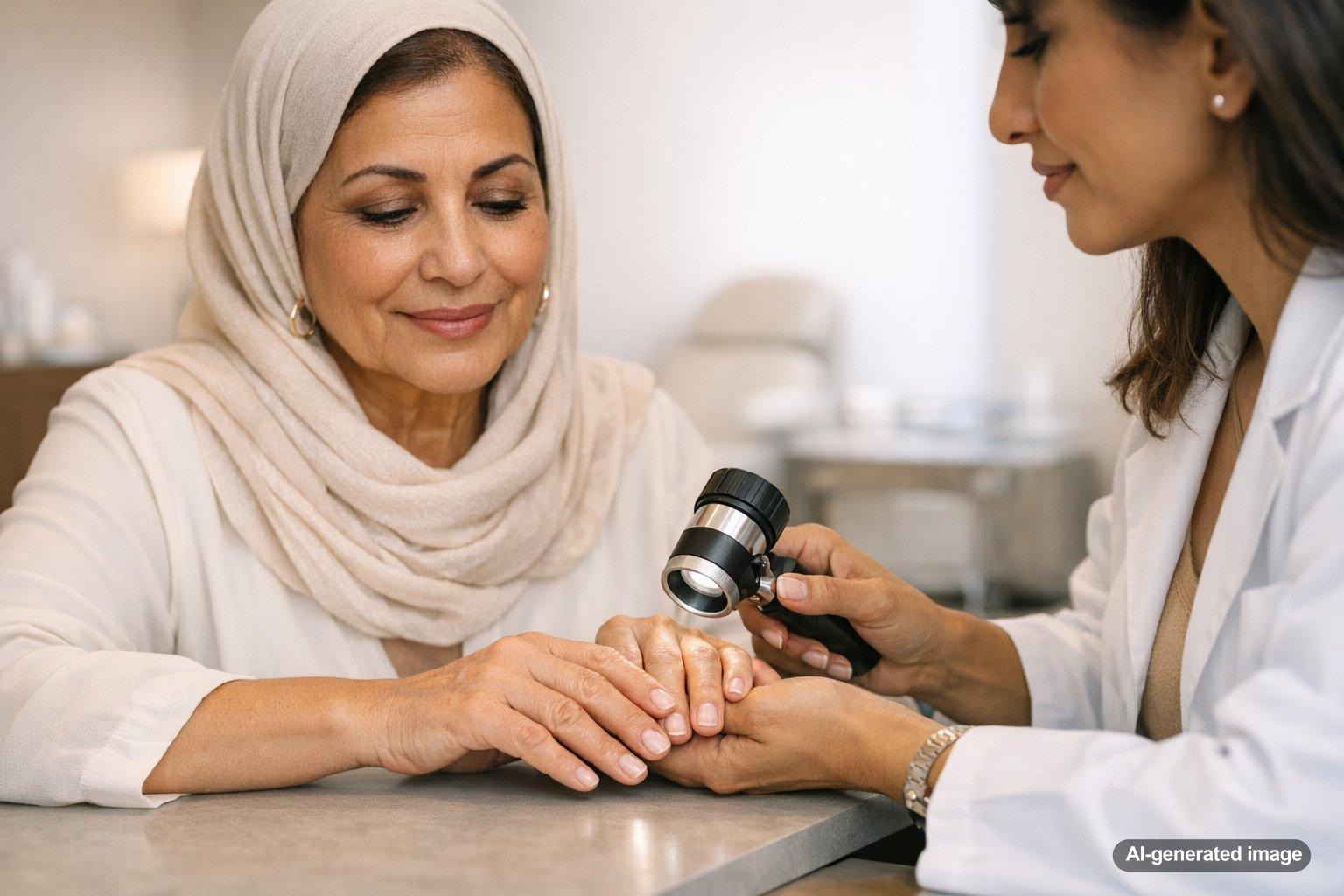
White areas on the nails can feel unsettling, especially when they appear suddenly or seem to spread. The most common explanation is often something simple, such as minor nail trauma from a manicure, tight shoes, picking, or a bump you may not remember. Still, white nails can also be associated with nail fungus, nail lifting, psoriasis, product irritation, or, less commonly, an underlying health concern.
The key is the pattern. A tiny white spot is different from a chalky patch, a nail that is lifting away from the skin, or several nails turning pale. A dermatologist can look closely, check for infection when needed, and help you decide what is reasonable to do next.
Quick answer
- Small white spots or streaks may happen after minor trauma to the nail plate.
- Chalky white patches, thickening, crumbling, or lifting can be associated with nail fungus.
- White areas can also appear with nail psoriasis, allergic reactions to nail products, repeated manicures, or nail separation.
- If the change is new, spreading, painful, affects several nails, or comes with swelling or drainage, it is worth getting checked.
- A dermatologist can evaluate the nail and may test a clipping or scraping before discussing treatment options.
What white nails can mean
White nails are often described as leukonychia, a term that refers to white spots, streaks, lines, or broader whitening of the nail. Sometimes the whiteness is within the nail plate itself. Other times, the nail looks white because it is lifting away from the nail bed, allowing air or debris to collect underneath.
Not every white mark is serious. Nails grow slowly, so a small spot from an old injury can take weeks or months to move outward as the nail grows. The concern rises when the nail is also thick, crumbly, tender, separated, changing color, or affecting several nails at once.
Common causes of nails turning white
- Minor trauma: Bumping the nail, biting, picking, aggressive cuticle work, or repeated pressure from shoes may leave white spots or lines.
- Nail fungus: Some fungal infections can create white, yellow, chalky, thickened, brittle, or lifting nails. This is more common in toenails than fingernails.
- Nail separation: When the nail lifts from the nail bed, the separated area may look white or opaque.
- Nail cosmetics or irritants: Gel polish, acrylics, adhesives, removers, hardeners, and frequent manicures may irritate or weaken the nail in some people.
- Inflammatory skin conditions: Psoriasis, eczema, or other inflammatory conditions can involve the nails and change their color, texture, or attachment.
- Less common internal factors: Widespread or unusual whitening can sometimes be associated with medication effects, nutritional issues, or systemic health conditions, which is why a persistent or unexplained change should be evaluated.
What you can do at home
- Keep nails trimmed, clean, and dry, especially toenails after bathing, swimming, or exercise.
- Avoid picking under the nail or aggressively scraping a white area, which can worsen separation or irritation.
- Take a break from gels, acrylics, nail glue, or harsh removers if the change appeared after nail services.
- Wear roomy shoes and moisture-wicking socks if toenails are affected.
- Do not share nail clippers, files, or pedicure tools.
- Choose a reputable nail salon that uses proper sanitation practices, or bring your own tools.
- Make note of when the whitening started, whether it is growing out, and whether there is pain, odor, thickening, or lifting.
Over-the-counter antifungal products may not be the right fit for every nail change. Because nail fungus can resemble trauma, psoriasis, and other nail conditions, testing may be helpful before spending months on treatment.
Professional options
A dermatologist can examine the nail pattern and may collect a small clipping, scraping, or debris sample to look for fungus or another cause. This helps avoid treating the wrong condition. Depending on the findings, common options may include prescription topical medication, oral antifungal medication, guidance on nail care, trimming or filing the affected nail, or treatment for an underlying inflammatory skin condition.
For nail changes linked to cosmetics or trauma, the plan may be conservative and focused on protecting the nail while it grows. For suspected infection, your clinician can review the benefits, limitations, safety considerations, and expected variability of treatment.
When to see a dermatologist
- The white area is spreading or more nails are becoming involved.
- The nail is thick, crumbly, lifting, painful, swollen, draining, or has an odor.
- You notice dark brown, black, green, or rapidly changing discoloration.
- The change affects one nail and does not seem to grow out.
- You have diabetes, circulation concerns, immune suppression, or a history of significant nail infections.
- You are unsure whether the cause is trauma, fungus, psoriasis, or something else.
Getting an accurate diagnosis matters because different causes of white nails are treated differently. A calm, in-office evaluation can often clarify whether testing or treatment is appropriate.
FAQ
Are white spots on nails always fungus?
No. White spots can come from minor trauma, nail biting, manicures, product irritation, nail lifting, or inflammatory skin conditions. Fungus is one possibility, especially when the nail is thick, crumbly, chalky, yellow-white, or lifting.
Will white nail spots grow out?
Some small spots from minor injury may move outward as the nail grows. If the white area expands, affects multiple nails, or comes with texture changes, it is safer to have it evaluated.
Can nail polish or gel manicures cause white nails?
They can contribute in some cases, particularly when the nail is dehydrated, over-filed, exposed to adhesives or removers, or repeatedly covered without breaks. A dermatologist can help separate cosmetic irritation from infection or another nail disorder.
Should I cut away the white part of my nail?
Trim nails gently, but avoid digging, cutting deeply, or scraping under the nail. If the nail is lifting, painful, or collecting debris, professional evaluation is a better next step.
Can white nails be a sign of something internal?
Sometimes, broader or unusual whitening patterns can be associated with medication effects or systemic health concerns. This is less common than local nail causes, but persistent, widespread, or unexplained changes should be checked.
Ready to get help?
Schedule an appointment or send a message and our team will get back to you.
Prefer to call? 954-666-3736
Disclaimer: This article is for educational purposes and is not medical advice. For diagnosis and personalized treatment, please book an appointment with a board-certified dermatologist.
Sources & further reading
- American Academy of Dermatology (AAD) – Nail fungus: Signs and symptoms
- American Academy of Dermatology (AAD) – Nail fungus: Diagnosis and treatment
- Cleveland Clinic – White Spots on Nails (Leukonychia): Causes & Treatment
- DermNet – White nail
